
Desserts
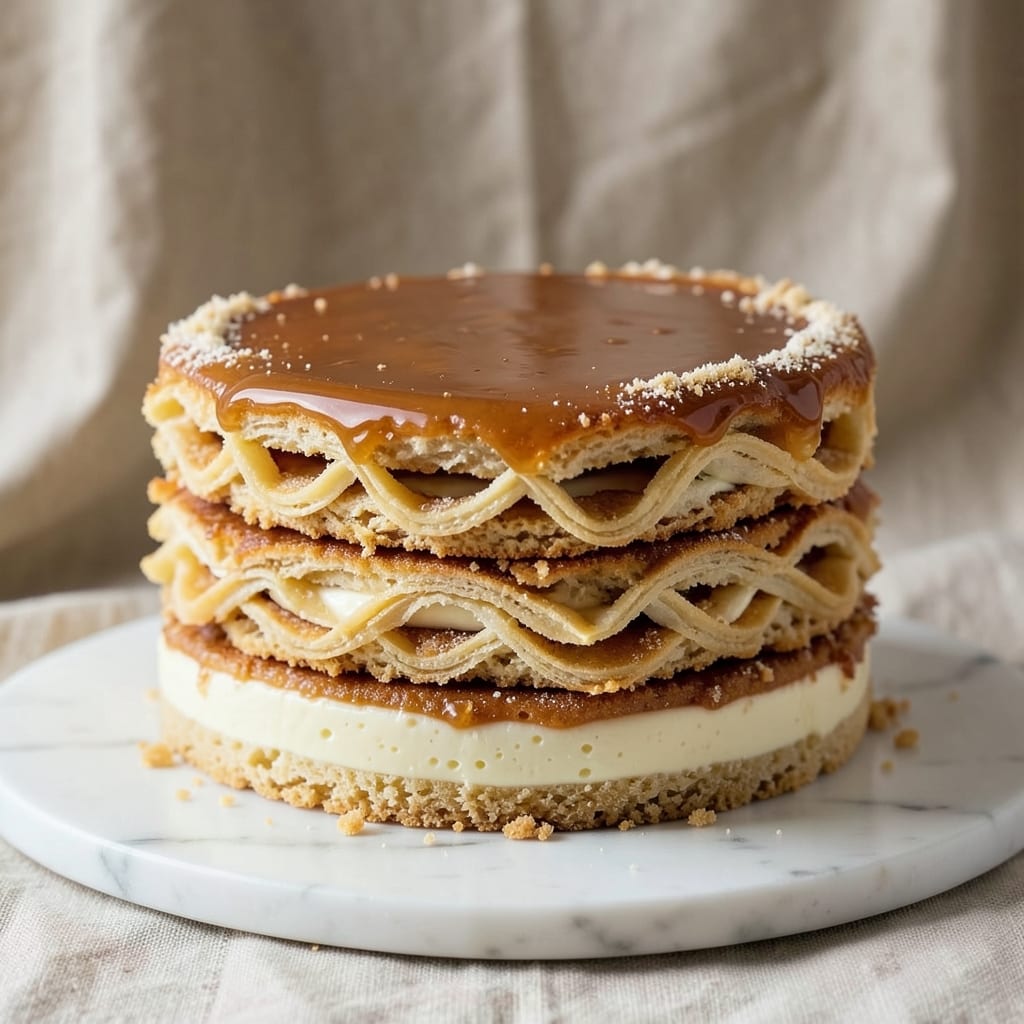
This Alhambra cake recipe delivers Spain’s most elegant dessert—a delicate marriage of vanilla sponge and almond cream, layered with marzipan and citrus zest. 💛 The secret lies in its precise structure: light, airy vanilla layers sandwiching rich almond paste, all baked to golden perfection in a springform pan. I’ve perfected this technique over years, ensuring every slice reveals the signature balance of sweetness and nuttiness that makes it unforgettable.
The magic begins with a foolproof vanilla sponge—tender yet sturdy enough to hold its shape—paired with a velvety almond cream that’s neither too sweet nor too heavy. Traditional recipes call for marzipan, but I’ve included a lighter alternative using almond flour and egg whites for those who prefer simplicity. The key? Baking the layers just until set, then assembling with a thin citrus glaze to bind everything together.
What you’ll end up with is a showstopping dessert—elegant enough for celebrations but simple enough for weeknight treats. The layers stay moist for days, and the almond flavor shines through without overpowering the delicate vanilla. Whether you’re serving it at a wedding or simply indulging after dinner, this cake delivers restaurant-quality results with minimal fuss.
For best results, use a springform pan and let the cake cool completely before slicing—patience ensures clean layers and a professional finish. The citrus glaze adds a subtle brightness that cuts through the richness, making every bite feel like a taste of Andalusia. Let’s get baking!
Ingredients for alhambra cake
Elegant layers of vanilla sponge and almond cream await—just these ingredients transform into Spain’s most beloved cake.
| Ingredient | Amount | Notes |
|---|---|---|
| All-Purpose Flour 🌾 | 2 ½ cups | Sifted for light texture |
| Unsalted Butter 🧈 | 1 ½ cups | Room temperature, European preferred |
| Granulated Sugar 🍚 | 2 cups | Superfine for smoothness |
| Large Eggs 🥚 | 6 whole | Room temperature, separated |
| Pure Vanilla Extract 🌿 | 2 tbsp | Bottled, Madagascar bourbon preferred |
| Almond Flour 🥜 | 1 ½ cups | Finely ground, blanched almonds |
| Powdered Sugar 🍚 | 1 ½ cups | For almond cream sweetness |
| Heavy Cream 🥛 | 1 ½ cups | Cold, 35% fat minimum |
| Marzipan 🍫 | 12 oz | Store-bought or homemade |
| Lemon Zest 🍋 | 1 tbsp | Fresh, organic preferred |
| Orange Zest 🍊 | 1 tbsp | Fresh, organic preferred |
| Lemon Juice 🍋 | 2 tbsp | Freshly squeezed |
| Cornstarch 🌾 | 1 tbsp | For citrus glaze |
The butter and eggs are non-negotiable for that signature tender crumb—European-style butter (like Plugrá) has higher fat content, which makes all the difference. For the almond flour, blanched almonds ground fresh yield the smoothest texture, but store-bought works in a pinch. If you’re using marzipan, look for high-quality store-bought (like Dandies) or make your own by blending almond flour and powdered sugar. The citrus zest should be vibrant—organic lemons and oranges from the market have the brightest flavor. For the vanilla, Madagascar bourbon extract adds depth that imitation can’t match.
No marzipan? Almond flour + powdered sugar (1:1 ratio) makes a decent substitute. Running short on eggs? Replace 2 yolks with 2 tbsp aquafaba—it mimics the richness. The heavy cream needs to be cold for the almond cream to whip properly, but if it starts to thicken too fast, chill the bowl for 10 minutes. For the citrus glaze, cornstarch is key—it thickens beautifully without altering the flavor. If you’re feeling fancy, add a pinch of salt to the glaze to balance the sweetness. The vanilla sponge can handle a splash of almond extract if you want extra nuttiness, but keep it subtle.
This cake keeps beautifully—3 days at room temperature wrapped in cake domes, or 5 days in the fridge sealed tightly. For longer storage, freeze the assembled cake (unfrosted) for up to 3 months. The layers stay moist thanks to the citrus glaze, but if you’re serving it fresh, bake it the day before—flavors meld overnight. To reheat, cover with foil and warm at 300°F for 10 minutes. The almond cream can be made ahead too—whip it, cover with plastic wrap, and refrigerate for up to 2 days. Just rewhip before assembling.
Why You'll Love This Recipe
- Here’s what sold me: the vanilla extract isn’t just a splash—it’s the star. Paired with that rich butter and sugar, it’s like biting into a warm hug. (Yes, even on a Tuesday night.)
- No Fuss Layers: I swear, the only tricky part is separating the eggs—everything else is just creaming butter and sugar until it’s light enough to float a boat. That buttery crumb? It’s the kind of texture that makes you pause mid-bite.
- Vanilla Butter Bliss: Here’s what sold me: the vanilla extract isn’t just a splash—it’s the star. Paired with that rich butter and sugar, it’s like biting into a warm hug. (Yes, even on a Tuesday night.)
- Party or Pudding: Slice it for a celebration or keep it whole for a lazy afternoon. Honestly, I’ve served it at birthday parties and as a midnight snack—no judgment, no regrets.
Step-by-step instructions for layered vanilla and almond cake
Here's how to build this elegant Spanish classic with perfect layers and silky textures.
👨🍳 Step 1: Prepare the Almond Cream Filling
In a stand mixer fitted with the whisk attachment, combine the 1.5 cups heavy cream and 1.5 cups powdered sugar. Whip on medium speed until soft peaks form—about 3-4 minutes. This light, airy base will become our signature almond cream layer.
In a separate bowl, mix the 1.5 cups almond flour, 1 tbsp lemon zest, and 1 tbsp orange zest. Gradually fold this into the whipped cream using a spatula until fully incorporated. The citrus zest will brighten the almond flavor beautifully. Cover and refrigerate while you prepare the sponge layers.
🍳 Step 2: Bake the Vanilla Sponge Layers
Preheat your oven to 350°F and grease three 8-inch round cake pans. Sift the 2.5 cups all-purpose flour and set aside. In a large mixing bowl, beat the 1.5 cups unsalted butter and 2 cups granulated sugar on medium speed until light and fluffy—about 5 minutes. This creaming process incorporates air for a tender crumb.
Add the 6 whole large eggs, one at a time, beating well after each addition. Mix in the 2 tbsp pure vanilla extract. Gently fold in the sifted flour until just combined—don't overmix or your layers will be dense. Divide the batter evenly among the prepared pans and bake for 20-25 minutes until a toothpick comes out clean. Let cool completely before assembling.
🥘 Step 3: Assemble the Cake Layers
Place the first sponge layer on a cake stand or plate. Spread a thin layer of the almond cream mixture over the top—about ¼ cup. This will act as a glue between layers. Place the second layer on top and repeat with another ¼ cup of almond cream. Top with the final layer.
For the marzipan layer, roll out the 12 oz marzipan to about ⅛-inch thickness and place it on top of the final cake layer. Press gently to adhere. Chill the assembled cake in the refrigerator for at least 2 hours to allow the layers to set properly.
🍽️ Step 4: Create the Citrus Glaze and Decorate
In a small saucepan, combine the 2 tbsp lemon juice and 1 tbsp cornstarch. Cook over medium heat, stirring constantly, until the mixture thickens enough to coat the back of a spoon—about 2-3 minutes. Let cool slightly, then strain through a fine-mesh sieve to remove any lumps.
Spread the glaze evenly over the top and sides of the chilled cake. Use a palette knife to create decorative patterns if desired. The glaze will set as it cools, giving your cake that professional finish. Serve at room temperature for the best texture and flavor experience.
Pro Tips For Making Alhambra Cake
- Cream Butter Properly: I learned this the hard way—don’t just mix butter and sugar like you’re in a hurry. Use a wooden spoon or your hands to work the butter until it’s light and fluffy, about 3-5 minutes. This isn’t just about aeration; it’s what gives the Alhambra its signature tender crumb. Stop when the mixture looks like wet sand, not wet cement. ---
- Sift That Flour: Skipping the sift for the flour is a shortcut that backfires. The Alhambra relies on a fine, even texture, and sifting removes lumps while incorporating air. Do it before adding to the butter mixture, and tap the measuring cup on the counter to level it off—no packing, no excuses. ---
- Bake Until Golden: The cake’s done when the top is a deep, even golden brown, not when the edges pull away. After 30-35 minutes, check the center with a skewer—it should come out clean, but if the top’s still pale, crank the oven to 350°F (175°C) for 5-10 more minutes. Underbaking is the fastest way to a dense, sad cake. ---
- Chill the Batter: Sounds weird, but it works: let the batter rest for 10-15 minutes after mixing. This lets the flour absorb the liquid, preventing a dense crumb. Pop it in the fridge while you preheat the oven—your future self will thank you when the cake bakes up light and airy, not gummy.
Storing and reheating this alhambra cake
Room Temperature Storage
This cake stays fresh for 3 days at room temperature when stored in cake domes or wrapped tightly in plastic wrap. The citrus glaze acts as a natural preservative, keeping the layers moist. I recommend cutting portions with a serrated knife for clean slices—dip it in hot water between cuts if the cake resists. 💛
Refrigerator Preservation
For longer freshness, refrigerate the cake for up to 5 days in an airtight container. The cold temperature slows moisture loss, but the texture becomes slightly firmer. Let it sit at room temperature for 15-20 minutes before serving to restore the ideal mouthfeel. I use Glasslock containers because they seal tightly and prevent drying.
Freezing for Later
Freeze the assembled cake (unfrosted) for up to 3 months by wrapping it tightly in plastic wrap followed by aluminum foil. Thaw overnight in the refrigerator before serving. The layers may release moisture during freezing, so I recommend brushing them with a thin layer of citrus glaze before freezing to maintain texture. 🥶
Reheating Slices
To warm individual slices, cover them with foil and reheat at 300°F for 10 minutes. The almond cream softens beautifully, while the sponge layers regain their tenderness. For a quick option, microwave slices on 50% power for 15 seconds—just enough to make the glaze slightly warm without drying the cake.
Make-Ahead Components
The almond cream can be prepared 2 days ahead and stored in the refrigerator. Simply rewhip before assembling the cake. The vanilla sponge layers can also be baked a day in advance and kept in an airtight container at room temperature. This gives flavors time to develop fully, making each bite more complex. The marzipan layer should be added fresh to maintain its texture.
Citrus Glaze Refresh
If the glaze appears dry after storage, brush the cake with a light layer of simple syrup (equal parts sugar and water, heated until dissolved). This restores moisture and shine without altering the flavor. For extra elegance, dust the cake with powdered sugar just before serving—it adds a professional finish that guests will notice immediately. ✨
Nutrition facts
Frequently asked questions
Can I make this cake without marzipan?
The traditional recipe uses marzipan, but you can easily substitute with a homemade almond paste. Mix 1 cup almond flour with 1 cup powdered sugar and a splash of almond extract until it forms a thick paste. Roll it out to ⅛-inch thickness just like marzipan. The texture will be slightly less refined but still delicious.
Why does my vanilla sponge turn dense?
Overmixing the batter is the most common culprit—stop folding the flour in once it's just combined. Also, ensure your butter and eggs are room temperature and your oven is fully preheated to 350°F. If your kitchen runs hot, reduce the temperature to 325°F and check for doneness at 20 minutes. A toothpick should come out clean, not moist.
How do I prevent the layers from sliding?
Chill the assembled cake for at least 2 hours before adding the glaze—this lets the almond cream set properly. For extra stability, brush each sponge layer with a thin layer of citrus glaze before stacking. If you're still having issues, use a springform pan for baking and assemble on a cake stand. The layers will hold better with proper support.
Can I use almond extract instead of zest?
Yes, but use it sparingly! Replace the 1 tbsp lemon zest and 1 tbsp orange zest with just ½ tsp almond extract—the flavor will be stronger. For a balanced taste, combine ¼ tsp almond extract with ½ tsp vanilla extract in the almond cream. The zest adds brightness that extract alone can't replicate.
What’s the best way to serve this cake?
Slice with a serrated knife for clean cuts, and serve at room temperature for the perfect texture. Pair it with a cup of Spanish coffee or sherry wine to complement the almond and citrus flavors. For a showstopping presentation, dust with powdered sugar and garnish with fresh berries or edible flowers.