
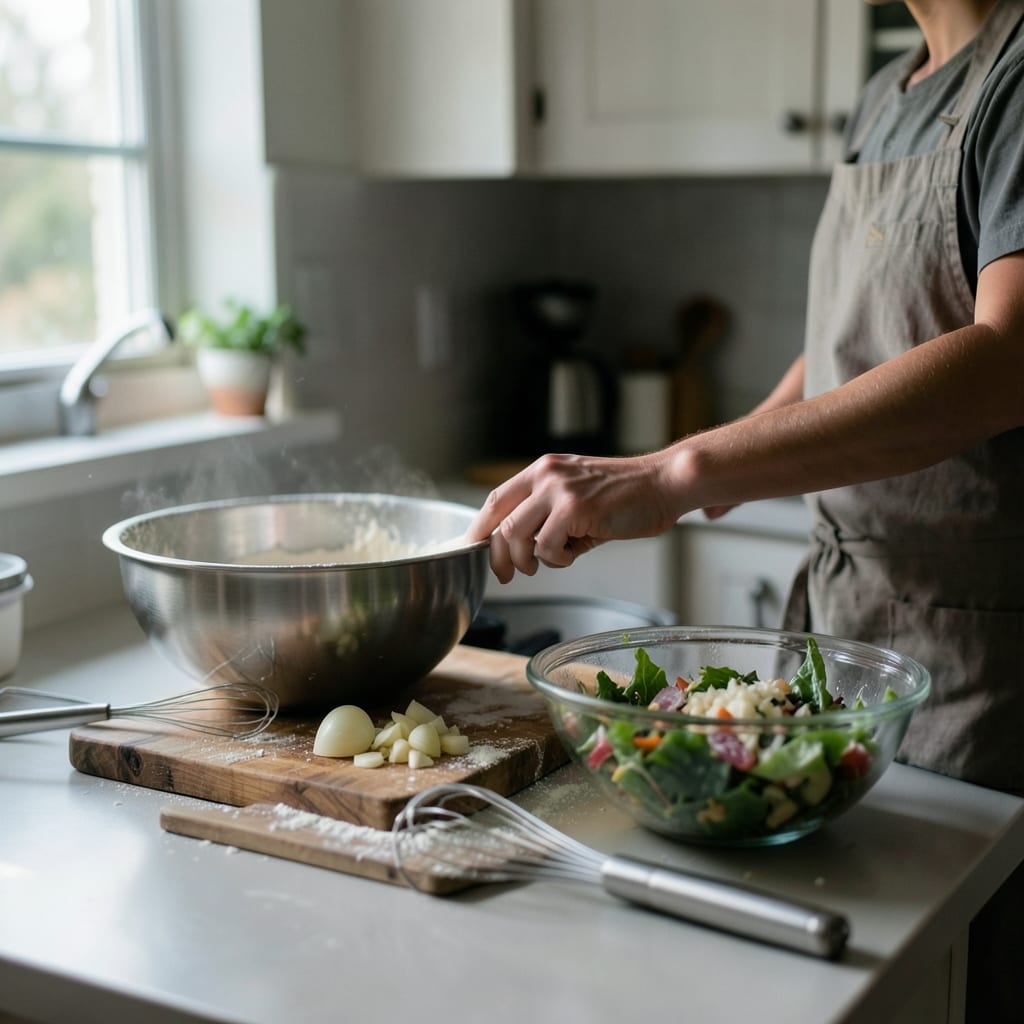
You have read a hundred of these
You’re right: the internet is full of recipe sites. Most of them are either too rigid (‘follow these steps exactly’) or too vague (‘trust your intuition’). We’re not either. This isn’t about rigid rules or empty fluff.
It’s about what actually works in a real kitchen, with real ingredients, and real people who aren’t chefs.
We don’t pretend baking is a science you can master overnight. We don’t treat cooking like a performance. And we don’t ignore the mess—because the best recipes are the ones that account for the times things go wrong.
If you’ve ever burned a cake because the oven ran hot, or ruined a batch of cookies because the dough was too sticky, you’re already ahead of 90% of recipe sites.
The difference here? Every recipe is tested until it works *for most people*, not just the ones who’ve done this a hundred times. That means noting when you can bend a rule, when you *shouldn’t*, and what to do when things go sideways. No vague advice.
No ‘it depends.’ Just honest answers.
There’s a reason you’re skeptical—and it’s not wrong.
Anyone can write that they test things
We test every recipe at least three times, often more. That means baking the same cake in three different ovens—one preheated, one not; one at 350°F, one at 325°F—to see how the edges and center react.
We adjust sugar ratios until the texture is right, not just ‘tastes good.’ We let dough rest for 20 minutes, then 40, then an hour, to find the sweet spot where it doesn’t collapse or stay dense.
Some recipes get scrapped entirely. The chocolate ganache that looked perfect in the bowl turned grainy when chilled? Gone. The sponge cake that rose beautifully but fell flat after cooling? Revised.
We even keep a ‘failure log’—notes on what went wrong, why, and how we fixed it. (Spoiler: most failures happen because of humidity, oven quirks, or overmixing. We tell you that upfront.)
And no, we don’t just test once with ‘perfect’ conditions. We bake in summer heat, winter cold, and everything in between. We use store-bought butter *and* the cheap tub kind. We ask friends who’ve never baked before to try the steps.
If it doesn’t work for them, it doesn’t work for anyone.
Testing isn’t a one-time thing—it’s a process of elimination.
About the author

Joelle Lattimore is the founder and editor of *Cake Recipes Magic*, where she turns kitchen experiments into recipes that feel like a hug—familiar enough to trust, surprising enough to delight.
The rules i live by
- 1No shortcuts for basics
We measure ingredients by weight, not volume, because 200g of flour isn’t the same as ‘a cup.’ This takes longer but ensures consistency. It costs us time, but saves you frustration.
- 2Failures are part of the process
Every recipe that makes the site has at least one version that didn’t. We keep the notes on what went wrong so you don’t repeat the same mistake. This means some recipes have ‘warning’ sections—because silence isn’t helpful.
- 3No ‘secret ingredients’
If a recipe requires something obscure, we’ll tell you where to find it *or* give you a substitute. We won’t hide behind jargon or imply you need a specialty store. This costs us credibility with ‘expert’ chefs, but earns it with home cooks.
- 4We prioritize flavor over perfection
A cake with a slightly uneven top is still delicious. A cookie with a few underbaked spots? Still worth eating. This means some photos look ‘imperfect’—because real life isn’t a staged shoot.
- 5Your time matters more than ours
If a recipe takes 3 hours but only 10 minutes of active work, we’ll tell you. If something can be prepped ahead, we’ll say so. This means some steps feel ‘boring,’ but it saves you from standing at the stove for hours.
When we break one of these rules, it’s usually because we’re learning something new. For example, we recently published a recipe that *didn’t* use weighed ingredients—because we wanted to see if volume measurements could work for a specific type of quick bread. The result?
A note at the top saying, ‘This one’s an exception,’ and why. Rules aren’t sacred; they’re tools. But we’ll always tell you when we’re bending them—and at what cost.
This will not be right for everyone
Close this page if you’re looking for quick fixes, ‘hacks’ that turn 10 ingredients into a fancy dessert, or recipes that require equipment you don’t own. This isn’t a place for microwave mug cakes or ‘5-minute’ anything.
It’s for people who enjoy the process, who don’t mind a little mess, and who believe good food should take time—even if that time is just reading the notes carefully.
It’s also not for people who think cooking is about impressing others. If you’re here to learn how to make a showstopper for a dinner party, you’ll find that tone grating.
We’re not teaching you to perform in the kitchen; we’re teaching you to feed the people you love—whether that’s a crowd or just yourself on a Tuesday night.
You could just be told what you want to hear
The contact page is the best place to share those. No fluff, no small talk—just the details that make our recipes better for everyone.
Worth telling us
- When a recipe *almost* works but needs one tiny tweak (e.g., ‘the meringue curled but the oven was too hot’).
- If you’ve adapted a recipe for dietary restrictions (gluten-free, nut-free, etc.) and it still turned out great.
- When a step feels unnecessarily complicated or confusing—so we can simplify it for the next person.
The recipes are grouped by category: Appetizers, Beverages, Breakfast & Brunch, Desserts, Main Courses and Reviews.