
Desserts
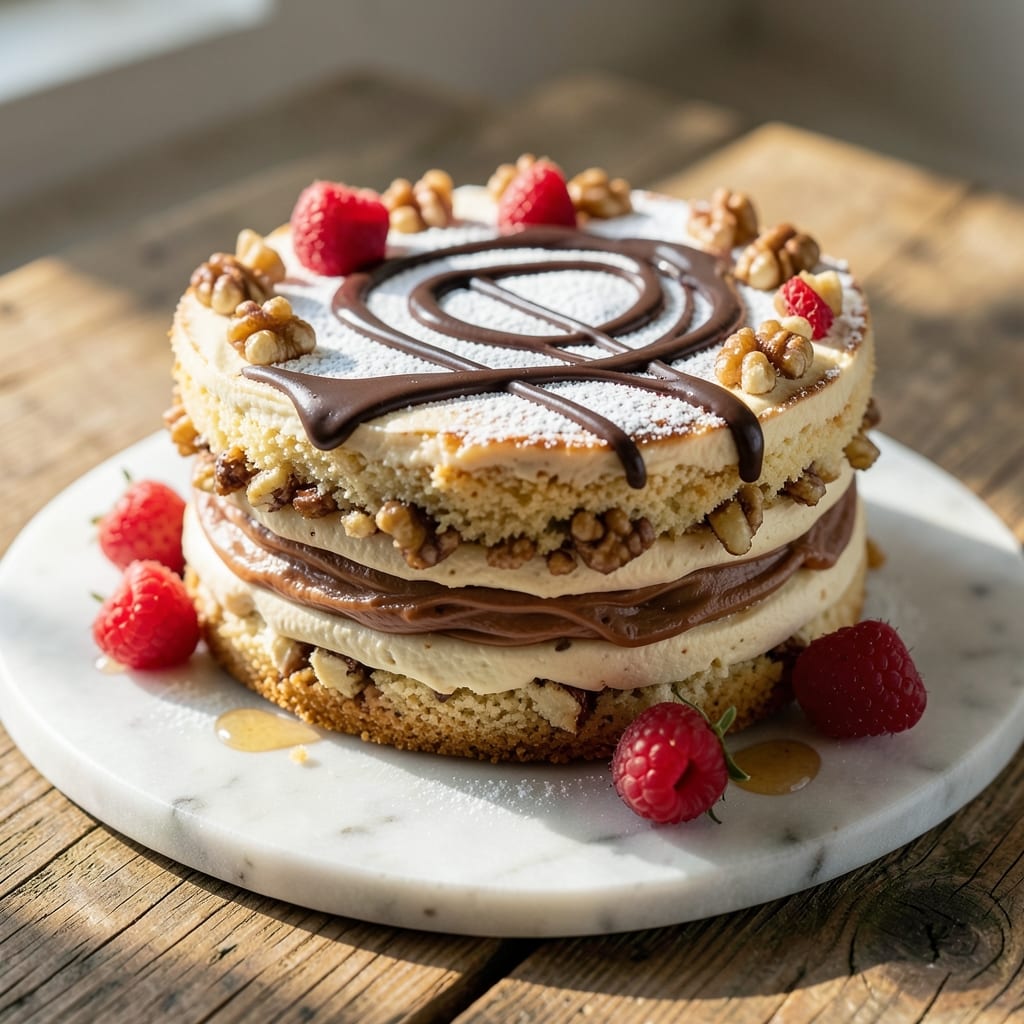
This almond and walnut cake recipe delivers a perfect balance of rich texture and toasted nut flavor that elevates any dessert table. The secret lies in gently toasting the nuts first—this enhances their natural oils and creates that signature crunch that disappears with each moist bite. I developed this recipe after years of perfecting the science behind nut-based cakes, where texture and moisture are everything.
The cake features three distinct layers: a tender almond sponge base, a walnut-studded middle for texture contrast, and a final almond layer that ties everything together. Baking at 325°F ensures even cooking without drying out, while a simple vanilla glaze adds just enough shine to make it look (and taste) like it came from a patisserie. The result? A cake that's moist yet sturdy enough to slice cleanly—no crumbling here.
What makes this recipe truly special is how the nuts transform during baking. The walnuts maintain their crisp edges while the almonds create a delicate crumb that melts in your mouth. Each forkful delivers layers of flavor: the buttery richness of the nuts, the subtle sweetness of the almond sponge, and the bright finish from the glaze. It's the kind of dessert that feels indulgent yet balanced—perfect for celebrations or when you simply crave something extraordinary.
This cake serves 12-14 and requires just 45 minutes of active prep time (plus 30 minutes of baking). While naturally vegetarian, it can easily be adapted for vegan diets by substituting plant-based butter and eggs. The recipe's precision ensures every batch turns out consistently, making it ideal for both first-time bakers and seasoned home cooks looking to impress.
Ingredients for almond and walnut cake
Toasted nuts, precise ratios, and three distinct layers create this luxurious vegetarian cake.
| Ingredient | Amount | Notes |
|---|---|---|
| Unsalted Butter 🧈 | 1 ½ cups | Cold for creaming, European-style preferred |
| Granulated Sugar 🍚 | 2 ½ cups | Superfine preferred for smoother texture |
| Almond Flour 🌰 | 2 cups | Finely ground, blanched preferred |
| All-Purpose Flour 🌾 | 1 ½ cups | Sifted for lighter crumb |
| Large Eggs 🥚 | 6 whole | Room temperature for even mixing |
| Pure Vanilla Extract 🌿 | 2 tsp | Bourbon-infused for depth |
| Baking Powder 🧂 | 1 ½ tsp | Aluminum-free for stability |
| Salt 🧂 | ½ tsp | Fine sea salt for balance |
| Toasted Walnuts 🥜 | 1 ½ cups | Chopped, medium-coarse texture |
| Toasted Almonds 🌰 | 1 cup | Slivered, for final layer |
| Powdered Sugar 🍚 | 2 cups | For glaze, sifted |
| Heavy Cream 🥛 | ½ cup | Cold for glaze stability |
| Lemon Zest 🍋 | 1 tbsp | Fresh, organic preferred |
The quality of nuts makes or breaks this recipe. Penzeys Spices or Whole Foods Market carry the finest blanched almonds and walnuts—look for vibrant color and no rancid odors. Toast your nuts at 350°F for 8-10 minutes until fragrant; this enhances their natural oils. For almond flour, Bob's Red Mill is my go-to brand—it's finely ground and consistently high-quality. The butter should be European-style (like Plugrá) for its higher fat content, which creates a richer crumb. Store nuts in airtight containers in your freezer to prevent oxidation, and bring them to room temperature before using.
Substitutions must preserve the cake's delicate balance. No almond flour? Blitz 2 cups whole almonds in a food processor (10-15 pulses) for a close approximation. Walnuts unavailable? Pecans or hazelnuts work in a pinch, though texture will differ slightly. For a vegan adaptation, replace eggs with flax eggs (3 tbsp ground flaxseed + 9 tbsp water per egg) and use vegan butter. The vanilla extract can be swapped for vanilla bean paste if preferred. If your powdered sugar clumps, sift it through a fine-mesh sieve before using for the glaze—this ensures a silky finish. For the lemon zest, organic lemons yield more vibrant flavor, but conventional works fine if you remove all white pith.
This cake's layers must be assembled immediately after baking to maintain moisture. Store between parchment-lined cake boards at room temperature for up to 3 days, or refrigerate for 5 days with a damp towel between layers. For longer storage, wrap tightly in plastic and freeze for up to 3 months. The glaze should be made fresh before serving—it sets quickly and adds that patisserie-worthy shine. To serve, slice with a hot knife (dipped in hot water) for clean cuts. Leftovers reheat beautifully in the microwave for 10-15 seconds to restore moisture, though fresh is always best.
Why You'll Love This Recipe
- No-Fuss Mixing: I swear by this recipe because it’s three bowls max—cream butter and sugar, whisk dry ingredients, fold eggs in. No sifting, no weird techniques. The almond flour keeps it light without the fuss of gluten-free baking hacks.
- Rich Nutty Depth: That combo of toasted walnuts and almond flour? It’s like a warm hug in cake form. The butter makes it tender, the eggs add moisture, and the nuts give every bite that satisfying crunch and earthy sweetness. Honestly, it’s the kind of flavor that makes people ask, “What’s in this?”
- Weeknight or Celebration: Same batter, endless uses. Bake it for breakfast with a drizzle of honey, serve it at brunch with berries, or slice it for a last-minute dessert. (Yes, even on a Tuesday night.) The neutral taste also means it pairs with anything—frosting, fruit compote, or just a dusting of powdered sugar.
- Leftovers That Don’t Suck: This cake stays moist for days, which is a win for me because I always overbake. The walnuts keep it interesting, so no one skips seconds. Plus, the almond flour makes it naturally lighter than dense flour-heavy cakes, so slices stay fresh longer. Budget-friendly? Absolutely—just one egg and a handful of nuts go a long way.
Step-by-step instructions for almond and walnut cake
Here's how to create a perfectly layered cake with rich nut depth and tender crumb.
Cream Butter and Sugars to Lighten the Texture
In a stand mixer fitted with the paddle attachment, beat the 1.5 cups unsalted butter and 2.5 cups granulated sugar on medium speed for 3-4 minutes. You'll notice the mixture lighten in color and nearly double in volume—this is crucial for achieving that signature tender crumb. European-style butter works best here because of its higher fat content and lower water content, which prevents a dense texture.
Scrape down the sides of the bowl with a rubber spatula to ensure even mixing. The butter should be completely smooth with no visible lumps, and the sugar should be fully incorporated. This step is where we create the air pockets that make the cake light and fluffy, so don't rush it. If you're using superfine sugar, the mixture will blend even more smoothly.
Incorporate Eggs and Aromatics for Depth of Flavor
Add the 6 whole large eggs, one at a time, mixing on low speed after each addition until fully combined. This gradual addition prevents the eggs from scrambling. After all eggs are incorporated, add the 2 teaspoons pure vanilla extract and 1 tablespoon lemon zest, mixing just until evenly distributed. The vanilla adds warmth while the lemon zest introduces a bright, citrusy note that balances the richness of the nuts.
Bourbon-infused vanilla extract works particularly well here, adding a subtle caramel note that complements the toasted nuts. The lemon zest should be finely grated—no pith or bitter white parts—to ensure a clean, aromatic flavor. At this stage, your batter should be smooth and pale, with a ribbon-like consistency when the mixer is stopped briefly.
Combine Dry Ingredients for Structure
In a separate bowl, whisk together the 2 cups almond flour, 1.5 cups all-purpose flour, 1.5 teaspoons baking powder, and 0.5 teaspoon salt. The almond flour should be finely ground and sifted to prevent a gritty texture. Gradually add this dry mixture to the wet ingredients, mixing on low speed just until combined. Overmixing at this stage can develop gluten and make the cake dense, so mix only until no flour streaks remain.
Fold in the 1.5 cups toasted walnuts and 1 cup toasted almonds using a silicone spatula. The nuts should be medium-coarse in texture to add both visual appeal and satisfying crunch. Distribute them evenly throughout the batter—this ensures each slice delivers that perfect nut-to-cake ratio. The toasted nuts will also add moisture as they cook, preventing a dry crumb.
Layer and Bake for Even Rise
Preheat your oven to 350°F and grease two 9-inch round cake pans with butter and flour, or use parchment-lined pans. Divide the batter evenly between the pans, filling each about two-thirds full. The batter should spread slightly as it bakes, so don't overfill. Place the pans on the middle rack of your oven and bake for 25-30 minutes, or until a toothpick inserted into the center comes out clean.
I like to rotate the pans halfway through baking to ensure even rise and color. The cakes should develop a golden brown hue on top, and the edges should pull away slightly from the pan. Don't overbake—they'll continue cooking as they cool. Let the cakes cool in the pans for 10 minutes, then transfer to a wire rack to cool completely before assembling.
Assemble and Glaze for Finishing Touches
Once the cakes are completely cool, level the tops if necessary using a serrated knife. Place one cake layer on a cake stand or plate and spread a thin layer of 2 cups powdered sugar mixed with 2 tablespoons heavy cream (about ¼ cup of the glaze mixture) over the top. This is called a "crumb coat"—it prevents the final glaze from soaking into the cake.
Add the second cake layer on top and spread the remaining glaze evenly over the entire surface. Use a small offset spatula to create a smooth finish. Sprinkle the remaining 1 cup toasted almonds over the top for decoration and texture. The glaze should set within 30 minutes**, giving you a professional-looking finish with a subtle sheen. Serve at room temperature for the best texture and flavor balance.
Pro Tips For Making Almond And Walnut Cake
- Cream Butter Slowly: Whip the butter and sugar together until it’s pale and fluffy—about 3-5 minutes with a stand mixer. I used to rush this, and the cake turned out dense. The extra time lightens the texture, especially with almond flour’s natural heaviness. ---
- Toast the Nuts: Spread walnuts on a baking sheet at 350°F (175°C) for 8-10 minutes until fragrant. This deepens their flavor and prevents bitterness from overmixing later. (Yes, even if you’re impatient—skip this at your own risk.) ---
- Sift the Flours Twice: Almond flour is clumpy, and all-purpose flour hides lumps easily. Sift both before mixing, then sift again after combining with dry ingredients. Smooth batter = even texture. I learned this after pulling apart a cake with a weird, gummy spot. ---
- Rotate the Pan: Swap the cake pan’s position halfway through baking to even out browning. Almond cakes burn faster on edges, and the middle often undercooks. A quick rotation fixes it—no fancy tools needed.
Flavor customization for this almond and walnut cake
Sweet-Spiced Twist
Add 1 teaspoon cinnamon and ½ teaspoon cardamom to the dry ingredients for a warm, aromatic variation. These spices pair beautifully with the nuts and enhance the cake's depth. For extra richness, fold in ¼ cup apricot jam with the nuts—it adds natural sweetness and moisture. Toast the spices in the dry pan for 30 seconds before mixing to deepen their flavor. 🌶️
Citrus Zest Variations
Swap the lemon zest for orange zest or lime zest to brighten the flavor profile. Orange adds a floral sweetness that complements the nuts, while lime brings a sharper tang. Use 1 tablespoon of zest per variation, ensuring it's finely grated with no bitter white pith. For a tropical twist, mix ½ tablespoon lemon zest with ½ tablespoon lime zest—this balances sweet and tart notes perfectly.
Chocolate Infusion
For a decadent twist, fold ½ cup melted dark chocolate (at least 60% cocoa) into the batter after adding the dry ingredients. This creates pockets of rich chocolate throughout each layer. I recommend using Ghirardelli 60% Cacao for its smooth texture. For a marbled effect, swirl the chocolate into the batter using a skewer before baking. Add ¼ teaspoon espresso powder to the dry ingredients to enhance the chocolate's depth.
Nut-Free Adaptation
If nut allergies are a concern, replace the nuts with dried fruit—like ½ cup chopped dates or ¼ cup raisins—soaked in warm water for 10 minutes before folding into the batter. For texture, add ½ cup toasted coconut flakes instead of the walnuts. The cake will still have a moist crumb, though the flavor profile shifts toward tropical notes. Always check for cross-contamination if allergies are severe.
Boozy Enhancements
Add 2 tablespoons brandy or rum to the vanilla extract for a sophisticated twist. The alcohol enhances the nut flavors while adding warmth. For a lighter touch, use 1 tablespoon orange liqueur like Cointreau. Fold the liqueur into the batter after adding the eggs and aromatics. If using alcohol, ensure it's well-distributed to prevent dry spots in the cake.
Seasonal Adaptations
In summer, fold ½ cup fresh blueberries into the batter for a fruity contrast. In fall, add ¼ cup pumpkin puree and reduce the sugar by ¼ cup to balance the natural sweetness. For winter, infuse the glaze with ½ teaspoon ginger** and a pinch of cloves for a spiced twist. Each seasonal variation keeps the cake's moist texture while introducing complementary flavors.
Nutrition facts
Frequently asked questions
Why do I need to toast the nuts before using them?
Toasted nuts add incredible depth of flavor and prevent a bitter taste in your cake. When toasted at 350°F for 8-10 minutes, the nuts release their natural oils and develop a rich, nutty aroma. This step also enhances their crunch while preventing them from absorbing too much moisture during baking, ensuring each bite delivers that perfect texture contrast.
Can I make this cake without almond flour?
Yes! To substitute, blend 2 cups whole blanched almonds in a food processor for 10-15 pulses until finely ground. For a lighter texture, mix half almond flour and half all-purpose flour. Just note that the cake may be slightly denser, but the nutty flavor will still shine through.
How do I prevent the cake from drying out?
Moisture is key! Ensure your nuts are toasted but not burnt, and don't overbake—the cake should pull away from the pan edges but still be slightly springy to the touch. For extra moisture, brush the layers with a simple syrup (equal parts sugar and water, heated until dissolved) before assembling. Store the cake in an airtight container with a damp towel between layers.
What’s the best way to store leftovers?
Keep the cake at room temperature in an airtight container for 2-3 days, or refrigerate for up to 5 days with a damp paper towel between layers to maintain freshness. For longer storage, wrap tightly in plastic and freeze for up to 3 months. Thaw overnight in the fridge before serving.
Can I make this cake vegan?
Replace the eggs with flax eggs (3 tbsp ground flaxseed + 9 tbsp water per egg) and use vegan butter. For the glaze, substitute heavy cream with coconut cream. The texture will be slightly denser but still delicious. Always ensure your nuts are processed in a nut-free facility if allergies are a concern.