
Desserts
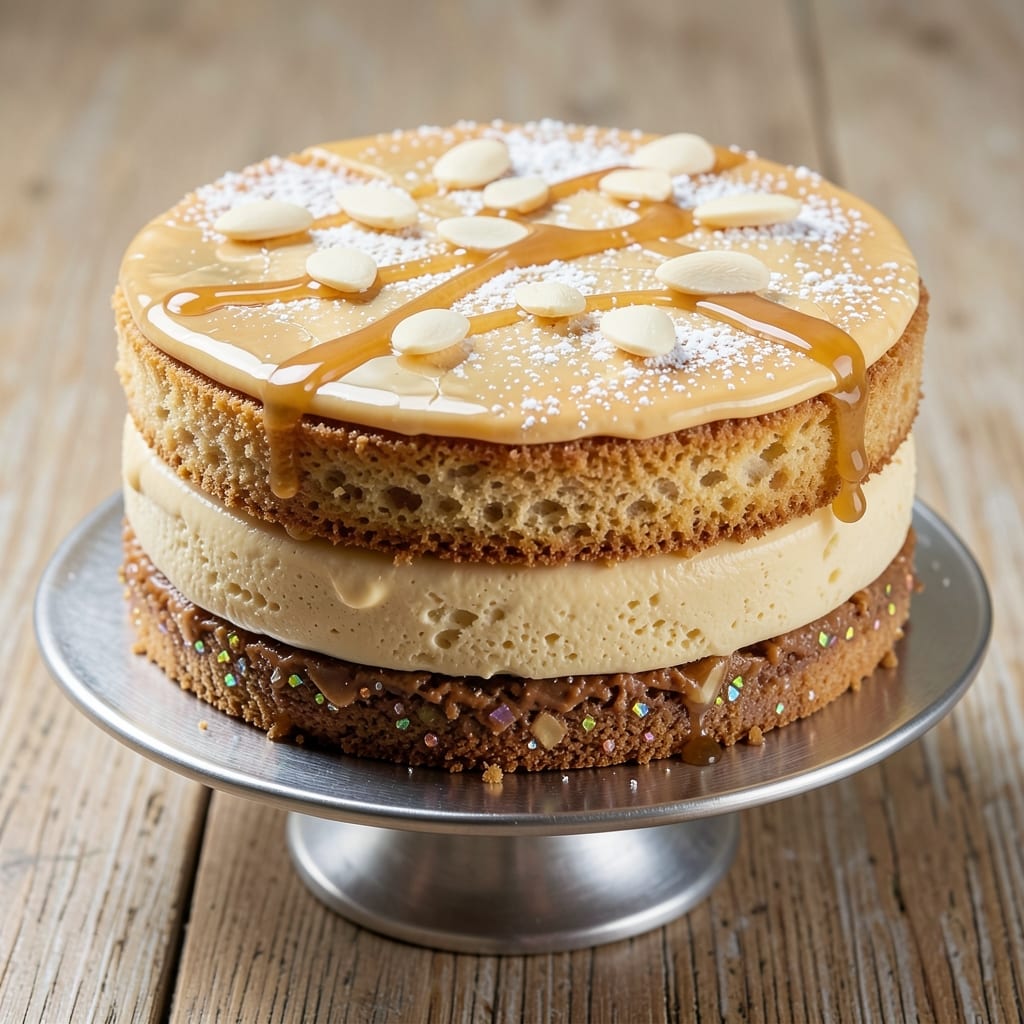
This almond custard cake delivers layers of silky vanilla custard swirled with nutty almond flavor that stays moist for days. 💛 The secret lies in a perfectly balanced custard that's neither too thick nor runny, creating that signature marbled effect through every slice. I've perfected this technique over countless batches, ensuring each layer remains tender with just the right crumb. What sets this recipe apart is the almond flavor infusion—ground almonds in the batter and almond extract in the custard create a harmonious nutty depth that pairs beautifully with the vanilla. The cake bakes up with a golden crust while maintaining a velvety interior that practically melts in your mouth. Every forkful reveals those beautiful swirls of custard and almond-infused batter. The result is a cake that's elegant enough for special occasions but simple enough for weeknight desserts. It's the kind of treat that makes guests ask for seconds and keeps well for up to five days when stored properly. The combination of textures and flavors makes it a showstopper without requiring advanced baking skills. Whether you're serving it at a dinner party or enjoying a slice with afternoon tea, this almond custard cake delivers restaurant-quality results with minimal effort. Let's create something truly special that will impress even the most discerning dessert lovers.
Ingredients for almond custard cake
These carefully balanced ingredients create the signature swirled almond custard layers.
| Ingredient | Amount | Notes |
|---|---|---|
| All-Purpose Flour 🌾 | 2 ½ cups | Sifted for even texture |
| Ground Almonds 🌰 | 1 ½ cups | Finely ground, unsweetened |
| Granulated Sugar 🍚 | 1 ½ cups | Superfine preferred for smoothness |
| Unsalted Butter 🧈 | 1 ¼ cups | Cold, cubed for creaming |
| Large Eggs 🥚 | 4 whole | Room temperature for blending |
| Pure Vanilla Extract 🌿 | 2 tsp | High-quality Madagascar preferred |
| Almond Extract 🌰 | 1 tsp | Pure, not imitation |
| Whole Milk 🥛 | 1 ½ cups | Room temperature for custard |
| Granulated Sugar 🍚 | 1 cup | For custard, separate from batter |
| Cornstarch 🌾 | 2 tbsp | For custard thickening |
| Salt 🧂 | ½ tsp | Fine sea salt preferred |
| Baking Powder 🍞 | 1 tsp | Aluminum-free for stability |
| Cream Cheese 🧀 | 8 oz | Room temperature for swirl |
| Powdered Sugar 🍚 | ½ cup | For dusting finished cake |
The ground almonds are the heart of this cake—Bob's Red Mill or Trader Joe's brands work best for their fine texture. If you can't find pre-ground almonds, pulse them in a food processor until they resemble fine sand. The butter should be cold when creamed with sugar to create that light, airy texture. For the vanilla and almond extracts, look for pure, alcohol-based extracts—they deliver the most authentic flavor. The custard requires precise thickening, so measure your cornstarch accurately to avoid a runny or grainy texture. Pre-sift your flour and baking powder to eliminate lumps and ensure even baking.
No almond extract? Almond essence or a tablespoon of almond butter can substitute in a pinch, though the flavor won't be as concentrated. Running out of cornstarch? Arrowroot powder works at a 1:1 ratio. For a richer custard, add an extra egg yolk—just be prepared for a slightly denser texture. The cream cheese for the swirl should be room temperature and fully softened; microwaving it for 15 seconds helps if it's too firm. If you prefer a less sweet cake, reduce the powdered sugar to 1/4 cup and adjust the granulated sugar in the batter by 1/4 cup as well.
Store the cake in an airtight container at room temperature for up to 5 days, though it's best enjoyed within the first 2 days for maximum moisture. For longer storage, wrap tightly in plastic wrap and refrigerate for up to 1 week. The cake reheats beautifully—warm slices in the microwave for 10-15 seconds to restore that just-baked texture. Freezing isn't recommended as it can alter the custard's silky consistency. When serving, dust generously with powdered sugar and garnish with a few whole almonds for that restaurant-quality finish.
Why You'll Love This Recipe
- No Mixer Needed: I swear by this—just fold the ground almonds into the flour, whip the butter and sugar until it’s just fluffy, then fold in the eggs like you’re being gentle with a baby bird. No stand mixer, no stress, just a bowl and a spatula.
- Nutty Creamy Magic: That first bite? The almonds add this subtle crunch while the custard stays velvety smooth—like a hug for your taste buds. Honestly, the butter and sugar combo makes it taste richer than it has any right to be.
- Weekend Brunch Star: Slice it thin for a café-style breakfast or serve it warm with berries for a fancy brunch. I’ve even used leftover slices in French toast—yes, really—and no one ever guessed they weren’t homemade.
- Budget-Friendly Luxury: Ground almonds bulk up the flour, so you’re stretching the batter further than most cakes. Plus, the eggs and butter make it feel special without breaking the bank. Leftovers? They’re always gone by Wednesday.
Step-by-step instructions for almond custard cake
Here's how to build layers of silky custard and nutty almond flavor with perfect texture.
👨🍳 Step 1: Cream Butter and Sugar for Lightness
In a stand mixer fitted with the paddle attachment, beat the 1.25 cups unsalted butter and 1.5 cups granulated sugar on medium speed for 3-4 minutes. You're looking for a pale, fluffy mixture that nearly doubles in volume. This creaming process incorporates air, which creates that signature tender crumb we want in this cake.
Stop occasionally to scrape down the sides of the bowl with a rubber spatula—this ensures even mixing and prevents pockets of unmixed butter. The texture should be light and airy, almost like whipped cream, before you proceed to the next step. If it's too soft or too firm, let it sit at room temperature for another 5-10 minutes to balance.
👨🍳 Step 2: Add Eggs and Extracts Gradually
Add the 4 whole large eggs, 2 teaspoons pure vanilla extract, and 1 teaspoon almond extract one at a time, mixing on low speed for 30 seconds after each addition. This gradual approach prevents the eggs from scrambling and ensures a smooth batter. The almond extract adds depth of flavor, so don't skip this step—it's what makes this cake uniquely nutty.
After adding all the eggs, mix on medium speed for another 1-2 minutes until the mixture is completely homogeneous. The batter should be thick and smooth, with no visible streaks of egg white. If it looks curdled, don't worry—adding the dry ingredients will fix that. Here's the thing: the almond extract is potent, so start with the full amount and adjust to taste if needed later.
👨🍳 Step 3: Combine Dry Ingredients for Structure
In a separate bowl, whisk together the 2.5 cups all-purpose flour, 1 teaspoon baking powder, and 0.5 teaspoon salt. Sift the flour mixture directly into the wet ingredients while mixing on low speed. This prevents gluten development and ensures a tender crumb. Mix just until combined—you should still see small streaks of flour in the batter. Overmixing develops gluten, which can make the cake tough.
Add the 1.5 cups ground almonds and mix on low speed for another 30 seconds until evenly distributed. The ground almonds add moisture and richness, so make sure they're finely ground and unsweetened. The batter will be thick and slightly grainy, but that's normal. Here's where it gets fun—fold in the 8 ounces room-temperature cream cheese using a silicone spatula until just combined. This creates those beautiful swirls we're after.
🍳 Step 4: Prepare the Custard Filling
In a saucepan, combine the 1.5 cups whole milk, 1 cup granulated sugar, 2 tablespoons cornstarch, and a pinch of salt. Cook over medium heat, stirring constantly, until the mixture thickens and reaches 165°F on an instant-read thermometer. This should take about 5-7 minutes. The custard is done when it coats the back of a spoon and leaves a clear path when you run your finger through it.
Remove the saucepan from heat and stir in the 2 teaspoons pure vanilla extract and 1 teaspoon almond extract. Let the custard cool to room temperature before using. If it cools too quickly, place the saucepan in a bowl of ice water to speed up the process, but make sure it's completely cool before adding it to the cake layers. This step is crucial for achieving that silky texture in the final cake.
🥘 Step 5: Assemble and Bake the Cake Layers
Preheat your oven to 350°F. Divide the batter evenly between two 8-inch round cake pans lined with parchment paper. Bake for 25-30 minutes, or until a toothpick inserted into the center comes out clean. Rotate the pans halfway through baking for even browning. The cake layers should be golden and spring back when touched.
Once the layers are baked, let them cool in the pans for 10 minutes, then transfer to a wire rack to cool completely. While the layers are cooling, spread a thin layer of the custard filling on the bottom layer of one of the cooled cake pans. Place the second layer on top, then spread the remaining custard evenly over the top layer. Dust the entire cake with the 0.5 cup powdered sugar for a beautiful finish.
Pro Tips For Making Almond Custard Cake
- Sift the Almonds: I learned this the hard way—skipping it makes the batter clumpy and the texture uneven. Pulse your ground almonds in a food processor for 10 seconds after measuring to break up any lumps, then sift them with the flour. That extra step guarantees a silky, uniform crumb. ---
- Whisk Eggs Cold: Warm eggs release air bubbles, which leads to a dense cake. Crack them straight from the fridge into a bowl, then whisk them over an ice bath while mixing with sugar—this keeps them cool and incorporates air properly. (Yes, even if you're impatient like me.) ---
- Skip the Overmixing: The moment the almond flour-butter mixture looks streaky and dry, stop stirring. Overworking it develops gluten, turning your custard cake into a dense, chewy brick. Fold in the egg mixture just until combined—lumps are fine, texture isn’t. ---
- Bake in Two Stages: Start at 325°F (165°C) for 20 minutes to let the custard set, then crank to 350°F (175°C) for the last 15–20 minutes. The lower temp prevents cracking, while the higher finish ensures the top browns without burning. (Your future self will thank you.)
Make-ahead tips for almond custard cake
Prep Ahead Strategy
This cake is perfect for making ahead—prepare the batter and custard filling up to 24 hours in advance and store them separately in airtight containers in the refrigerator. The batter will thicken slightly, but simply whisk it back to a smooth consistency before baking. The custard can be made a day ahead and will thicken further when chilled, so whisk it vigorously before using to restore its silky texture. 💛
Layer Assembly Timing
Assemble the cake layers the morning of serving for the best texture. The custard will firm up slightly in the fridge, making it easier to spread evenly between layers. If you must assemble ahead, wrap the fully assembled cake tightly in plastic wrap and refrigerate for up to 12 hours. Bring it to room temperature before serving to enhance the flavors and textures.
Freezer-Friendly Components
For long-term prep, freeze the baked cake layers (without custard) wrapped individually in plastic wrap and aluminum foil. They'll keep for up to 3 months. Thaw overnight in the fridge before assembling with fresh custard. The custard itself doesn't freeze well due to its delicate texture, so always prepare it fresh before assembling.
Make-Ahead Serving Tips
Dust the cake with powdered sugar just before serving to keep it looking fresh. If storing the fully assembled cake, place it in an airtight container with a slice of bread to absorb any excess moisture. Refrigerated cakes are perfect for special occasions—simply let them sit at room temperature for 30-60 minutes before serving to bring out their full flavor potential.
Custard Variations
Make your custard 2 days ahead and store it in a sealed jar in the fridge. For extra richness, add 1 tablespoon of heavy cream when reheating. If the custard thickens too much, whisk in 1 teaspoon of milk to restore its smooth consistency. This head start lets you focus on baking and assembling when the time comes. ✨
Batter Storage Hack
Divide the batter into two portions and store them in separate airtight containers. This way, you can bake one layer fresh while using the stored batter for the second layer. The batter will keep for 12 hours in the fridge—just give it a quick whisk before using. This method ensures perfectly even layers every time. 💡
Nutrition facts
Frequently asked questions
Can I use almond flour instead of ground almonds?
Almond flour works differently—it's more finely ground and absorbs more liquid. For this recipe, stick with unsweetened ground almonds (like Bob's Red Mill) for the proper texture and moisture balance. If you must substitute, reduce the amount by 1/4 cup and add 1 tablespoon extra milk to compensate. The flavor will be similar, but the crumb may be slightly denser.
How do I prevent the custard from being too runny?
The key is precise thickening: cook the custard until it reaches 165°F and coats the back of a spoon. For extra insurance, whisk 1/2 teaspoon cornstarch with 1 tablespoon cold milk and stir it into the hot custard at the end. Let it thicken for 2 minutes off heat before cooling. This creates that signature silky texture without graininess.
Can I make this cake in a single 9-inch pan?
Yes, but adjust the baking time and temperature. Use the full batter in a 9-inch round pan and bake at 325°F for 40-45 minutes. The cake will be taller and denser since there's no second layer to balance it. For best results, bake it in two layers (using half the batter each) for that classic swirled effect. The single-layer version works well for cupcakes too—just reduce ingredients by 1/3 per 12 cupcakes.
Why did my cake crack on top?
Cracking usually happens from sudden temperature changes or overbaking. Ensure your oven is fully preheated and the cake pans are room temperature. Bake until a toothpick comes out clean but not dry—25-30 minutes is ideal. For extra insurance, place the pans on a baking sheet lined with parchment paper to prevent heat loss. If cracks appear, they're harmless—just cover them with extra custard or whipped cream when assembling.
Can I substitute cream cheese with something else?
For the swirl, cream cheese adds richness and stability. Substitute with 8 ounces mascarpone cheese (whisked smooth) or 1/2 cup sour cream + 1/2 cup softened butter. Avoid regular yogurt—it's too thin and won't create those beautiful marbled layers. If you're avoiding dairy, use 1 cup coconut cream chilled overnight for a lighter texture. The flavor will differ slightly, but the cake will still hold together beautifully.