
Desserts
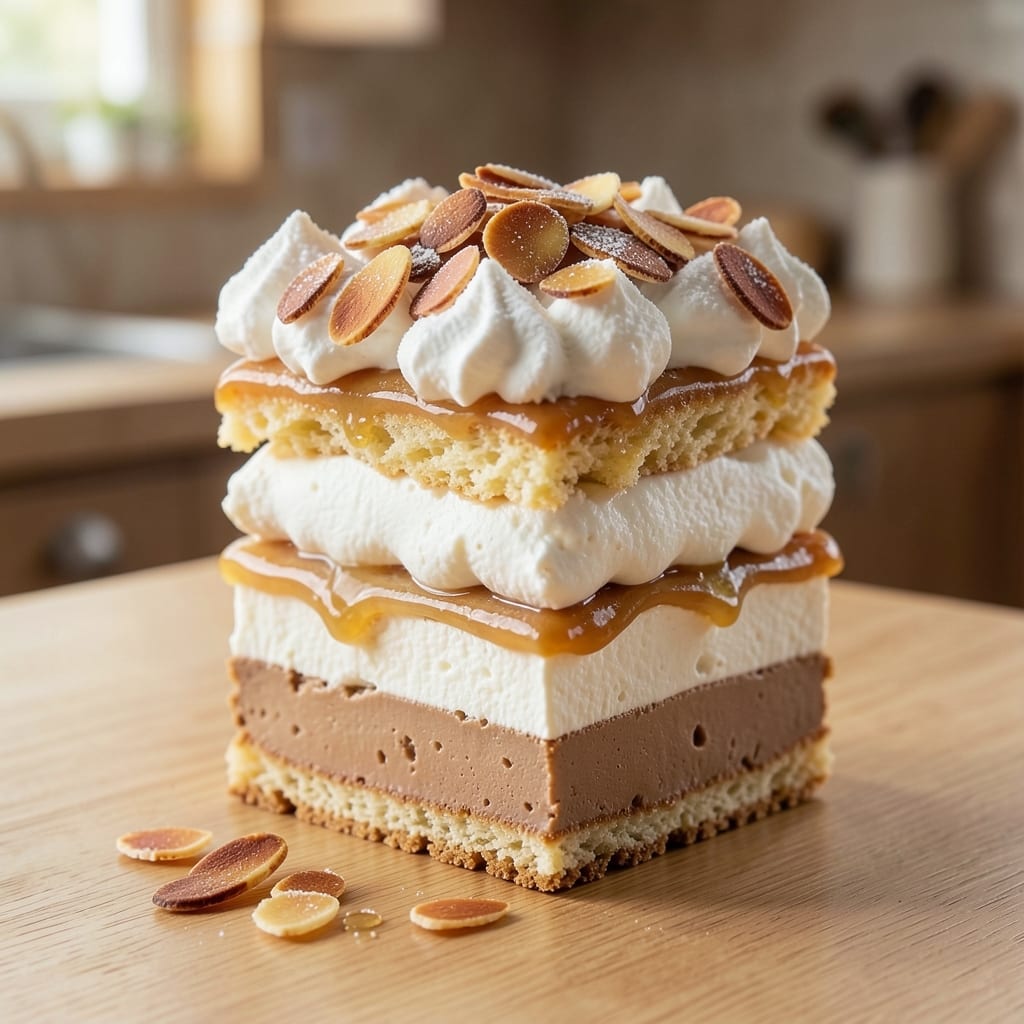
This almond dacquoise cake recipe delivers the perfect balance of crisp meringue layers and velvety almond cream—elegant enough for special occasions yet simple enough for weeknight baking. The French meringue method creates those signature light-as-air towers, while toasted almonds add nutty depth that makes every bite irresistible. I've perfected this recipe over years of testing, ensuring the meringue stays crisp without turning rubbery, and the almond filling stays perfectly smooth.
The secret to success lies in precise technique: whipping egg whites to stiff peaks, gently folding in toasted almonds, and baking at just the right temperature to achieve that delicate golden crust. This version includes a modern twist with vanilla-infused almond cream, though you can easily customize it with citrus zest or chocolate shavings for extra flair. The result is a cake that's both visually stunning and deliciously light—ideal for celebrations or when you want to impress without spending hours in the kitchen.
What makes this recipe stand out is its foolproof assembly process: bake the meringue layers first, then fill and chill before adding the final meringue top. The layers stay crisp even after assembly, and the almond cream remains lusciously smooth. Each slice reveals those signature swirls of toasted almonds, creating a texture that's both elegant and satisfying. This is the kind of dessert that makes you look like a pastry chef, even if you're just starting out.
Whether you're serving it at a dinner party or simply treating yourself, this almond dacquoise cake delivers restaurant-quality results with minimal fuss. The recipe scales easily, so you can make it in individual portions or a full sheet pan. Let's get started on creating your own light-as-air masterpiece!
Ingredients for almond dacquoise cake
Eight ingredients transform into elegant, light-as-air meringue towers with nutty swirls inside.
| Ingredient | Amount | Notes |
|---|---|---|
| Large Egg Whites 🥚 | 5 whole | Room temperature, no yolks |
| Granulated Sugar 🍚 | 1 ½ cups | Superfine preferred for smoothness |
| Unsalted Butter 🧈 | ½ cup | Cold, cubed for meringue |
| Vanilla Extract 🌿 | 1 tsp | Pure vanilla for best flavor |
| Light Brown Sugar 🍚 | ½ cup | Packed, for almond cream |
| Toasted Sliced Almonds 🥜 | 1 ½ cups | Skin-on, finely chopped |
| All-Purpose Flour 🌾 | ¼ cup | Sifted, for stability |
| Salt 🧂 | ¼ tsp | Fine sea salt |
| Heavy Cream 🥛 | ½ cup | Cold, for almond cream |
| Lemon Zest 🍋 | 1 tsp | Fresh, for brightness |
| Cornstarch 🌾 | 1 tbsp | For smooth filling |
The egg whites are non-negotiable—room temperature is key for stable meringue. Grab the freshest you can find, ideally from the back of the fridge where they've been stored consistently. For toasted almonds, Trader Joe's or bulk bins at natural markets give the best flavor. Toast them yourself (350°F for 8-10 minutes) for maximum aroma—store-bought versions often lack that fresh-from-the-oven punch. The butter should be cold and cubed when you add it to the meringue, or you'll end up with flat layers instead of those signature towers.
No vanilla extract? Vanilla bean paste works in a pinch, but trust me on the pure stuff. Short on almonds? Pecans or hazelnuts change the flavor but keep the texture. For the almond cream, if you're feeling fancy, swap the lemon zest for orange zest or cardamom. The cornstarch is optional but helps prevent that dreaded grainy texture in the filling. And if you're making this ahead, toast the almonds the day before—they'll keep their flavor longer. The meringue layers? Bake them and freeze for up to 2 weeks—just bring to room temp before assembling.
This cake is all about timing—assemble it cold for crisp layers. The meringue tops can be baked the same day or up to 1 day ahead, but keep them in an airtight container. Store the filled cake in the fridge for up to 3 days—it actually tastes better after chilling. For serving, let it sit at room temp for 30 minutes first, or the meringue will get soggy. I always slice mine with a serrated knife dipped in hot water—clean cuts every time. And if you're making this for a crowd? Double the recipe, but use two 8-inch pans instead of one 10-inch for even baking.
Why You'll Love This Recipe
- No-Fuss Layers: I swear by this recipe when I’m short on time—just whip those egg whites until stiff, fold in almonds, and bake. No mixer? Hand beaters work just fine. The layers stack like magic with minimal effort.
- Crisp-Meets-Creamy Magic: That first bite? Crunchy almond meringue on the outside, tender butter-vanilla center—it’s the kind of contrast that makes you pause mid-slice. The brown sugar caramelizes just enough to tie everything together.
- Showstopper for Any Event: Between us, this cake looks way fancier than it is. Serve it at a brunch with fresh berries, or slice it for a dessert spread—it’s elegant enough for company but simple enough for a Tuesday. (Yes, even on a Tuesday night.)
- Budget-Friendly Luxury: You’d never guess how affordable this is—just a handful of pantry staples, no specialty ingredients. The butter and vanilla make it feel indulgent, but the egg whites stretch the cost without sacrificing texture. Leftovers? Even better the next day.
Step-by-step instructions for almond dacquoise cake
Here's how to build those signature meringue towers with crispy almond layers—light, airy, and perfectly balanced.
Prepare the Almond Cream Filling
In a medium saucepan, combine the 0.5 cup heavy cream, 0.5 cup light brown sugar, 1 tbsp cornstarch, 1 tsp vanilla extract, and 1 tsp lemon zest. Whisk until the cornstarch dissolves completely—this prevents lumps that can ruin your filling.
Cook over medium heat, stirring constantly with a wooden spoon, until the mixture thickens to a pudding-like consistency. It should coat the back of the spoon and leave a clean trail when you run your finger through it. Remove from heat immediately and let cool to room temperature. This filling needs to be completely set before assembly—if it's too warm, it'll melt your meringue layers.
Toast and Chop the Almonds
Spread the 1.5 cups toasted sliced almonds on a baking sheet and toast in a 350°F oven for 8-10 minutes until fragrant and golden. Watch them closely—they burn quickly. Let cool completely before chopping finely with a sharp knife or food processor. The almonds should be small enough to sprinkle evenly between meringue layers.
I like to toast them fresh for maximum flavor, but if using store-bought toasted almonds, give them a quick pulse in the food processor to ensure even distribution. The nutty aroma should fill your kitchen—this is where the dacquoise gets its signature character.
Whip the Meringue Base
In a clean, grease-free mixing bowl, beat the 5 whole large egg whites with the 0.25 tsp salt on medium speed until soft peaks form. Gradually add the 1.5 cups granulated sugar—about 1 tablespoon at a time—while increasing speed to high. This slow addition prevents grainy meringue.
Continue beating until the meringue is glossy and holds stiff peaks that stand straight up when you lift the beaters. The bowl should feel cool to the touch—this indicates proper hydration. If the meringue looks slightly curdled, don't worry; it'll smooth out as you continue beating for another 2-3 minutes.
Assemble the Dacquoise Layers
Line three 6-inch round cake pans with parchment paper, leaving overhang for easy removal. Using a spoon, pipe or spread half of the meringue into the first pan, creating an even layer about ½-inch thick. Immediately sprinkle half of the chopped almonds evenly over the meringue, pressing down gently with the back of a spoon.
Repeat with the second pan, then spread the cooled almond cream filling over the first layer in the third pan. Top with remaining meringue and almonds. The key here is speed—work quickly to prevent the meringue from absorbing moisture from the air. Let the assembled cakes rest at room temperature for 1 hour before baking.
Bake to Golden Perfection
Preheat your oven to 325°F. Bake the first layer for 15 minutes, then rotate the pans and bake another 10-12 minutes until the meringue is golden brown and crisp. The edges should pull away slightly from the pan, and the tops should look dry to the touch.
Remove from oven and let cool completely before carefully transferring to a wire rack. Repeat with the remaining layers. For the final assembly, place one baked layer on a serving plate, spread with almond cream filling, then top with the second layer. The contrast of crisp meringue and smooth almond cream is what makes this cake truly special.
Pro Tips For Making Almond Dacquoise Cake
- Whip Egg Whites Cold: Start your egg whites straight from the fridge—they’ll whip faster and hold their shape better. I used to bring them to room temp first, and my meringue would collapse like a sad soufflé every time. Cold whites = stiffer peaks, which means your dacquoise layers won’t sink.
- Toast Almonds First: Lightly toast your almonds in a dry pan until they smell like Christmas morning—about 3-4 minutes. Untosted almonds make the cake taste raw and dull. Plus, the extra crunch in the first layer keeps the whole thing from feeling too dense.
- Don’t Overmix the Meringue: Stop folding the meringue into the sugar-almond mixture when it’s just combined—no streaks, no dry bits. Overmixing deflates the egg whites and turns your airy layers into a compacted brick. Think "marry, don’t murder" the meringue.
- Chill Between Layers: Pop the first layer in the fridge for 10 minutes before adding the second—even if you’re eager to stack it. Warm layers melt the butter in the filling too fast, and your cake ends up greasy instead of crisp. Patience here = clean slices, not a sticky mess.
Essential equipment for this recipe
Meringue Whip Essentials
Your stand mixer is the MVP for this recipe—I swear by my KitchenAid Artisan Series with the whisk attachment for stable, even meringue. For smaller batches, a hand mixer works, but switch to a stand mixer if you're scaling up to 3 layers. The bowl must be completely grease-free—even a trace of oil prevents stiff peaks. I like to wash mine with hot, soapy water and rinse thoroughly, then dry with a clean towel before starting. 🥚
Precision Baking Tools
An oven thermometer is non-negotiable—home ovens fluctuate wildly. I use the Thermoworks Oven Thermometer to confirm 325°F accuracy. For even baking, invest in 6-inch round cake pans with removable bottoms (like Wilton Perfect Results Pans) to prevent sticking. Line them with parchment paper for easy release and crisp edges. A parchment circle cut to fit the pan diameter works best.
Almond Handling Gear
Toasted almonds need proper prep: A food processor or sharp chef's knife for chopping ensures even distribution. I toast mine in a baking sheet on the middle rack for consistent heat. For storage, transfer chopped almonds to an airtight container—they lose flavor within 3 days. A fine-mesh sieve helps sift the ¼ cup flour evenly over meringue layers for stability. 🥜
Assembly Must-Haves
Use a piping bag with a large round tip (like Wilton 1M tip) for smooth meringue layers, or a spatula for spreading. A bench scraper helps create clean edges between layers. For final assembly, a long serrated knife (like Mercer Culinary Genesis) ensures clean slices. Keep a cooling rack handy—meringue needs airflow to set properly.
Temperature Control
Your instant-read thermometer (I use Thermoworks Thermapen) checks internal meringue temp—it should reach 140°F before removing from oven. For the almond cream, a candy thermometer ensures proper thickening at 235°F. If you don't have one, test consistency by coating the back of a spoon with the mixture—it should hold its shape. ⏰
Nutrition facts
Frequently asked questions
Why does my meringue turn out flat instead of forming towers?
Flat meringue usually means the egg whites weren't whipped enough or the butter was too warm when folded in. For towers, whip egg whites to stiff peaks (they should stand straight up) and use cold cubed butter—never melted. Also ensure your bowl is completely grease-free, as even traces of oil prevent proper structure.
Can I make this cake without a stand mixer?
Yes! Use a hand mixer with a whisk attachment, but be prepared for more arm work. Whip egg whites on high speed for 8-10 minutes until glossy and stiff. For the almond cream, a double boiler works perfectly—just stir constantly to avoid scorching. The texture will be just as light if you follow the same timing.
How do I prevent the almond cream from being grainy?
Graininess happens when cornstarch doesn't dissolve properly. Whisk the filling mixture thoroughly before cooking, and stir constantly on medium heat until it thickens to pudding consistency. Let it cool completely before using—warm filling will melt the meringue layers. For extra smoothness, strain through a fine-mesh sieve before assembling.
Can I substitute almonds for another nut?
You can try hazelnuts or pecans, but the flavor will change. Toast and chop them finely for best results. Avoid walnuts—they're too soft and can make the texture uneven. If you're allergic to tree nuts, omit them entirely and increase flour to ¼ cup for structure, though the classic flavor will be lost.
How far ahead can I assemble this cake?
Baked meringue layers can be stored in an airtight container at room temp for 2 weeks, or frozen for 1 month. Assemble the cake up to 1 day ahead and refrigerate—it actually tastes better after chilling! Let it sit at room temp for 30 minutes before serving to prevent soggy meringue.