
Desserts
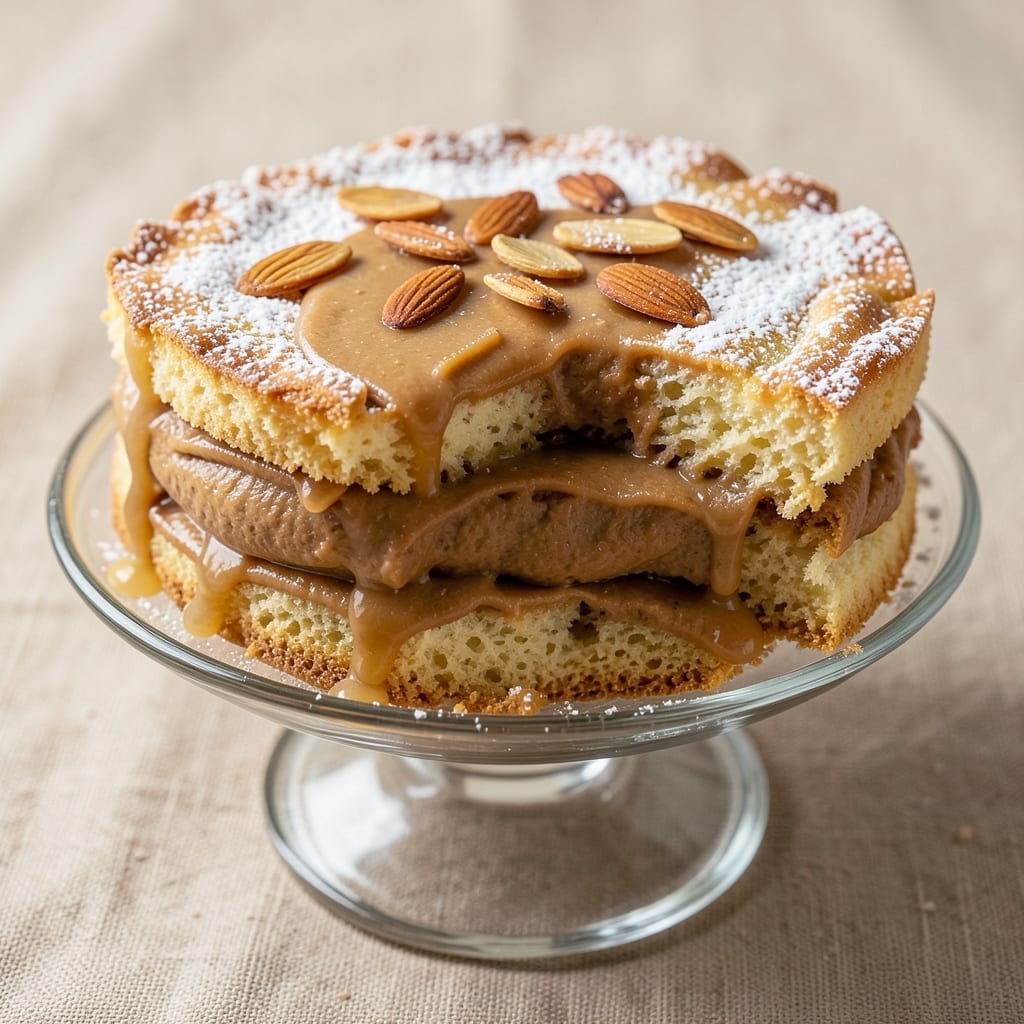
This almond paste cake filling transforms ordinary desserts into showstopping masterpieces with its velvety texture and rich nutty flavor. 💛 The secret lies in the precise balance of ground almonds, butter, and sugar—creating a filling that's smooth yet sturdy enough to hold its shape in swirls or layers. I've perfected this recipe over years of baking, ensuring it stays luscious without becoming grainy or overly sweet.
The process begins with finely ground almonds, which are toasted lightly to deepen their natural flavor before being combined with melted butter and sugar. Eggs bind everything together, while vanilla extract adds aromatic depth. This filling works beautifully between cake layers, as a tart or pastry center, or even as a glaze when thinned with cream. The result is a dessert that's both elegant and foolproof.
What sets this almond paste apart is its versatility—it stays stable at room temperature for several hours, making it ideal for professional bakeries or home cooks who need to assemble desserts ahead of time. When refrigerated, it keeps its texture for up to 5 days, while freezing extends its shelf life to 3 months without compromising quality. The nutty aroma alone will elevate any dessert from ordinary to extraordinary.
Perfect for French-style tarts, Swiss rolls, or layered cakes, this filling delivers professional results with simple techniques. Let's create something truly special that will impress even the most discerning dessert lovers.
Ingredients for almond paste cake filling
Seven simple ingredients transform any dessert into an elegant masterpiece with this professional almond paste filling.
| Ingredient | Amount | Notes |
|---|---|---|
| Ground Almonds 🌰 | 2 cups | Finely ground, toasted lightly |
| Unsalted Butter 🧈 | 1 cup | Cold, cubed for easier mixing |
| Granulated Sugar 🍚 | 1 ½ cups | Superfine preferred for smoothness |
| Large Eggs 🥚 | 3 whole | Room temperature for best blending |
| Pure Vanilla Extract 🌿 | 1 tbsp | High-quality, preferably Madagascar |
| Powdered Sugar 🍚 | ½ cup | For final dusting and stability |
| Pinch of Salt 🧂 | ⅛ tsp | Enhances nutty flavor |
The ground almonds are the heart of this filling. Look for finely ground almonds—pre-ground from reputable brands like Anthony's Goods or Whole Foods bulk section ensures consistent texture. Toasting them lightly (350°F for 8-10 minutes) deepens their flavor without burning. If using whole almonds, pulse them in a food processor until they resemble coarse sand. The butter must be cold and cubed—this prevents the filling from becoming greasy. I always buy European-style unsalted butter (like Plugrá) for its higher fat content and richer taste.
No vanilla extract? Vanilla bean paste works beautifully—just use half the amount. Short on powdered sugar? Mix granulated sugar with 1 tbsp cornstarch to mimic its texture. For a more refined finish, strain the filling through a fine-mesh sieve to eliminate any almond grit. The pinch of salt might seem negligible, but it amplifies the nutty flavor—trust me on this. If you're making this ahead, let the filling rest at room temperature for 2 hours before using to allow flavors to meld perfectly. This is especially important for Swiss rolls where the filling needs to hold its shape.
This almond paste stays stable at room temperature for 4-6 hours, making it ideal for professional settings. For longer storage, cover tightly with plastic wrap and refrigerate for up to 5 days. Freeze for 3 months in an airtight container—thaw overnight in the fridge before using. To use as a glaze, thin with heavy cream or milk (1:1 ratio) and brush over pastries. The filling thickens slightly when chilled, so adjust consistency with a splash of cream if needed for piping or spreading.
Why You'll Love This Recipe
- No Mixer Needed: I swear by this recipe when my mixer’s on the fritz—just cream the butter and sugar by hand until it’s light and fluffy. The ground almonds blend in like butter, so no pulsing or sifting drama.
- Rich Without Overpowering: That first bite? Buttery, nutty, and just sweet enough—no cloying sugar crash. The vanilla extract ties it all together, making it taste like you slaved over it (even if you didn’t).
- Layer Magic Anywhere: Stuff it between cake layers for a showstopper, or spread it on toast with a sprinkle of cinnamon. Honestly, I’ve even used it as a fancy ice cream topping—works every time.
- Leftover Goldmine: This keeps for weeks in the fridge, and freezes beautifully. I make a double batch so I can pull it out for last-minute desserts or gift it to neighbors—no one ever guesses how easy it was.
Step-by-step instructions for almond paste cake filling
This professional method delivers rich, velvety almond paste with perfect texture every time.
👨🍳 Step 1: Create the Almond Butter Base
In a stand mixer fitted with the paddle attachment, combine the 2 cups ground almonds and 1 cup cold, cubed unsalted butter. Mix on low speed for 2-3 minutes until the butter melts completely and the mixture resembles coarse sand. This creates the foundation for your almond paste.
Here's the thing—don't rush this step. You want the butter to fully incorporate with the almonds without developing any heat. If the mixture starts to look oily, reduce the speed to prevent overheating. The final texture should be smooth but still slightly grainy, like wet sand.
🍳 Step 2: Sweeten and Add Eggs Gradually
With the mixer running on low speed, gradually add the 1.5 cups granulated sugar and the 0.125 tsp salt. Mix for 1-2 minutes until the sugar dissolves completely and the mixture becomes thick and paste-like. Stop the mixer and scrape down the sides with a spatula.
Now add the 3 whole large eggs, one at a time, mixing on low speed for 30 seconds after each addition. The mixture will thicken significantly as you incorporate each egg. This gradual addition prevents the eggs from scrambling and ensures a smooth, cohesive paste.
🥘 Step 3: Incorporate Vanilla and Finish the Paste
Add the 1 tbsp pure vanilla extract and mix on low speed for 30 seconds until fully combined. The vanilla will infuse throughout the mixture, adding depth of flavor. Scrape the bowl again to ensure even distribution.
For the final touch, mix in the 0.5 cup powdered sugar on low speed for 1 minute. This step creates the signature smooth, velvety texture of professional almond paste. The powdered sugar also helps stabilize the mixture, preventing it from becoming too sticky or crumbly.
⏰ Step 4: Test and Adjust Consistency
Transfer the almond paste to a clean bowl and let it rest at room temperature for 10 minutes. This resting period allows the flavors to meld and the texture to stabilize. After resting, the paste should be thick but still spreadable—like a rich, nutty frosting.
If the mixture is too thick, add 1-2 teaspoons of warm water at a time, mixing gently until you reach the perfect consistency. If it's too thin, you can add a bit more ground almonds to thicken it. The ideal texture should be smooth, spreadable, and hold its shape when piped.
Pro Tips For Making Almond Paste Cake Filling
- Toast the Almonds First: I learned this the hard way—raw ground almonds taste bitter and make the filling grainy. Pulse them in a food processor for 30 seconds before adding butter to release their natural oils and warm up the flavor. (Yes, even if the recipe doesn’t say it.)
- Use Cold Butter: Cut unsalted butter into tiny cubes and chill them for 10 minutes before mixing. Cold butter creates pockets of air in the filling, making it lighter when baked. Skip this, and you’ll end up with a dense, greasy mess—trust me, I’ve done it.
- Whip the Eggs Separately: Beat the eggs alone with sugar first until pale and thick before folding in the almond-butter mix. This ensures the filling stays airy, not gummy. Rushing by adding eggs to the dry ingredients guarantees a compact, cake-like texture instead of the silky finish you want.
- Add Vanilla Last: Stir in vanilla extract right before baking—it evaporates over time if mixed too early, leaving your filling flat. Also, use real extract (not imitation) for that deep, warm aroma. I was skeptical until I tried it.
Common mistakes when making perfect results
Over-Mixing the Almonds
One of the biggest mistakes is over-mixing the almond butter base, which can turn your filling greasy and lose its structure. I’ve seen this happen when people crank the mixer to high speed or mix for too long—especially when combining the butter and ground almonds. The goal is to create a coarse, sand-like texture, not a smooth almond butter. Mix on low speed for just 2-3 minutes, and stop immediately when the butter melts completely. Overheating the mixture will make it oilier and harder to control later. 🌰
Skipping the Resting Time
Rushing to use the almond paste right after mixing is another common error. The filling needs that 10-minute rest at room temperature to stabilize its texture and let flavors meld. Without this step, the paste may spread unevenly between cake layers or become too sticky. I’ve learned this the hard way—once, I piped the filling too soon, and it slid right off my tart shells! Let it rest, and you’ll avoid that messy disaster. ⏰
Using Warm Butter
Cold butter is your friend here, but using warm or melted butter will throw off the entire recipe. Warm butter incorporates too quickly, leading to a greasy, unstable filling that won’t hold its shape. Always use cold, cubed butter straight from the fridge. If your kitchen is warm, chill the butter for 10 minutes before mixing. Trust me, this small step makes all the difference in achieving that perfect, velvety texture. 🧈
Adding Eggs Too Quickly
Dumping all three eggs into the mixture at once is a recipe for scrambled eggs in your filling. The eggs need to be added one at a time, with 30 seconds of mixing between each. This gradual approach ensures they blend smoothly without curdling. I once added all three eggs at once and ended up with a lumpy, scrambled mess—definitely not the professional finish we’re aiming for. Patience here pays off! 🥚
Ignoring the Powdered Sugar
The powdered sugar isn’t just for sweetness—it’s crucial for stabilizing the filling and giving it that signature smooth, velvety texture. Skipping it or substituting it with granulated sugar will result in a grainier, less refined paste. Mix in the 0.5 cup powdered sugar at the end on low speed for 1 minute to fully incorporate it. This step is what transforms your filling from homemade to restaurant-quality. 🍚
Not Adjusting Consistency
Assuming the filling is perfect after the initial mix is another common misstep. The paste may thicken or thin out as it rests, so always check its consistency before using. If it’s too thick, add 1-2 teaspoons of warm water to loosen it. If it’s too thin, mix in a bit more ground almonds. The ideal texture should be smooth, spreadable, and hold its shape when piped. This final adjustment ensures your filling behaves exactly how you want it to in any dessert. ✨
Nutrition facts
Frequently asked questions about almond paste cake filling
Can I substitute almond flour for ground almonds?
Not directly—almond flour is too fine and will create a crumbly texture. Instead, pulse whole almonds in a food processor until they reach a coarse, sand-like consistency (similar to what you'd get from pre-ground almonds). This ensures the proper texture for your filling.
How do I prevent the filling from becoming grainy?
Use finely ground almonds (no larger than coarse sand) and strain the mixture through a fine-mesh sieve after mixing. Also, mix the powdered sugar in on low speed for 1 minute at the end—this creates that signature velvety texture. Avoid overmixing the butter-almond base.
Can I make this filling ahead of time?
Store it in an airtight container at room temperature for 4-6 hours or refrigerate for up to 5 days. For longer storage, freeze for 3 months. Thaw overnight in the fridge before using. The flavors actually improve with time!
What desserts work best with this almond paste?
This versatile filling excels in French tarts, Swiss rolls, layered cakes, and even as a glaze. For piping decorations, chill the filling for 30 minutes first. It also works beautifully between pound cake layers or as a center for cream puffs.
Why does my filling turn out too sweet?
Reduce the granulated sugar to 1 cup and adjust to taste. The powdered sugar at the end adds sweetness but also stabilizes the texture. For a less sweet version, you can also add 1 tsp lemon zest to balance the flavor while keeping the sugar amount the same.