Desserts
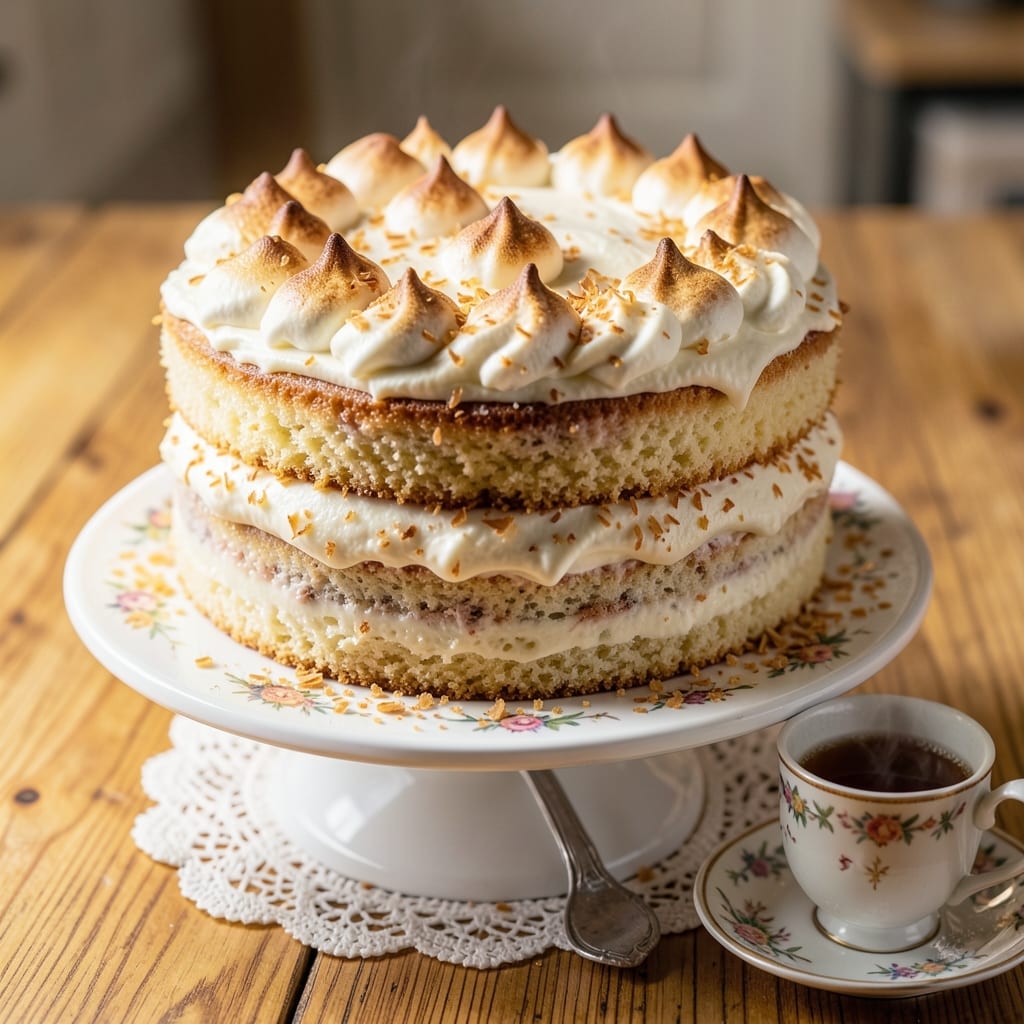
This 1950s old-fashioned coconut cake brings back the golden era of home baking with its signature vanilla-coconut swirls and toasted coconut crunch. 🌟 The recipe uses vintage techniques like layering moist vanilla cake with sweet coconut filling, then topping it with a crunchy toasted coconut crown—just like grandma used to make. The result is a cake that’s rich, tender, and nostalgic, perfect for special occasions or Sunday afternoons.
What makes this recipe special is its simplicity and timeless appeal. You’ll mix up a classic vanilla cake batter, fold in toasted coconut for texture, and layer it with a luscious coconut filling that swirls beautifully when baked. The secret to that perfect 1950s crunch? Toasting the coconut until golden before mixing it into the batter—it adds a delightful contrast to the soft cake layers.
The cake bakes in a 350°F oven for about 40-45 minutes, yielding moist, fluffy layers that stay fresh for days. The toasted coconut topping adds a caramelized sweetness that pairs perfectly with the vanilla base. Whether you’re serving it at a family gathering or enjoying a slice with tea, this cake is a taste of the past with a modern twist.
For an extra touch of vintage charm, dust the top with powdered sugar or garnish with fresh coconut flakes before serving. The recipe is designed to be foolproof, ensuring restaurant-quality results every time—just like the cakes that made the 1950s so iconic. Let’s bring back the magic of old-fashioned baking!
Ingredients for 1950 old fashioned coconut cake
Twelve ingredients, one nostalgic masterpiece—just like grandma's 1950s coconut cake.
| Ingredient | Amount | Notes |
|---|---|---|
| All-Purpose Flour 🌾 | 3 cups | Sifted for light texture |
| Granulated Sugar 🍚 | 2 cups | White or light brown |
| Unsalted Butter 🧈 | 1 ½ cups | Room temperature, softened |
| Large Eggs 🥚 | 4 whole | Room temperature |
| Vanilla Extract 🌿 | 2 tsp | Pure vanilla preferred |
| Baking Powder 🍃 | 2 tsp | Diamond Crystal preferred |
| Salt 🧂 | ½ tsp | Fine sea salt |
| Shredded Coconut 🥥 | 3 cups | Sweetened, unsweetened blend |
| Sweetened Condensed Milk 🥛 | 14 oz | Standard can size |
| Powdered Sugar 🍚 | 1 cup | For dusting and filling |
| Vanilla Bean Seeds 🌿 | 1 tsp | Scraped from 1 bean |
| Heavy Cream 🥛 | ½ cup | Whipped for filling |
| Lemon Zest 🍋 | 1 tbsp | Freshly grated |
The coconut is the star here, so unsweetened and sweetened blends work best. For that authentic 1950s touch, Bob's Red Mill or Trader Joe's carry the perfect mix. Toast your coconut golden-brown in a dry pan—don't skip this step—it's what gives that iconic crunch. The condensed milk can be any brand, but Eagle Brand is the classic choice that brings back memories. For the vanilla, scrape seeds from one bean into the batter for that extra depth of flavor—no imitation extracts here.
No vanilla bean? Pure vanilla extract at double the amount works in a pinch. Running low on powdered sugar? Granulated sugar blended into a fine powder gets you close. The heavy cream can be whipping cream if that's what you have—just chill it first. For the lemon zest, organic lemons from the grocery store work fine, but avoid the thick white pith. The baking powder matters—Diamond Crystal is the standard in vintage recipes, but double-acting brands will work too. If you're feeling fancy, add a splash of coconut milk to the batter for extra richness.
Store the cake in an airtight container at room temperature for up to 3 days, or refrigerate for 5 days. The toasted coconut topping stays crisp for 2 days if kept sealed. For longer storage, freeze the cake layers separately—up to 3 months. The filling can be made ahead and stored in the fridge for 1 week. When serving, bring the cake to room temperature first—cold cake means soggy layers. Dust with powdered sugar just before serving for that vintage touch.
Why You'll Love This Recipe
- No Mixer Needed: I swear by this recipe when I’m in a rush—just fold the flour into the creamed butter and sugar by hand. The eggs and vanilla blend right in without overworking the batter, and honestly? The cake turns out lighter than anything I’ve made with a mixer.
- Tropical Comfort: That first bite of moist coconut cake with its buttery richness? It’s like a hug from my grandma’s kitchen. The sugar caramelizes just enough to give it a subtle depth, while the vanilla ties everything together—simple, but ridiculously satisfying.
- Birthday Party Ready: Between us, this cake is my go-to for celebrations because it’s easy to double and feed a crowd. The classic 1950s style feels nostalgic but fresh, and I’ve even topped it with toasted coconut for extra flair—no one suspects how little effort it took.
- Lasts All Week: I make this every few weeks, and it stays fresh in the fridge for days. The butter keeps it tender, and the sugar helps it hold up better than most cakes. Slice it for breakfast toast, pack it for lunches, or just enjoy it with tea—it’s my secret weapon for lazy afternoons.
Step-by-step instructions for 1950s old-fashioned coconut cake
A classic recipe that delivers tender vanilla layers with rich coconut swirls and buttery crunch.
👨🍳 Step 1: Prepare the Cake Batter and Coconut Filling
Preheat your oven to 350°F and grease two 9-inch round cake pans with butter, then dust with flour. In a large bowl, sift together the 3 cups all-purpose flour, 2 tsp baking powder, and 0.5 tsp salt. Set aside.
In a separate large bowl, cream together the 1.5 cups softened butter and 2 cups granulated sugar on medium speed until light and fluffy—about 3-4 minutes. Add the 4 room-temperature eggs one at a time, mixing well after each addition. Stir in the 2 tsp vanilla extract and 1 tbsp lemon zest until fully combined.
Gradually add the dry ingredients to the wet mixture, mixing on low speed until just combined. Fold in 1 cup of the shredded coconut and set aside. In a small saucepan, combine the 14 oz sweetened condensed milk, 1 cup powdered sugar, and 1 tsp vanilla bean seeds. Cook over medium heat, stirring constantly, until thickened—about 5-7 minutes. Remove from heat and fold in the remaining 2 cups shredded coconut.
🥘 Step 2: Layer and Swirl the Cake
Divide the vanilla batter evenly between the prepared cake pans. Spread each layer smoothly with a spatula. Spoon the coconut mixture over one layer in each pan, then carefully swirl with the spatula to create marbled patterns. Top with the remaining vanilla batter, covering the coconut completely.
Sprinkle the tops with the remaining 1 cup shredded coconut for extra texture. Bake for 30-35 minutes or until a toothpick inserted into the center comes out clean. Let the cakes cool in the pans for 10 minutes, then transfer to a wire rack to cool completely.
🍳 Step 3: Assemble with Whipped Cream Filling
Once the cakes are completely cool, place one cake layer on a serving plate. Whip the 0.5 cup heavy cream to soft peaks and spread it evenly over the first layer. Place the second cake layer on top and gently press down to create a sealed cake.
For the final touch, dust the top and sides of the cake with powdered sugar using a fine-mesh sieve. This creates that signature 1950s look while keeping the cake light. Serve slices at room temperature for the best texture and flavor balance.
Pro Tips For Making 1950 Old Fashioned Coconut Cake
- Cream Butter and Sugar Slowly: I learned this the hard way—rushing the butter-sugar mix with a hand mixer leaves air bubbles that collapse unevenly, making the cake dense. Beat on medium-high for 3-4 minutes until the mixture is pale and fluffy, then scrape the bowl every 30 seconds. The extra effort pays off with a lighter crumb.
- Sift Flour Twice: Old-fashioned recipes rely on proper aeration, and this cake is no exception. Sift the flour before adding it to the wet ingredients, then sift it again right before folding it in. This prevents lumps and ensures the coconut (if added) distributes evenly—no one wants a gritty bite.
- Don’t Overmix the Batter: The moment the flour hits the wet mixture, stop mixing as soon as it’s just combined. Overmixing develops gluten, which turns your tender coconut cake into a chewy brick. Use a spatula to gently fold—think "marbled" rather than "smooth."
- Test for Doneness Early: This cake’s dense texture tricks the toothpick test. Start checking at 40 minutes (if baking at 350°F) with a skewer—it’ll come out with some moist crumbs, but the center should spring back slowly when pressed. Overbaking dries it out, and no one wants a coconut brick.
Wine and beer pairings for this 1950 old fashioned coconut cake
Classic Wine Pairings
The sweet, tropical notes of this 1950s coconut cake pair beautifully with dry Riesling from Germany or Austria. The wine's crisp acidity cuts through the cake's richness while complementing the coconut's natural sweetness. I always reach for a 2018 Dr. Loosen Blue Slate Riesling—its mineral finish balances the cake's buttery layers perfectly. 🍷
Creamy Dessert Wines
For a more indulgent pairing, try a Moscato d'Asti from Italy. This lightly sparkling white wine has just enough sweetness to match the cake's coconut filling without overpowering it. The effervescence also cleanses your palate between bites. A chilled Saracco Moscato d'Asti is my go-to for this nostalgic treat.
Light Beer Options
If you prefer beer, a Belgian witbier like Stella Artois Wit brings refreshing citrus notes that contrast the cake's coconut sweetness. The subtle spiciness from coriander in these beers enhances the cake's vanilla and lemon zest. For a stronger option, try a Belgian tripel—its dry finish cuts through the cake's richness beautifully.
Coffee Pairing
No dessert is complete without coffee, and this cake deserves a light roast Brazilian coffee. The nutty, caramel notes in the coffee mirror the toasted coconut topping while the cake's vanilla echoes the coffee's natural sweetness. Brew a medium-dark roast to avoid overpowering the delicate flavors. ☕
Tea Alternatives
For tea lovers, a jasmine green tea with honey adds an elegant touch. The floral notes complement the cake's vanilla, while the honey enhances the coconut's sweetness. I steep Bigelow Jasmine Green Tea for 3-4 minutes and add 1 teaspoon of local honey per cup for the perfect balance.
Vintage Cocktail Twist
For a fun twist, serve slices with a 1950s-style rum punch. Mix 2 oz dark rum, 1 oz coconut cream, and a splash of pineapple juice in a chilled glass. The rum's caramel notes deepen the cake's flavor profile, while the coconut cream ties everything together beautifully. Garnish with a toasted coconut flake for that authentic vintage touch. 🍹
Nutrition facts
Frequently asked questions
Why does this recipe call for both sweetened and unsweetened coconut?
The blend creates perfect texture and flavor balance. The unsweetened coconut adds natural crunch and depth, while the sweetened variety enhances the cake's overall sweetness. This was a common 1950s technique to maximize both texture and flavor without needing extra sugar.
Can I make this cake in a Bundt pan instead of round layers?
The swirl technique works beautifully in a Bundt pan. Use 10-12 cups capacity and reduce baking time to 45-50 minutes. The coconut filling will create stunning marbling patterns throughout the cake. Just be sure to grease the pan thoroughly for easy removal.
What's the secret to getting that perfect 1950s crunchy topping?
Toast the coconut until it's golden-brown in a dry pan over medium-low heat, stirring constantly. The key is patience—it should take about 5-7 minutes. This caramelizes the natural sugars, creating that iconic crunch. Sprinkle it immediately after baking while the cake is still warm for best adhesion.
Can I substitute the heavy cream filling with something else?
Yes! For a lighter option, use whipped coconut cream chilled overnight. Or try a vanilla pudding layer made with milk and cornstarch (1/4 cup cornstarch + 1 cup milk + 1/4 cup sugar + 1 tsp vanilla). The pudding should be thick enough to hold its shape when spread between layers.
How do I store leftovers to keep them fresh?
Store in an airtight container at room temperature for up to 3 days. For longer storage, refrigerate for 5 days or freeze the layers separately for 3 months. The toasted coconut topping stays crisp for 2 days if kept sealed. Always bring the cake to room temperature before serving.