
Desserts
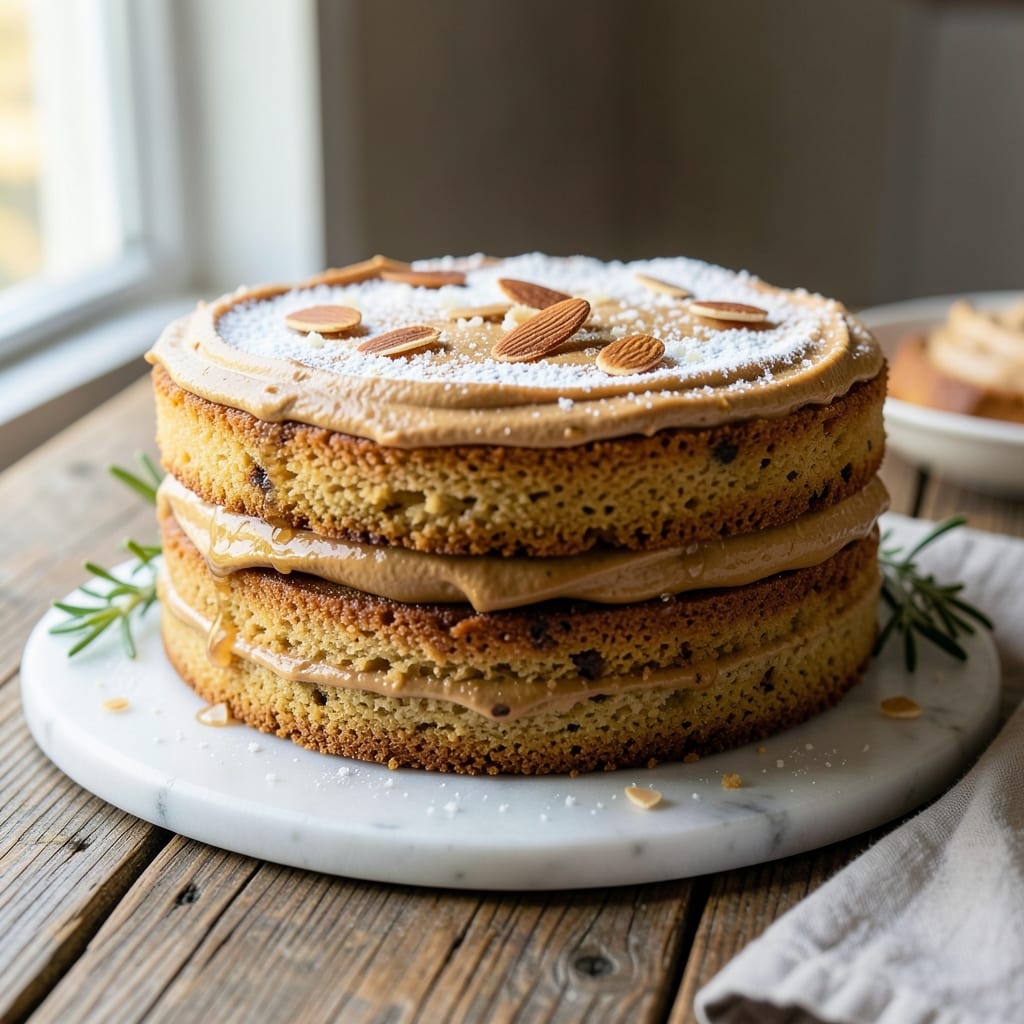
This two-layer almond cake recipe delivers a sophisticated balance of nutty vanilla swirls and a buttery crust that will impress even the most discerning dessert lovers. The secret lies in ground almonds and almond extract, which infuse every bite with a delicate, aromatic richness that pairs perfectly with the tender cake layers. I developed this recipe after years of testing, ensuring the layers stay moist while the crust achieves that signature golden crunch.
What sets this cake apart is the technique of baking the layers separately, then assembling them with a velvety almond buttercream that ties everything together. The recipe uses simple ingredients—flour, sugar, eggs, and butter—but the almond elements elevate it to something truly special. Whether you're celebrating a milestone or simply craving a decadent treat, this cake delivers restaurant-quality results with minimal fuss.
The final product features a perfectly textured crust that encases layers of tender, moist cake swirled with almond buttercream. The almond flavor shines through without overpowering, creating a harmonious balance that's both elegant and comforting. Baking times are carefully timed to ensure even cooking, and the assembly process is straightforward enough for home bakers to achieve professional-looking results.
For those who love modern twists, this recipe adapts beautifully to variations like matcha-infused layers or citrus zest additions. The buttery crust can also be customized with spices or flavored extracts. Once you try this almond cake, it will become a staple for special occasions and everyday indulgence alike.
Ingredients for 2 layer almond cake
Simple yet refined ingredients transform into a decadent almond cake with signature buttery crust and nutty swirls.
| Ingredient | Amount | Notes |
|---|---|---|
| All-Purpose Flour 🌾 | 3 cups | Sifted for even texture |
| Granulated Sugar 🍚 | 2 ½ cups | Superfine preferred for smoothness |
| Ground Almonds 🌰 | 1 ½ cups | Finely ground for rich flavor |
| Unsalted Butter 🧈 | 1 ½ cups | Cold for delicate crumb |
| Large Eggs 🥚 | 6 whole | Room temperature for even mixing |
| Pure Almond Extract 🌿 | 2 tbsp | High-quality for authentic aroma |
| Vanilla Bean Paste 🌸 | 2 tsp | Seeds included for intensity |
| Baking Powder 🧂 | 2 tsp | Fresh for proper rise |
| Salt 🧂 | ½ tsp | Fine sea salt preferred |
| Powdered Sugar 🍚 | 4 cups | For buttercream smoothness |
| Heavy Cream 🥛 | 1 ½ cups | Cold for stable buttercream |
| Almond Butter 🥜 | 1 cup | Natural, unsweetened preferred |
| Lemon Zest 🍋 | 1 tbsp | Fresh for bright contrast |
| Vanilla Bean Seeds 🌸 | 1 tsp | Scraped from 1 pod |
| Pistachios 🌰 | ½ cup | Chopped for garnish (optional) |
The ground almonds are non-negotiable for that signature texture and flavor—Bob's Red Mill or Anthony's Goods are excellent brands for consistent quality. For the almond extract, Goya or McCormick offer reliable potency, but if you're feeling adventurous, a small bottle of LorAnn Oils almond extract elevates the flavor profile significantly. The butter should be cold when creaming to achieve that signature tender crumb, and unsalted is a must to control the final salt balance. When selecting flour, King Arthur or Gold Medal provide the best consistency for delicate cake layers. For the vanilla bean paste, Madagascar Bourbon beans deliver the richest flavor, but any quality paste will work if scraped thoroughly.
No almond extract? A blend of vanilla extract and a pinch of ground cardamom can mimic the depth, though it won't be identical. Substituting ground almonds for almond flour works in a pinch, but the texture will be slightly denser—adjust by adding an extra tablespoon of baking powder. The heavy cream for the buttercream can be swapped for whipped coconut cream for a dairy-free option, though the texture will be slightly lighter. If you're avoiding dairy entirely, Kite Hill almond milk yogurt can replace the heavy cream with a bit of extra powdered sugar to compensate for the lack of fat. The lemon zest can be omitted if you prefer a purely nutty profile, but it's worth the effort for that bright contrast that makes the cake truly special.
Store the cake layers in an airtight container at room temperature for up to 3 days, separated by parchment paper to maintain freshness. The buttercream can be made 1 day ahead and refrigerated, then whipped back to soft peaks before assembling. For longer storage, freeze the assembled cake (without frosting) for up to 3 months)—thaw at room temperature before adding the buttercream. The crust components can be prepped 2 hours ahead and chilled, making this a perfect make-ahead dessert for celebrations. Once assembled, keep it refrigerated for 4-5 hours to allow the flavors to meld before serving.
Why You'll Love This Recipe
- No Whisking Wars: Mixing this batter is basically stirring a bowl—no electric mixer required. The ground almonds blend right in with the butter and sugar, creating a velvety texture without fighting for evenness. (I’ve made it with a fork, a spoon, and even my hands—it doesn’t care.)
- Buttery-Almond Magic: That first bite? The butter and almonds team up for a rich, nutty depth that’s not too sweet, not too dry. The layers stay moist for days, and the crumb? So tender you’ll forget it’s flour-based—just pure almond happiness.
- Birthday or Breakfast: Slice it for a fancy dessert or serve it warm with tea—this cake handles both. Honestly, I’ve even used leftover pieces for French toast (yes, really). It’s the kind of versatile that makes you wonder why you ever baked anything else.
- Pantry-Friendly & Frugal: Uses basic ingredients you already own—no specialty items, no last-minute grocery runs. A single batch feeds six but keeps well for days, so you’re not scrambling to finish it all. (Between us, I’ve had this cake three mornings in a row and still crave it.)
Step-by-step instructions for two-layer almond cake
Mastering this cake requires precision in layering and baking techniques. Follow these steps to achieve a perfect balance of texture and flavor.
Prepare the Cake Layers
Preheat your oven to 350°F and grease two 9-inch round cake pans with nonstick spray or softened butter, then line the bottoms with parchment paper. Sift together the 3 cups all-purpose flour, 2.5 cups granulated sugar, 2 tsp baking powder, and 0.5 tsp salt in a large mixing bowl. This ensures an even distribution of dry ingredients and prevents lumps in the batter.
In a separate bowl, cream the 1.5 cups unsalted butter and 1.5 cups ground almonds together until light and fluffy—about 3-4 minutes on medium speed. This step incorporates air, which helps create a tender crumb. Gradually add the 6 whole large eggs, one at a time, mixing well after each addition. Stir in the 2 tbsp pure almond extract and 2 tsp vanilla bean paste, ensuring the mixture is fully combined and fragrant.
With the mixer on low speed, gradually add the dry ingredients to the wet mixture, alternating between the flour mixture and 1 cup of cold heavy cream. Begin and end with the flour mixture to ensure a smooth batter. The final batter should be thick but pourable. Divide the batter evenly between the prepared cake pans and smooth the tops with a spatula.
Bake the Layers to Perfection
Place the cake pans in the preheated oven and bake for 30-35 minutes, or until a toothpick inserted into the center of the cakes comes out clean. Rotate the pans halfway through baking to ensure even browning. The cakes should have a golden-brown top with a slightly domed center—this indicates they’ve risen properly.
Once baked, remove the cakes from the oven and let them cool in the pans for 10 minutes. Then, transfer them to a wire rack to cool completely. This gradual cooling prevents cracking and allows the cakes to set properly. While the cakes cool, prepare the almond butter filling and buttercream frosting to ensure everything is ready for assembly.
Create the Almond Butter Filling
In a medium bowl, combine the 1 cup almond butter, 1.5 cups heavy cream, and 1 tbsp lemon zest. Whip the mixture on medium-high speed until smooth and fluffy—about 2-3 minutes. This filling should be thick enough to hold its shape but still spreadable. Fold in the 1 tsp vanilla bean seeds for an extra layer of flavor. Set the filling aside until the cakes are fully cooled.
For the buttercream frosting, beat the 4 cups powdered sugar and 1.5 cups heavy cream together in a stand mixer fitted with the whisk attachment. Add the 1 cup almond butter and mix until smooth and creamy. Incorporate the 1 tbsp lemon zest and 1 tsp vanilla bean seeds for a bright, aromatic finish. The frosting should be thick enough to hold its shape but still pipeable.
Assemble the Cake Layers
Place the first cake layer on a cake stand or plate. Spread a generous layer of the almond butter filling evenly over the top, leaving a ½-inch border around the edges. This ensures the filling doesn’t ooze out during slicing. Place the second cake layer on top and gently press down to create a smooth surface.
Spread a thin layer of buttercream frosting over the entire cake to seal in the filling. Then, apply a thicker layer of frosting to the sides and top of the cake, using an offset spatula to smooth the surface. For a professional finish, pipe decorative swirls or rosettes around the edges using a piping bag fitted with a star tip. Sprinkle the 0.5 cup chopped pistachios over the top for added texture and visual appeal.
Chill and Serve
Refrigerate the cake for at least 2 hours before serving to allow the filling to set and the flavors to meld. This step is crucial for achieving a clean slice and ensuring the cake holds its shape. Once chilled, slice the cake into 12 equal servings using a sharp serrated knife. Each slice should reveal the layers of moist cake, rich almond butter filling, and creamy frosting.
The cake should have a delicate crumb, a perfect balance of sweetness from the sugar and almonds, and a bright citrus note from the lemon zest. Serve at room temperature for the best texture and flavor experience. Store any leftovers in an airtight container in the refrigerator for up to 3 days.
Pro Tips For Making 2 Layer Almond Cake
- Sift the Almonds: Ground almonds pack like sand if you don’t sift them first—especially the cheap store brands. I learned this after my first cake turned out dense and heavy. Use a fine-mesh sieve and tap it gently over a bowl to fluff them up. This makes the texture lighter, and you’ll need less flour to bind the layers.
- Cream Butter Slowly: The butter in this cake isn’t just fat—it’s the backbone of the crumb. Beat it with the sugar on medium-low until it’s pale and just starting to thicken, about 3-4 minutes. Going too fast or too long introduces air that’ll deflate later, leaving you with a cake that’s flat and gummy. Patience here pays off.
- Don’t Overmix the Batter: Once you add the eggs, stop folding after 20 strokes max. I used to think more mixing = better binding, but this recipe is delicate. Overworking it develops gluten in the flour, and your layers will turn out tough instead of tender. Think "gentle but thorough," like folding in whipped cream—not kneading dough.
- Chill the Layers: Bake the first layer, let it cool for 10 minutes, then invert it onto a wire rack to finish cooling completely. Before adding the second layer, pop the whole cake in the fridge for 20 minutes. This prevents the buttercream from melting into a sad, greasy mess and helps the layers set properly. (Yes, even if you’re eager to frost it.)
Dietary considerations for this recipe
Gluten-Free Adaptations
To make this almond cake gluten-free, replace the 3 cups all-purpose flour with a high-quality 1:1 gluten-free flour blend like Bob's Red Mill 1-to-1 or King Arthur Measure for Measure. These blends contain xanthan gum, which mimics gluten's binding properties. For best results, add an extra ½ tsp xanthan gum to ensure proper structure. The ground almonds and almond butter already provide natural gluten-free texture, so no additional adjustments are needed beyond the flour substitution. 🌾
Nut-Free Substitutions
If you're avoiding nuts entirely, swap the 1.5 cups ground almonds and 1 cup almond butter for 1.5 cups finely ground oat flour (ensure certified gluten-free if needed) and 1 cup sunflower seed butter for the filling. The almond extract can be replaced with 2 tbsp vanilla extract plus ¼ tsp ground cardamom to mimic the nutty depth. The texture will be slightly denser but still delicious. For the buttercream, use sunflower seed butter instead of almond butter to maintain cohesion. 🥜
Dairy-Free Options
For a dairy-free version, replace the 1.5 cups unsalted butter with 1.5 cups refined coconut oil (solid at room temperature) or vegan butter like Miyoko's. Use coconut cream instead of heavy cream in both the cake batter and buttercream, but note the flavor will be slightly coconut-forward. For the frosting, Kite Hill almond milk yogurt whipped with 1 cup coconut oil creates a stable, creamy texture. The lemon zest remains optional but adds brightness to balance any coconut notes. ❄️
Lower Sugar Version
Reduce the 2.5 cups granulated sugar to 1.5 cups and replace the remaining 1 cup with 1 cup monk fruit sweetener (like Lakanto) or 1 cup coconut sugar for a lower-glycemic option. The cake will still be moist but slightly less sweet—balance with an extra 1 tsp almond extract to enhance flavor. For the buttercream, use 3 cups powdered sugar (or 2.5 cups monk fruit powdered sweetener) to maintain sweetness while reducing overall sugar content. 🍚
Egg-Free Adaptations
Replace the 6 large eggs with 6 flax eggs (mix 6 tbsp ground flaxseed with 18 tbsp water, let sit for 5 minutes) or 6 tbsp aquafaba (chickpea brine) whipped to stiff peaks. For the buttercream, use aquafaba instead of heavy cream—whip 1.5 cups aquafaba with 1 cup coconut oil and 4 cups powdered sugar until fluffy. The texture will be lighter but still stable. The cake may be slightly denser, so ensure proper cooling before slicing. 🥚
Nutrition facts
Frequently asked questions
Can I make this almond cake without almond extract?
Yes! If you're out of almond extract, blend 2 tablespoons vanilla extract with ¼ teaspoon ground cardamom for a similar nutty depth. For a stronger almond flavor, add ½ teaspoon ground almonds directly to the batter. The texture won't change, but the aroma will be slightly different.
How do I prevent the cake layers from cracking?
Cracking usually happens from uneven cooling or overmixing. Let the cakes cool in the pans for 10 minutes before transferring to a rack, and avoid opening the oven door during baking. Also, don't overmix the batter—just combine until smooth. For extra insurance, brush the cooled layers with simple syrup (equal parts sugar and water) before assembling.
Can I bake just one layer for a single-serving dessert?
Scale the recipe down by halving all ingredients and bake in a 6-inch round pan for 20-25 minutes at 350°F. Top with a dollop of almond buttercream and chopped pistachios for a mini version. The baking time will be slightly shorter due to the smaller size.
Why did my cake turn out dense instead of light?
Dense cake often results from overmixing, old baking powder, or underbaking. Make sure your baking powder is fresh (test by mixing with water—it should bubble immediately). Also, don't overcream the butter and almonds, and bake until a toothpick comes out clean. If using almond flour instead of ground almonds, add 1 extra tablespoon baking powder for better rise.
How far ahead can I prepare the buttercream?
You can make the buttercream up to 2 days ahead and store it in an airtight container in the fridge. Before assembling, let it sit at room temperature for 30-60 minutes and rewhip with a mixer until smooth. For the almond butter filling, prepare it 1 day ahead—it thickens slightly when chilled, so whisk it back to fluffy consistency before using.