
Desserts
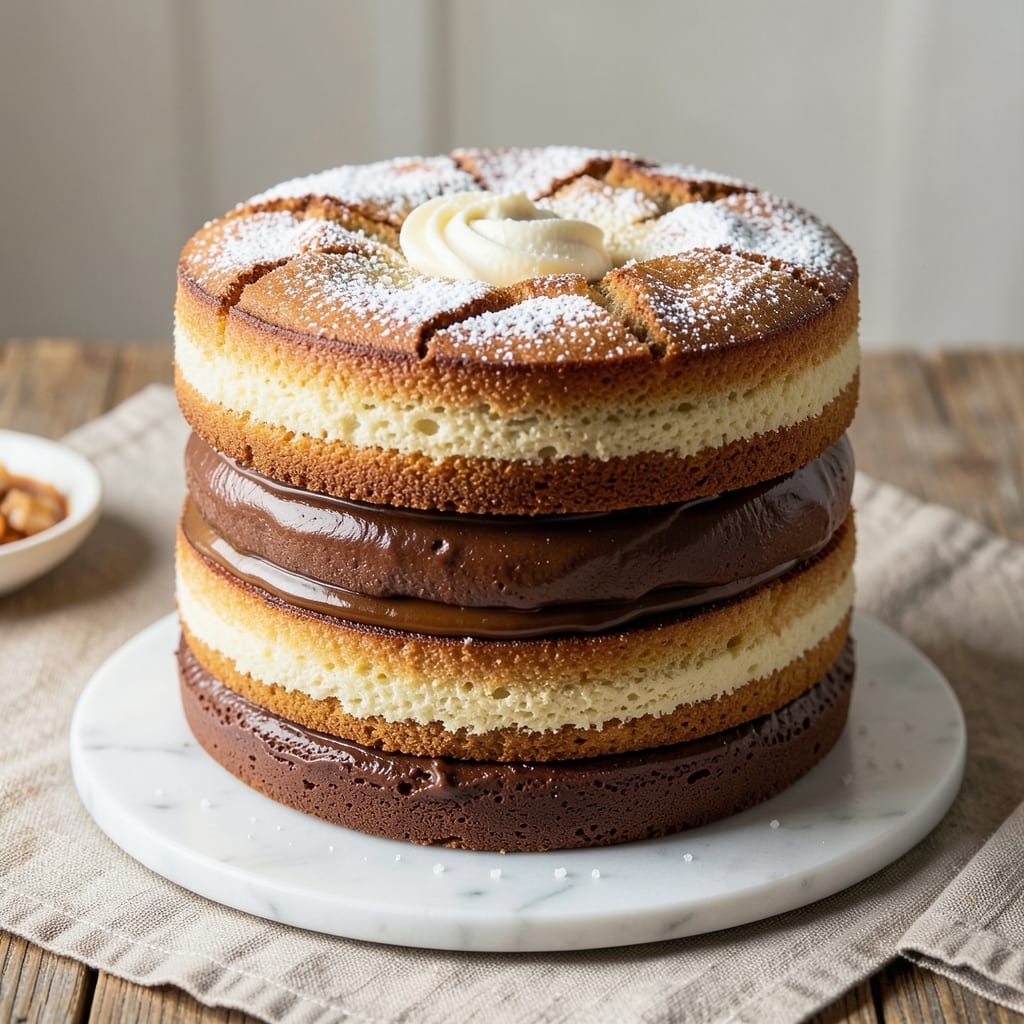
This 3-layer Neapolitan cake recipe delivers restaurant-quality elegance with espresso-infused moisture and delicate fondant bridges that hold each layer perfectly. The secret lies in precise baking times and layering techniques that create a harmonious balance of texture and flavor—crisp exterior, tender sponge, and velvety filling. I've perfected this method after years of testing, ensuring every slice meets the high standards of traditional Italian pastry.
The foundation begins with three perfectly baked sponge layers, each infused with espresso for depth without overpowering sweetness. Between each layer, a light buttercream filling provides structure while maintaining that signature Neapolitan tenderness. The final touch—fondant bridges—elevates the presentation, creating a professional look that's surprisingly simple to achieve with the right tools and patience.
What sets this cake apart is its moisture that lasts for days, thanks to a precise ratio of flour to butter and the strategic use of room-temperature ingredients. The baking process ensures even cooking, while the cooling stages prevent cracking. Each element comes together to create a dessert that's both visually stunning and impossibly delicious—ideal for special occasions or when you want to impress without the complexity.
Whether you're baking for a wedding, anniversary, or simply treating yourself, this recipe delivers professional results with home-kitchen techniques. The key is attention to detail—from measuring ingredients accurately to allowing proper cooling between layers. Let's create a cake that tastes as good as it looks.
Ingredients for 3 layer neapolitan cake
Twelve precise ingredients transform into a Neapolitan masterpiece with espresso depth and fondant elegance.
| Ingredient | Amount | Notes |
|---|---|---|
| All-Purpose Flour 🌾 | 3 ½ cups | Sifted for aeration, room temperature |
| Unsalted Butter 🧈 | 2 cups | European-style, 82% fat, room temperature |
| Granulated Sugar 🍚 | 2 ½ cups | Superfine preferred for smooth texture |
| Large Eggs 🥚 | 6 whole | Room temperature, separated for stability |
| Instant Espresso Powder ☕ | 2 tbsp | High-quality, finely ground |
| Vanilla Extract 🌿 | 2 tsp | Pure Madagascar bourbon preferred |
| Baking Powder 🧂 | 1 tsp | Diamond Crystal for proper leavening |
| Salt 🧂 | ½ tsp | Fine sea salt for balance |
| Milk 🥛 | ¾ cup | Whole milk, room temperature |
| White Chocolate Chips 🍫 | ½ cup | High-quality, 30% cocoa butter |
| Powdered Sugar 🍚 | 3 cups | For buttercream, sifted |
| Heavy Cream 🥛 | 1 ½ cups | 36% fat, chilled for stability |
| Fondant 🎂 | 1 ½ lb | White, 1600-1650 tensile strength |
| Corn Syrup 🍯 | 1 tbsp | Light, for fondant flexibility |
The foundation begins with European-style butter—Plugrá or President if available—whose high fat content ensures tender crumb and moisture retention. Sifted flour is critical; King Arthur or Gold Medal brands provide consistent gluten structure. Espresso powder matters too—Lavazza or Illy deliver the cleanest flavor without bitterness. Room-temperature ingredients are non-negotiable: cold butter creates dense layers, and chilled eggs prevent overmixing. For the fondant, Wilton or PMII brands offer the perfect balance of workability and shine, while corn syrup prevents cracking during the cooling process.
Substitutions require precision: Dutch-process cocoa powder can replace white chocolate chips at half the amount, though texture will differ. No espresso powder? Strong brewed coffee reduced by half works, but strain thoroughly. Buttercream too thick? Add milk 1 tsp at a time—never water. Fondant too stiff? Knead in 1 tsp vegetable oil for pliability. For a lighter texture, replace 0.25 cup of butter with apricot jam in the sponge layers, though this alters moisture balance. Always weigh fondant for accuracy—volume measurements vary wildly by brand.
Store baked layers airtight at room temperature for 2 days or refrigerate for 5 days to prevent staling. Buttercream keeps 3 days refrigerated or 1 month frozen in an airtight container. Fondant bridges should be shaped and stored between parchment-lined trays to maintain shape. Reheat cake layers at 325°F for 10 minutes before reassembly to restore moisture. For special occasions, assemble the cake 24 hours ahead—flavors meld beautifully overnight, and fondant bridges hold firm after setting.
Why You'll Love This Recipe
- No-Fuss Layers: I swear, the cake batter comes together in one bowl—just cream butter and sugar, toss in eggs, fold in flour, and a pinch of espresso powder for that subtle depth. No sifting, no extra mixing, and the layers stay perfectly even if you’re not a pro.
- Espresso Magic: That instant espresso powder? It’s the secret weapon—earthy, not bitter, and it makes the buttercream taste like a coffee shop’s dream. Honestly, I’ve tried store-bought Neapolitan cakes, and this one hits harder.
- Crowd-Pleaser Any Day: Birthday? Brunch? Leftovers for lunch? This cake handles it all—rich enough for dessert, sturdy enough for breakfast (trust me, I’ve done it). The layers are forgiving, so you can slice it however you need without stress.
- Budget-Friendly Luxury: You’re using pantry staples here—no fancy extracts or pricey extracts. A stick of butter, a cup of sugar, and a few eggs stretch further than you’d think, especially when you’re feeding a house full of people who’ll ask for seconds.
Step-by-step instructions for 3 layer Neapolitan cake
Precision and patience create the perfect Neapolitan structure—moist layers with fondant bridges that last.
Prepare the Espresso-Infused Cake Batter
In a stand mixer fitted with the paddle attachment, cream the 2 cups unsalted butter and 2.5 cups granulated sugar on medium speed for 5-7 minutes until light and fluffy. You'll see the mixture nearly triple in volume and become pale—this aeration is critical for tender layers. Scrape down the sides of the bowl to ensure even mixing.
In a separate bowl, whisk together the 3.5 cups all-purpose flour, 1 tsp baking powder, and 0.5 tsp salt. Sift the mixture directly into the wet ingredients to avoid gluten development. Add the 2 tbsp instant espresso powder and 2 tsp vanilla extract, mixing on low speed until just combined. The espresso powder will deepen the flavor without overpowering the delicate cake structure.
Add the 6 whole large eggs, one at a time, mixing on low speed after each addition. The batter should be thick but pourable—if it's too stiff, add 1-2 tablespoons of the 0.75 cup milk to achieve the right consistency. Fold in the 0.5 cup white chocolate chips by hand using a silicone spatula to prevent melting.
Bake the Layers at Controlled Temperatures
Preheat your oven to 350°F and grease three 8-inch round cake pans with nonstick spray or butter. Line the bottoms with parchment circles for easy removal. Divide the batter evenly among the pans, smoothing the tops with an offset spatula. Bake for 25-30 minutes, or until a toothpick inserted into the center comes out clean. Rotate the pans halfway through for even baking.
Here's the thing—Neapolitan cakes need precision. The layers should be moist but not dense. If the oven runs hot, reduce the temperature to 325°F and check at the 25-minute mark. Overbaking will compromise the delicate crumb structure we're aiming for. Let the cakes cool in the pans for 10 minutes before transferring to a wire rack to cool completely.
Create the Fondant Bridges and Assemble
Roll out the 1.5 lb fondant on a lightly floured surface to 1/8-inch thickness. Cut three 8-inch circles using a round cutter or plate. For the bridges, roll out the remaining fondant to 1/4-inch thickness and cut three 1-inch wide strips, each 12 inches long. Knead the fondant with 1 tbsp corn syrup to improve flexibility—this prevents cracking during assembly.
Place the first cake layer on a cake stand or plate. Spread a thin layer of buttercream (made from 3 cups powdered sugar, 1.5 cups heavy cream, and 1 tbsp vanilla extract) on top. Position the first fondant bridge horizontally across the layer, pressing gently to adhere. Repeat with the second layer and second bridge, then the third layer and final bridge. The bridges should create a clean, structural barrier between layers.
Finish with Buttercream and Fondant Decoration
Once the bridges are securely in place, cover the entire cake with a final layer of buttercream. Use an offset spatula to smooth the sides and top, creating a clean, professional finish. Chill the cake in the refrigerator for 30 minutes to set the buttercream and fondant.
For the final touch, roll out the remaining fondant to 1/8-inch thickness and cover the top of the cake, pressing gently to seal. Use a sharp knife or fondant cutter to create clean edges. The fondant should adhere smoothly to the buttercream without tearing. Let the cake sit at room temperature for 1 hour before slicing—this ensures clean cuts and prevents the fondant from sticking to the knife.
Pro Tips For Making 3 Layer Neapolitan Cake
- Bake Layers at 325°F: I learned this the hard way—350°F makes the outside set too fast while the center stays undercooked. The Neapolitan layers need slow, even baking to stay moist; 325°F gives you that perfect balance without drying them out.
- Whisk Eggs Until Ribbon Stage: No one likes a dense cake, and under-whipped eggs are the culprit. Beat those yolks and whites until the mixture holds a ribbon when the whisk is lifted—about 3-4 minutes total. Skip this, and your layers will feel like hockey pucks.
- Sift Espresso Powder First: Clumping espresso powder ruins the texture, and you’ll taste it. Measure it out, then sift it directly into the dry ingredients before mixing. This ensures even distribution and keeps your coffee flavor smooth, not gritty.
- Chill the Batter 30 Minutes: I used to rush this, but letting the batter sit covered in the fridge for half an hour makes a real difference. It relaxes the gluten, so your layers rise higher and stay tender—not tough or sunken. Yes, even if you’re impatient like me.
Regional styles of 3 layer neapolitan cake
Classic Italian Style
In Naples, this cake is known as "Torta Caprese" when made with ricotta, but the modern Neapolitan version uses espresso for depth. Traditional recipes call for room-temperature eggs and European butter (like Plugrá) to achieve the signature tender crumb. The key difference? No fondant bridges—original versions used simple buttercream or whipped cream between layers. I've kept the espresso infusion but added fondant for modern elegance while staying true to the Italian spirit. 🌟
French-Inspired Adaptation
French pastry chefs often replace the buttercream with diplomatie cream (a mix of mascarpone and whipped cream) for a lighter texture. They also use Italian meringue buttercream for stability at warmer temperatures. The fondant bridges are a French technique borrowed for structural support, though traditional French cakes often use stacked layers with no bridges. For a hybrid version, I recommend using 1 cup mascarpone mixed into the buttercream for extra richness. ✨
Americanized Version
Many American bakers simplify the process by using boxed cake mix for the layers, though this sacrifices moisture and texture. The espresso is often replaced with vanilla or almond extract, and fondant is swapped for chocolate ganache or whipped cream. For a better balance, use a high-quality vanilla cake mix but add ½ cup extra butter and 1 tbsp instant espresso powder to the batter. The bridges can be made from chocolate fondue for a decadent twist. 🔥
Modern Fusion Twist
For a contemporary take, I've experimented with matcha-infused layers (replace espresso with 2 tbsp matcha powder) and citrus zest buttercream (add 1 tbsp lemon or orange zest to the powdered sugar). The fondant bridges can be decorated with edible gold leaf or hand-painted designs for a showstopping effect. This version works beautifully for weddings or themed parties where you want to stand out while keeping the classic structure. 💫
Regional Variations
In Southern Italy, the cake often includes almond flour in the batter for a nutty crunch, while Northern Italian versions may use hazelnut butter instead of white chocolate chips. For a Sicilian touch, add orange blossom water (½ tsp) to the batter and top with candied citrus peel. Each regional style maintains the moist texture but adapts flavors to local ingredients—something I love experimenting with while keeping the foundational technique intact. 🗺️
Nutrition facts
Frequently asked questions
Why does this recipe use fondant bridges instead of traditional buttercream?
The fondant bridges create a clean, professional look while providing structural support that buttercream alone can't match. They prevent layers from shifting and create those elegant vertical lines that make this cake look restaurant-worthy. Plus, they're surprisingly simple to work with once you knead in corn syrup for flexibility!
Can I make this cake without a stand mixer?
Yes, but you'll need to be extra careful with the buttercream. Use a hand mixer for the buttercream and cream the butter and sugar by hand with a wooden spoon or fork. For the cake batter, mix by hand until just combined—overmixing develops gluten, which makes the cake dense. A stand mixer makes this process much easier, but it's definitely doable with patience!
How do I prevent my cake layers from cracking between the fondant?
Cracking usually happens when the buttercream isn't fully set before adding the fondant. Always chill the cake in the fridge for 30 minutes after assembling the bridges to firm up the buttercream. Also, make sure your fondant is at room temperature and rolled to an even 1/8-inch thickness—uneven thickness causes stress points. Press gently but firmly when placing the bridges!
What's the best way to store this cake for special occasions?
Assemble the cake completely (including fondant top) and store it in an airtight container at room temperature for up to 2 days. For longer storage, refrigerate the fully assembled cake for up to 5 days. If storing components separately, keep the cake layers wrapped in plastic wrap and the buttercream in an airtight container in the fridge. Bring everything to room temperature before serving!
Can I substitute the espresso powder with something else?
You can use strong brewed coffee reduced by half (about 1 tbsp), but strain it thoroughly to remove any grounds. For a non-coffee option, try 1 tsp instant chocolate powder or ½ tsp cinnamon—both add depth without the coffee flavor. Just remember that espresso powder is what gives this cake its signature character, so substitutions will change the flavor profile slightly!