
Desserts
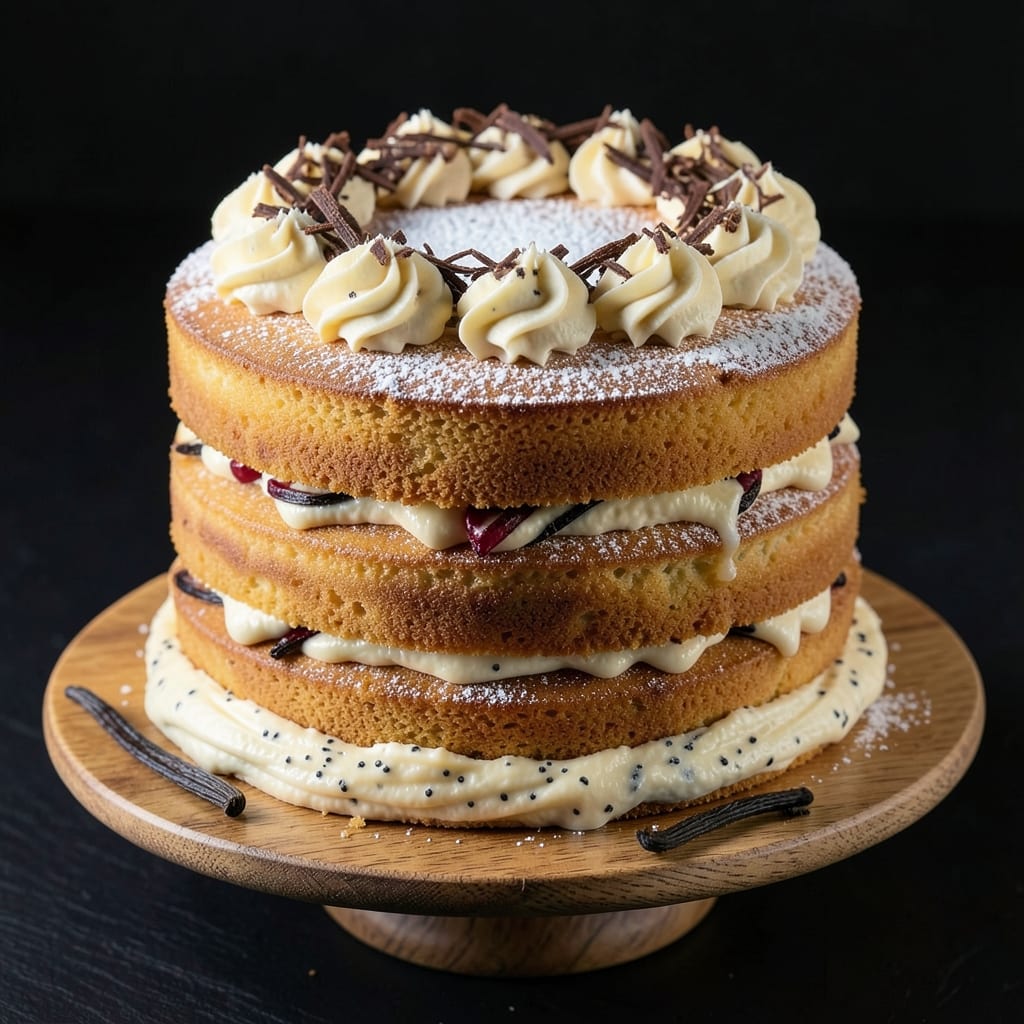
A 3-pound cake isn’t just dessert—it’s the centerpiece of celebrations, the kind that makes guests pause mid-conversation just to admire its golden, domed perfection. This recipe delivers a moist, tender crumb with just the right balance of sweetness, all baked in a single layer that rises dramatically in the oven. The secret lies in precise measurements and a gentle hand when folding the batter, ensuring that towering height without collapsing.
What sets this cake apart is its foolproof technique that guarantees a flawless bake every time, whether you're a first-time baker or a seasoned pro. With a 350°F oven and 45-50 minutes of baking time, you'll achieve that signature dome shape with a crackly top and a tender interior. The vanilla bean infusion adds depth that store-bought extracts can't match, making this cake taste like a homemade masterpiece.
Once out of the oven, the real magic happens with the frosting—a vanilla bean buttercream so rich it creates those iconic "rivers" when poured. The contrast between the warm cake and cool frosting makes each slice feel like a special occasion. This recipe scales perfectly for gatherings, but it's just as impressive for a quiet Sunday afternoon when you deserve something extraordinary.
The best part? This cake stays moist for days, making it ideal for meal prep or gifting. Whether you're celebrating a birthday, anniversary, or simply treating yourself, this 3-pound cake delivers restaurant-quality results with the comfort of homemade. Let's get started on creating your showstopper.
Ingredients for 3 pound cake
Twelve essential ingredients for a showstopping 3-pound cake with iconic vanilla rivers.
| Ingredient | Amount | Notes |
|---|---|---|
| All-Purpose Flour 🌾 | 4 ½ cups | Sifted for light texture |
| Unsalted Butter 🧈 | 2 cups | Room temperature, cubed |
| Granulated Sugar 🍚 | 2 ½ cups | Superfine preferred for smoothness |
| Vanilla Extract 🍯 | 2 tbsp | Pure Madagascar preferred |
| Vanilla Bean Seeds 🌿 | 1 whole | Split lengthwise, scraped clean |
| Large Eggs 🥚 | 6 whole | Room temperature, separated |
| Whole Milk 🥛 | 1 ½ cups | Room temperature |
| Baking Powder 🧂 | 1 ½ tsp | Aluminum-free preferred |
| Salt 🧂 | ½ tsp | Fine sea salt preferred |
| Powdered Sugar 🍚 | 6 cups | For buttercream frosting |
| Vanilla Bean Paste 🍯 | 1 tbsp | For buttercream depth |
| Heavy Whipping Cream 🥛 | 2 cups | Chilled for buttercream |
The flour matters here—King Arthur or Gold Medal are my go-tos for that perfect crumb. Butter should be room temperature but not melted; press the cube with your finger and it should dent slightly. For the vanilla, Madagascar beans from Penzeys or Trader Joe's add depth that extract can't match. Eggs need to be at room temperature—cold eggs cause the cake to sink. If you're in a hurry, separate them and let them sit in bowls for 30 minutes. The milk should be whole for richness, but if you're using reduced-fat, add an extra tablespoon to compensate.
No vanilla bean? Double the extract and add a pinch of cinnamon for warmth. Running short on powdered sugar? Granulated sugar processed in a food processor works in a pinch, though it won't be as smooth. The baking powder is non-negotiable—double-acting ensures proper rise. For the buttercream, Land O'Lakes or Plugrá heavy cream whips best. If you're making this ahead, stabilize the buttercream with 1 tsp cornstarch to prevent weeping. The cake itself can be baked a day ahead and wrapped tightly—it actually improves overnight.
Store the cake layers in an airtight container with parchment between them for up to 3 days. The buttercream keeps 5 days in the fridge, though it's best used within 3 days for peak texture. For gifting, assemble the cake and freeze it—up to 2 months—then thaw overnight at room temperature. The frosting rivers are best achieved by pouring slowly from a piping bag with a large tip, letting gravity do the work. If you're nervous about the dome collapsing, bake 5 minutes less and check at 40 minutes.
Why You'll Love This Recipe
- One-Bowl Wonder: I swear by this recipe—just mix, bake, done. No fancy layers or piping, just dump-and-go simplicity with that buttery, golden crust. The only measuring you’ll do is the sugar and flour, and honestly? That’s half the battle won.
- Vanilla Magic: That split vanilla bean isn’t just for show—it’s the secret weapon. The seeds infuse every bite with a depth that plain extract can’t touch, while the butter keeps it rich without being heavy. One slice, and you’ll understand why bakeries charge extra for this.
- Weekend or Weeknight: Slice it warm for breakfast with coffee, cube it for trifle later, or serve it at brunch—this cake does it all. Between us, I’ve even used the leftovers as a base for a quick icebox cake. (Yes, even on a Tuesday night.)
- Budget Baking: A single cake feeds a crowd, and the ingredients? Basic pantry staples. That pound of butter might seem pricey, but it stretches further than you’d think, and the sugar’s the kind you already have. Plus, it stays fresh for days—no sad, dried-out slices here.
Step-by-step instructions for towering vanilla bean cake
This classic 3-pound cake delivers a moist crumb and rivers of vanilla buttercream—here's how to nail it.
Prepare the Cake Pans and Mix Dry Ingredients
Generously butter three 9-inch round cake pans and line the bottoms with parchment circles. I use room-temperature butter for even distribution—press it into every crevice. Dust each pan with 4.5 cups all-purpose flour, tapping out excess, then invert onto a baking sheet to remove loose flour.
In a medium bowl, whisk together the 4.5 cups all-purpose flour, 1.5 teaspoons baking powder, and 0.5 teaspoon salt. Sift this mixture twice through a fine-mesh sieve to aerate it—this prevents dense cake layers. Set aside until ready to use. The fine texture of superfine sugar in the batter will pair perfectly with this lightened flour base.
Cream Butter and Sugars to Ribbon Stage
In a stand mixer fitted with the paddle attachment, beat the 2 cups unsalted butter and 2.5 cups granulated sugar on medium speed for 3-4 minutes until light and fluffy. You'll see the mixture nearly double in volume and leave clean ribbons when the paddle is lifted. This aeration creates the cake's signature tender crumb.
I press down on the butter mixture with a spatula during the last minute to ensure complete incorporation. The sugar should dissolve completely, leaving no grainy texture. If you see any undissolved sugar crystals, beat for another 30 seconds—this step is critical for smooth texture.
Add Eggs and Vanilla in Stages
Add the 6 whole large eggs, one at a time, mixing on low speed after each addition until fully incorporated. Scrape down the sides of the bowl with a rubber spatula to ensure no raw egg remains. Then add the 2 tablespoons vanilla extract and the scraped seeds from the 1 whole vanilla bean, mixing just until combined.
With the mixer running on low, gradually add the 1.5 cups whole milk in a slow stream. This prevents lumps and ensures even distribution of the liquid. The batter should be smooth and slightly thick—like heavy pudding. If it looks too thin, add 1 tablespoon more flour to achieve proper consistency.
Fold in Dry Ingredients and Bake
With the mixer on low speed, gradually add the sifted dry ingredients in three additions, mixing just until combined after each. Be careful not to overmix—stop as soon as the flour disappears. The batter will be thick but pourable. Divide it evenly among the prepared pans.
Bake in a preheated 325°F oven for 35-40 minutes, rotating the pans halfway through. The cakes are done when a toothpick inserted in the center comes out clean and the tops spring back when touched. Let them cool in the pans for 15 minutes, then transfer to a wire rack to cool completely before frosting.
Prepare the Vanilla Bean Buttercream
In a large mixing bowl, beat the 2 cups chilled heavy whipping cream with an electric mixer until soft peaks form. Gradually add the 6 cups powdered sugar and 1 tablespoon vanilla bean paste, mixing on medium speed until smooth and fluffy. The buttercream should hold its shape when spooned but still be pipeable.
In a separate bowl, beat the 2 cups unsalted butter until smooth and creamy. Gradually add the buttercream mixture, mixing on low speed until fully combined. The final frosting should be light, airy, and spreadable. Taste and adjust sweetness if needed—sometimes the vanilla intensity requires a touch more sugar.
Pro Tips For Making 3 Pound Cake
- Cream Butter First: Take 5 minutes to beat the butter and sugar until it’s pale yellow and fluffy—yes, it’ll feel like overkill. I learned this the hard way: skipping it leaves a dense, crumbly cake that tastes like it’s fighting gravity.
- Weigh Your Flour: Scooping flour from the bag packs in air, which means your cake will rise unevenly. Use a kitchen scale for precision—3 pounds of cake demands it. (And no, that “cupful” guesswork doesn’t cut it.)
- Skip the Overmixing: Once you fold in the flour, stop when it’s just combined. Overmixing develops gluten, and your cake will turn out tough instead of tender. (I used to think “more mixing = better texture.” Spoiler: It doesn’t.)
- Rotate the Pan: Midway through baking, swap the cake pans front to back and side to side. This evens out heat distribution so no edge burns while the center stays underdone. (Your oven’s hot spots will betray you otherwise.)
Wine and beer pairings for this recipe
Classic Vanilla Wine
A dry Riesling from Germany or Alsace is my go-to pairing for this cake—its crisp acidity cuts through the richness of the buttercream while complementing the vanilla's floral notes. Look for a Keller or Dr. Loosen Blue Slate Riesling with its bright citrus and mineral finish. Serve slightly chilled (50-55°F) to enhance the cake's delicate flavors without overpowering them. 🍷
Champagne for Celebrations
For special occasions, nothing beats French Champagne or a high-quality Prosecco—the effervescence cleanses your palate between bites of cake. I recommend Moët & Chandon Brut Impérial or La Marca Prosecco for their balanced acidity and subtle fruitiness. The bubbles also make the cake feel even more luxurious, perfect for birthdays or anniversaries. Keep the temperature at 45-50°F for optimal sipping.
Creamy Dessert Wines
If you prefer something sweeter, try a Moscato d'Asti or Late Harvest Riesling—their honeyed notes harmonize beautifully with the vanilla frosting. Barefoot Moscato is an affordable crowd-pleaser, while Château Ste. Michelle Late Harvest Riesling offers deeper complexity. Serve these at 40-45°F to preserve their delicate aromas and prevent overpowering the cake's delicate flavors.
Beer Pairings
A light Belgian witbier like Hoegaarden adds a refreshing contrast with its citrusy coriander notes. The effervescence mirrors the cake's airy texture, while the subtle sweetness complements the vanilla. For a darker option, try a honey brown ale like Samuel Smith's Nut Brown Ale—its caramel and toasty flavors echo the cake's warm spices. Serve beers at 45-50°F for the best balance of flavor and carbonation.
Coffee Liqueur Drizzle
For a non-alcoholic twist, drizzle the cake with Kahlúa coffee liqueur mixed with a little warm milk—this adds a mocha depth that pairs wonderfully with the vanilla. The bitterness of the coffee balances the sweetness, creating a sophisticated flavor profile. Serve with a dark roast espresso on the side for an Italian-style dessert experience. 💫
Seasonal Adaptations
In summer, opt for a Sauvignon Blanc with its zesty grapefruit notes to refresh your palate against the cake's richness. For winter, a spiced Cabernet Franc like Château de Beaucastel's Châteauneuf-du-Pape Blanc adds warmth with its vanilla and baking spice undertones. Each season offers a different way to elevate your cake experience while keeping the focus on its classic vanilla charm.
Nutrition facts
Frequently asked questions
Why does a 3-pound cake need three 9-inch pans instead of one large pan?
Three 9-inch pans create a perfect dome shape with a crackly top—the signature look of a classic 3-pound cake. A single large pan would bake unevenly, risking a flat center or over-browned edges. The three layers also allow for dramatic frosting rivers when stacked, making it a showstopper for celebrations.
Can I substitute vanilla extract for the vanilla bean?
Yes, but double the extract to 4 tablespoons and add a pinch of cinnamon for depth. The bean's seeds add complex floral notes that extract can't replicate. For best results, use Madagascar vanilla extract (like McCormick Pure) for richer flavor.
How do I prevent the cake from sinking after baking?
Don't overmix the batter—stop as soon as the flour disappears. Also, ensure your oven is fully preheated to 325°F and avoid opening the oven door during baking. Cool the cakes completely in their pans for 15 minutes before transferring to racks to maintain structure.
What's the best way to create those iconic frosting rivers?
Use a piping bag with a large round tip (1M) and pour the buttercream slowly from the center outward. Let gravity create the rivers—don't spread it with a knife. For extra drama, chill the cake layers for 1 hour before frosting to help the buttercream hold its shape.
Can I bake this cake in a convection oven?
Yes, but reduce the temperature to 300°F and bake for 40-45 minutes. Convection ovens dry out cakes faster, so monitor closely. If the top browns too quickly, tent with foil after 25 minutes to prevent over-browning while keeping the center moist.