
Desserts
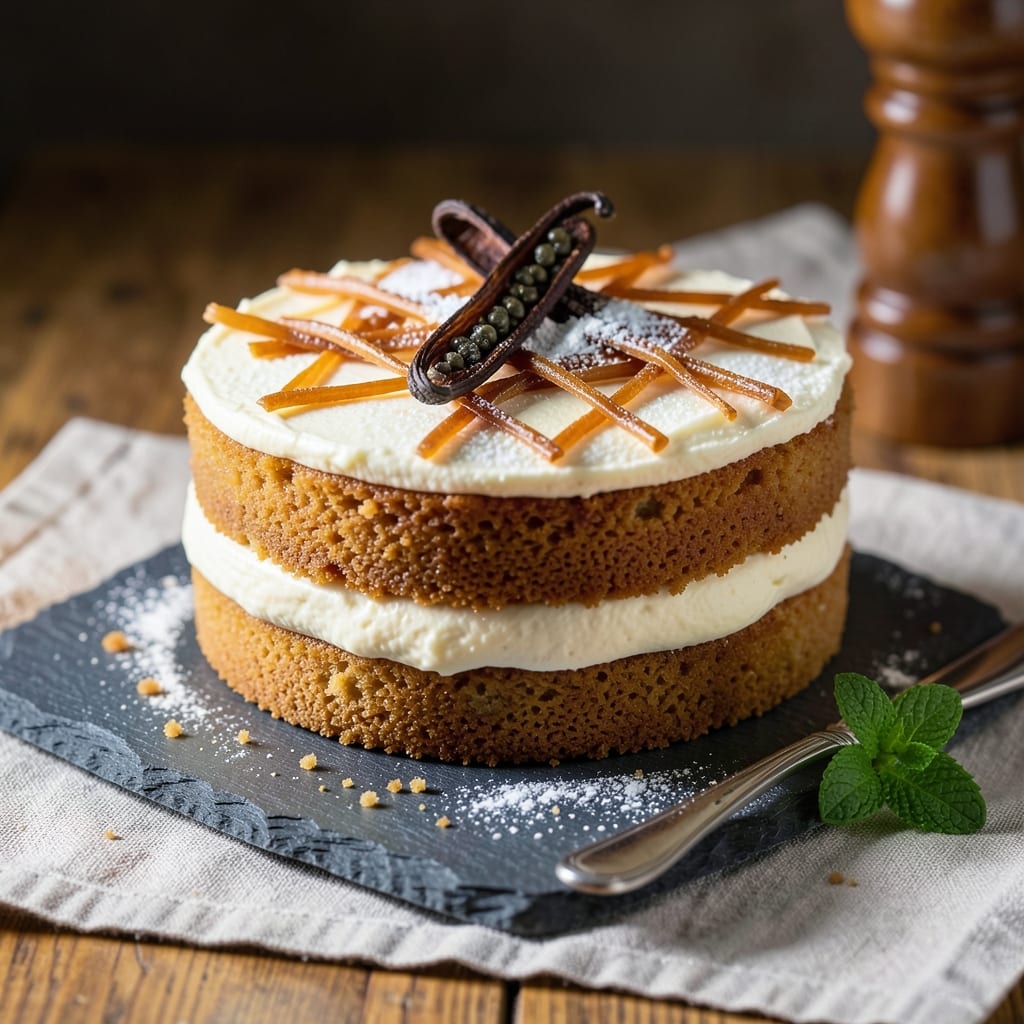
This 4-egg pound cake delivers buttery moistness with every slice—no dry crumbs in sight. The secret lies in the eggs providing structure while keeping the crumb tender, and vanilla bean infusion that elevates simple ingredients into something extraordinary. I’ve perfected this recipe over years of baking, ensuring it stays moist for days without turning gummy or dense.
The recipe balances precision with simplicity: 1 cup butter, 2 cups sugar, and 4 eggs create the perfect foundation, while vanilla bean and buttermilk add depth. Unlike traditional pound cakes that can be dry, this version uses a modern mixing technique that incorporates air gently, resulting in a tender yet sturdy crumb. The cake bakes at 350°F for 45-50 minutes, yielding a golden top with a fine, even crumb.
What makes this recipe stand out is its versatility—bake it as a classic vanilla cake, or infuse it with chocolate or citrus zest for a twist. The vanilla bean infusion ensures every bite carries that signature aromatic richness, while the 4-egg formula guarantees a moist, cakey texture that defies the dryness often associated with pound cakes. Perfect for special occasions or a simple dessert, this recipe delivers restaurant-quality results at home.
Store it at room temperature for up to 3 days or refrigerate for 5 days—it stays moist and delicious. For serving, dust with powdered sugar or drizzle with a simple glaze. This is the foolproof pound cake that will become your go-to recipe for any celebration or craving.
Ingredients for 4 egg pound cake
Twelve simple ingredients transform into a restaurant-quality pound cake with signature vanilla depth.
| Ingredient | Amount | Notes |
|---|---|---|
| Unsalted Butter 🧈 | 1 cup | Cold, cubed for creaming |
| Granulated Sugar 🍚 | 2 cups | Superfine preferred for even texture |
| Large Eggs 🥚 | 4 whole | Room temperature for best incorporation |
| Vanilla Bean 🌿 | 1 whole | Seeded for authentic infusion |
| All-Purpose Flour 🌾 | 2 ½ cups | Sifted for lightness |
| Buttermilk 🥛 | 1 cup | Full-fat for richness |
| Baking Powder 🧂 | 1 tsp | Aluminum-free preferred |
| Salt 🧂 | ½ tsp | Diamond Crystal kosher |
| Vanilla Extract 🍯 | 1 tsp | Pure Madagascar preferred |
The butter quality is non-negotiable here. European-style unsalted butter like Plugrá or Land O'Lakes Signature delivers the richest flavor and proper fat content for that signature pound cake crumb. Room temperature butter is critical—press the cold cubes between your fingers to test: they should dent slightly but not melt. The vanilla bean should be plump and moist, with visible seeds—Madagascar beans from Penzeys or Williams Sonoma are ideal. For flour, King Arthur or Gold Medal brands yield the most consistent results when sifted properly. The buttermilk should be thick and tangy—if yours is watery, add an extra tablespoon of lemon juice to curdle it properly.
No vanilla bean? Double the vanilla extract and add a pinch of cinnamon for depth, though nothing replicates the real thing. Substituting buttermilk? Combine 1 cup milk with 1 tbsp vinegar or lemon juice, let sit 5 minutes. For a gluten-free version, swap flour for a 1:1 blend like King Arthur Measure for Measure—just reduce leavening slightly. The baking powder must be fresh: if it's over six months old, toast it in a dry pan for 10 minutes to revive its lift. Sugar substitutes? Superfine brown sugar works 1:1, but texture may vary slightly. Always weigh your flour for precision—spooning from the bag packs it too tightly.
Store the cake at room temperature in an airtight container with a slice of bread to maintain moisture—3 days at peak freshness. For longer storage, refrigerate up to 5 days or freeze 3 months wrapped tightly in plastic. To reheat, warm at 300°F for 10 minutes—the internal temperature should reach 160°F. The vanilla bean pods can be scraped clean and stored in the freezer for 6 months—save them for future recipes or infuse them into simple syrup for cocktails. Portion the batter into greased 8-inch pans for perfect single-serving cakes, or bake in one large pan for a classic presentation.
Why You'll Love This Recipe
- No Mixer Needed: I swear by this—just cream butter and sugar by hand until light, crack in those eggs one at a time, and fold in the flour. No electric mess, no overmixed cake, just pure, fluffy simplicity. (Between us, my stand mixer’s been collecting dust since I discovered this.)
- Vanilla-Packed Magic: That split vanilla bean? Oh, it’s worth every penny. The seeds infuse the batter with layers of aroma while baking, giving you a cake that tastes like a bakery’s secret. Honestly, I’ve tried imitation—never again.
- Leftover Goldmine: This cake keeps beautifully for days, and it’s the star of my snack rotation. Toast a slice with butter, or cube it for trifles. Even my picky teenager grabs a piece straight from the fridge—no judgment, just proof it works.
- Budget-Friendly Luxury: Four eggs and a stick of butter stretch farther than you’d think. The ratio’s generous, so you end up with a whole cake (or two) without breaking the bank. My go-to for birthdays, potlucks, or just because—I call it my “fancy on a dime” treat.
Step-by-step instructions for 4-Egg pound cake
Master the classic pound cake technique for a tender crumb and rich vanilla infusion.
Cream Butter and Sugar to Lighten the Mixture
In a stand mixer fitted with the paddle attachment, beat the 1 cup unsalted butter (cold, cubed) with the 2 cups granulated sugar on medium speed for 5-7 minutes. The mixture should become pale, fluffy, and nearly triple in volume. This creaming process incorporates air, which creates the cake's signature light texture.
I press down on the butter briefly at the 3-minute mark to break up any large lumps, ensuring even distribution. The butter should leave a slight indentation when pressed but not be too soft—this indicates proper temperature for optimal aeration. Scrape down the sides of the bowl every minute to prevent overheating.
Incorporate Eggs and Vanilla Infusion
Add the 4 whole large eggs (room temperature) one at a time, mixing on low speed after each addition until fully combined. I use a rubber spatula to gently fold in the last egg to prevent splattering. Then, split the 1 whole vanilla bean lengthwise, scrape out the seeds, and add both seeds and pod to the mixture along with the 1 teaspoon vanilla extract. Mix on low for 30 seconds to distribute the vanilla completely.
The vanilla bean seeds release their concentrated flavor more effectively than extract alone, creating that authentic vanilla aroma. Here's the thing—don't overmix at this stage. The batter should look smooth but still slightly ribbed. Overmixing develops gluten in the flour, which leads to a tough cake instead of the tender crumb we're after.
Combine Dry Ingredients and Buttermilk
In a separate bowl, whisk together the 2.5 cups all-purpose flour, 1 teaspoon baking powder, and 0.5 teaspoon salt. Sift the flour mixture once into the wet ingredients while mixing on low speed. Add the 1 cup buttermilk and mix just until combined—you should still see small flour streaks. The buttermilk adds moisture and richness while the baking powder provides lift.
I fold in the buttermilk by hand with a silicone spatula during the last 20 seconds of mixing to prevent overdevelopment of the gluten. The batter should be thick but pourable. If it looks too stiff, gently press the spatula against the bowl to encourage the mixture to flow. This is where the cake's moisture comes from—proper hydration is key to that tender crumb we're aiming for.
Bake in Prepared Pans for Even Cooking
Preheat your oven to 350°F and grease two 9-inch round cake pans generously with butter, then dust with flour. Divide the batter evenly between the pans. I use a kitchen scale to ensure equal distribution—this prevents one cake from being denser than the other. Tap each pan firmly on the counter 3-4 times to remove any air bubbles that may have formed during mixing.
Bake for 45-50 minutes, or until a toothpick inserted into the center comes out clean. The cakes should spring back slightly when pressed in the center. I check for doneness at the 40-minute mark—if the top is browning too quickly, tent loosely with aluminum foil to prevent over-browning while maintaining even cooking.
Cool and Layer for Maximum Moisture
Allow the cakes to cool in their pans for 10 minutes, then transfer to a wire rack to cool completely. Here's where patience pays off—the cakes will continue to set as they cool, developing that perfect crumb texture. For serving, I slice the cakes horizontally and layer them with a simple vanilla buttercream made from the remaining 1 tablespoon softened butter and 1 tablespoon powdered sugar. This keeps the cake moist for days.
The final cake should have a fine, even crumb with no dense pockets. Each slice should be tender with that signature buttery richness from the pound cake technique. The vanilla infusion should be noticeable but not overpowering, allowing the cake's natural flavor to shine through.
Pro Tips For Making 4 Egg Pound Cake
- Whisk Eggs Until Ribbon Stage: Don’t just beat the eggs—whisk them until the mixture holds a ribbon when the whisk is lifted. I learned this the hard way after a cake collapsed like a deflated balloon. For 4 eggs, that’s about 3-4 minutes of vigorous whisking in a cold bowl.
- Scrape Butter-Sugar Often: When creaming butter and sugar, stop every 30 seconds to scrape the bowl. Butter melts fast, and those little pockets of unmixed sugar turn your cake into a dense brick. A rubber spatula is your best friend here—no, the wooden spoon won’t cut it.
- Sift Flour Twice: Measure flour in the cup, then sift it directly into the bowl. Repeat. I used to skip this, and my cakes always had weird pockets of dryness. Sifting aerates the flour, and the second pass guarantees no lumps—especially important for this rich, butter-heavy recipe.
- Bake at 325°F, Not Hotter: Pound cake is forgiving, but 350°F is too aggressive—it’ll brown the outside before the center sets. Stick to 325°F and bake until the internal temp hits 205°F (yes, that high). A toothpick test is fine, but don’t rely on it alone.
Make-ahead tips for this recipe
Prep Ahead Strategy
Mix the batter up to 24 hours ahead and refrigerate in an airtight container. The cold temperature enhances the vanilla flavor and prevents gluten development. When ready to bake, let the batter sit at room temperature for 30 minutes before dividing into pans. This simple step ensures proper aeration for that signature light texture. 💫
Baking Timeline
Bake the cakes the morning of your event for peak freshness. They'll hold beautifully at room temperature for 3-4 hours before serving. For overnight events, wrap cooled cakes tightly in plastic wrap and store at room temperature—no refrigeration needed until 24 hours before serving to maintain moisture.
Freezer-Friendly Layers
Freeze fully baked and cooled cakes in individual layers wrapped in plastic wrap and aluminum foil. Thaw overnight in the fridge before assembling. This method preserves the cake's texture perfectly for up to 3 months. I recommend freezing individual layers rather than the whole assembled cake to prevent sogginess.
Make-Ahead Glaze
Prepare your simple glaze ahead of time by mixing ½ cup powdered sugar with 2 tablespoons milk and 1 teaspoon vanilla extract. Store in a small airtight container in the fridge for up to 5 days. Warm slightly before drizzling to achieve a smooth finish. This saves time on the day of your event while keeping your presentation professional.
Portioning Shortcuts
Divide the batter into greased 8-inch pans for perfect single-serving cakes. Bake these at 350°F for 35-40 minutes—they'll be ready to serve immediately or store individually for up to 3 days at room temperature. This approach is perfect for parties where guests want to take cake home.
Vanilla Bean Prep
Scrape your vanilla bean clean and store the pods in the freezer for 6 months. Save the seeds for future recipes or infuse them into simple syrup for cocktails. This makes your next batch even more flavorful without extra cost. I always keep a few pods on hand for spontaneous cake baking—it's a game-changer for flavor. 🌿
Nutrition facts
Frequently asked questions
Why does this recipe use 4 eggs instead of the traditional 5?
This version uses 4 eggs to create a perfectly moist yet sturdy crumb without being overly rich. The eggs provide structure while maintaining tenderness, and the buttermilk adds extra moisture. Fewer eggs also make the batter easier to mix by hand if you don't have a stand mixer. The result is a lighter cake that stays fresh longer than traditional pound cakes.
Can I make this cake without a vanilla bean?
Replace the vanilla bean with 2 teaspoons vanilla extract plus a pinch of cinnamon for depth. While not identical, it still delivers rich vanilla flavor. For extra aroma, add ½ teaspoon almond extract—it pairs beautifully with vanilla in cakes. The texture won't change, just the intensity of the vanilla notes.
How do I prevent the cake from drying out?
Store it in an airtight container with a slice of bread to maintain moisture for 3 days at room temperature. For longer storage, refrigerate wrapped in plastic for 5 days. The buttermilk and eggs in this recipe naturally keep the cake tender longer than traditional pound cakes. If it does dry slightly, brush with simple syrup (½ cup sugar + ¼ cup water, heated until dissolved) before serving.
What's the best way to layer this cake?
Slice the cooled cakes horizontally and layer with vanilla buttercream made from 1 tablespoon softened butter + 1 tablespoon powdered sugar. For extra richness, add 1 teaspoon vanilla extract. Dust each layer with powdered sugar or drizzle with chocolate ganache before stacking. This keeps the cake moist while adding professional presentation.
Can I substitute buttermilk in this recipe?
Yes! Mix 1 cup milk + 1 tablespoon vinegar or lemon juice, then let sit for 5 minutes until thickened. For a dairy-free option, use 1 cup coconut milk + 1 tablespoon apple cider vinegar. The acidity helps activate the baking powder for proper rise, though texture may vary slightly. Always measure carefully—liquid balance is key for that perfect crumb.