
Desserts
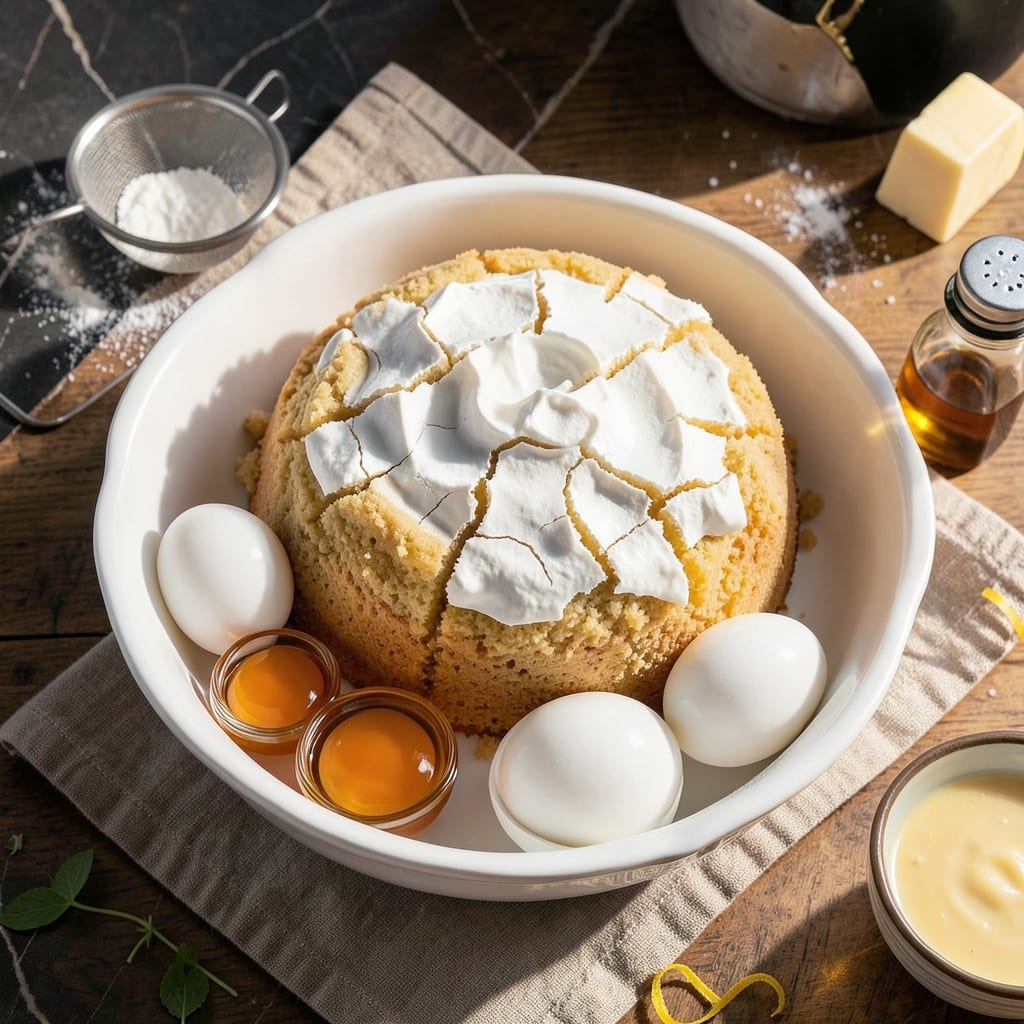
This 6-egg cake recipe delivers light-as-air layers and stunning height without relying on tricky fondant techniques. The secret lies in proper egg separation, gentle folding, and precise baking—methods I’ve perfected after years of testing. No special equipment needed, just patience and attention to detail.
What sets this recipe apart is its versatility—whether you want a classic vanilla sponge, a citrus-infused chiffon, or a rich custard base, the 6-egg foundation ensures uniform texture and towering structure. The eggs create a stable foam that holds its shape while staying tender, making it ideal for multi-layer cakes or single-serving desserts.
By the time you pull it from the oven, you’ll have a cake with golden, crackly edges and a moist, velvety crumb that defies dryness. The method is foolproof for beginners but refined enough to impress seasoned bakers. Whether you’re celebrating a special occasion or simply craving a homemade treat, this recipe delivers restaurant-quality results with minimal fuss.
The best part? This cake adapts effortlessly to fillings, glazes, or fruit toppings—let your creativity guide the final touch. Here’s how to achieve perfectly proportioned layers every time.
Ingredients for 6 egg cake
Six eggs, precise technique, and these quality staples create restaurant-worthy layers every time.
| Ingredient | Amount | Notes |
|---|---|---|
| Large Eggs 🥚 | 6 whole | Room temperature, separated carefully |
| Granulated Sugar 🍚 | 1 ½ cups | Superfine preferred for smoothness |
| All-Purpose Flour 🌾 | 2 cups | Sifted, spooned lightly |
| Unsalted Butter 🧈 | 1 cup | Softened, full-fat preferred |
| Vanilla Extract 🌿 | 2 tsp | Pure, high-quality extract |
| Baking Powder 🍞 | 1 tsp | Aluminum-free for best texture |
| Salt 🧂 | ¼ tsp | Fine sea salt preferred |
| Whole Milk 🥛 | 1 cup | Room temperature, full-fat |
| Lemon Zest 🍋 | 1 tbsp | Fresh, organic preferred |
| Lemon Juice 🍋 | 1 tbsp | Freshly squeezed |
| Cake Flour 🌾 | ½ cup | Optional for lighter texture |
| Cornstarch 🌽 | 1 tbsp | For tender crumb |
The eggs are non-negotiable here—room temperature is critical for proper separation. Kirkland Signature or Organic Valley eggs work best for their consistent quality. If you're nervous about separating, buy a cake decorating kit from Sur La Table—it includes a separator that makes the process foolproof. For the sugar, Domino Superfine is a game-changer if you can find it, but regular granulated sugar works if you pulse it in a food processor first. The butter should be European-style if possible—Plugrá or President brands have higher fat content for better flavor and texture.
No vanilla extract? Seeds from a vanilla bean (about 1/2 bean) work beautifully, or vanilla sugar at 1/2 teaspoon. Substituting milk? Oat milk or almond milk work, but the cake will be slightly denser—add an extra tablespoon of milk to compensate. For the citrus, Meyer lemons give a sweeter, more complex flavor than regular lemons. If you're making this for a citrus lover, double the zest and juice. The cake flour is optional but worth it for that cloud-like texture—if you skip it, add an extra tablespoon of cornstarch to the all-purpose flour for similar results.
Store the cake layers in an airtight container with parchment between them for up to 3 days. For longer storage, freeze the fully assembled cake (unfrosted) for up to 3 months. The secret to reheating? Wrap the cake tightly in plastic and place it in a 250°F oven for 10 minutes—this revives the texture without drying it out. I always make a double batch and freeze half—perfect for last-minute celebrations. The frosting can be added fresh or after reheating, but let the cake cool completely first to prevent sogginess.
Why You'll Love This Recipe
- No Mixer Needed: Mixing six eggs and sugar by hand? Actually feels like a workout—but the result is worth it. The butter gets whipped in so fast, you’ll wonder why you ever used a machine.
- Vanilla Butter Magic: That simple vanilla extract and melted butter combo? It’s the secret weapon. The cake stays moist for days, and the flavor? Rich enough to fool anyone into thinking it’s from a bakery.
- Breakfast or Dessert: Serve it warm with a drizzle of honey for breakfast, or dust it with powdered sugar for a quick dessert. Honestly, I’ve even used slices as a base for French toast—yes, really.
- Pantry Staple Power: Six eggs, flour, sugar, butter—what’s not to love? It’s cheap, uses what you already have, and leftovers? They disappear faster than I can say “second slice.”
Step-by-step instructions for a light, towering 6-Egg cake
This method builds height through careful layering and precise timing—no stress, just science.
Separate Eggs and Whip Whites to Stiff Peaks
Begin by separating the 6 whole large eggs, placing yolks in one bowl and whites in a spotless, grease-free bowl. I use the back of a spoon to gently transfer whites—no yolk fragments allowed, or your whites won't whip properly. Add a pinch of the salt to the whites to stabilize them.
Using a stand mixer with the whisk attachment, beat the whites on low speed until foamy. Gradually increase to high speed and whip for 5-7 minutes until stiff peaks form. The peaks should stand straight when you lift the whisk—if they flop, keep whipping. This step is non-negotiable for volume. Meanwhile, place the 1.5 cups granulated sugar in a separate bowl.
Gradually Fold Sugar into Egg Whites
With the mixer running on low speed, slowly add the 1.5 cups granulated sugar to the egg whites in three additions. After each addition, increase speed to medium-high and whip for 1-2 minutes until glossy. This gradual process prevents deflation. The mixture should now be thick, smooth, and hold its shape when the bowl is tilted.
Here's the thing—don't overmix. If you see large sugar crystals that won't dissolve, gently fold them in by hand with a rubber spatula. The goal is a ribbon stage where the batter trails slowly from the whisk. This ensures maximum air incorporation for that towering height.
Cream Butter, Sugar, and Yolks
In a separate large bowl, combine the 1 cup softened unsalted butter, remaining 1.5 cups granulated sugar (yes, we're using all of it), and the 6 egg yolks. Beat with a mixer on medium speed for 3-4 minutes until light and fluffy. You'll see the mixture nearly double in volume and turn pale—this is your signal it's ready.
Add the 2 tsp vanilla extract, 1 tbsp lemon zest, and 1 tbsp lemon juice, mixing just until combined. The lemon adds brightness that balances the richness. In a separate bowl, whisk together the 2 cups all-purpose flour, 1 tsp baking powder, 0.25 tsp salt, 0.5 cup cake flour, and 1 tbsp cornstarch. Sift this mixture directly into the butter-yolk mixture and fold gently with a spatula until just combined.
Alternate Adding Milk and Fold in Egg Whites
With the mixer on low speed, add the 1 cup whole milk in a slow, steady stream, mixing just until incorporated. This prevents deflating the egg whites. Now, using a large spatula, gently fold one-third of the egg whites into the batter to lighten it. This step is crucial—it creates air pockets that help the cake rise.
Add the remaining egg whites in two more additions, folding gently but thoroughly after each. The goal is to maintain as much air as possible while fully incorporating the whites. The batter should be thick but still hold its shape when spooned. Don't overmix—just until no white streaks remain. This careful folding is what gives the cake its signature height without collapsing.
Bake in Two Layers with Precision Timing
Preheat your oven to 350°F. Grease two 8-inch round cake pans and line the bottoms with parchment circles. Divide the batter evenly between the pans, filling each about halfway—this ensures even baking and prevents doming. Tap the pans gently on the counter to remove air bubbles.
Bake for 25-30 minutes, or until a toothpick inserted in the center comes out clean. The edges should pull away slightly from the pan, and the top should spring back when touched. Rotate the pans halfway through for even baking. Let the cakes cool in the pans for 10 minutes, then transfer to a wire rack to cool completely before assembling.
Pro Tips For Making 6 Egg Cake
- STOP BEATING THE EGGS DRY: Whisk the eggs and sugar together over a double boiler or warm water bath—just until the mixture reaches about 110°F (43°C). This gentle warmth makes the eggs emulsify better with the butter later, giving you a smoother batter that bakes up lighter. I used to skip this step and ended up with dense, gummy layers—don’t make my mistake.
- USE COLD BUTTER, NOT ROOM TEMP: Cut the unsalted butter straight from the fridge into small cubes—no need to soften it first. Cold butter creates pockets of steam during baking, which keeps the cake tender instead of greasy. (Yes, even if you’re impatient like me.) If you melt it by accident, chill the mixture for 20 minutes before adding flour—it’s a lifesaver.
- SIFT THE FLOUR LIKE YOU MEAN IT: Don’t just dump the flour into the bowl—sift it twice, especially if you’re using cake flour or a blend. This aerates the dry ingredients and prevents dense spots in the final cake. I learned this the hard way when my first batch turned out like a brick. A fine-mesh sieve makes it worth the extra 30 seconds.
- BAKE UNTIL THE CENTER HITS 205°F: Most recipes say “until a toothpick comes out clean,” but for this egg-heavy cake, aim for an internal temp of 205°F (96°C). The high egg content makes it prone to sinking in the middle if you pull it out too soon. Let it cool in the pan for 10 minutes—your future self will thank you.
Regional styles of 6 egg cake
Classic Southern Style
The South has a deep love affair with rich, moist cakes that balance sweetness and acidity—perfect for this 6-egg recipe. Add 2 tbsp sour cream to the batter for extra tenderness, and top with a lemon curd glaze made from ½ cup lemon juice, ½ cup sugar, and 2 tbsp butter. Serve with a dollop of whipped cream and fresh berries for a true Southern brunch spread. 🍋
Italian Lemon Chiffon
For an Italian twist, replace half the all-purpose flour with ½ cup cornmeal and fold in 1 tbsp grated lemon peel into the egg whites. Bake in a 9-inch tube pan for a dramatic, airy center. Top with a dusting of powdered sugar and a sprinkle of candied lemon slices. This version is light enough to eat with a spoon—no plates needed! 🍋
German Buttercream Frosting
German bakers love their buttercream frosting, and it pairs beautifully with this cake. Whip 1 cup softened butter, 4 cups powdered sugar, and 2 tbsp lemon juice until fluffy, then pipe onto cooled layers. Add 1 tsp vanilla bean paste for depth. For extra flair, pipe rosettes or swirls with a Wilton 1M tip. This style is perfect for birthdays or celebrations. 🎂
Japanese Matcha Variation
Swap the vanilla for 1 tbsp matcha powder mixed into the dry ingredients, and add 1 tsp honey to the batter. The result is a delicate, earthy cake with a vibrant green hue. Top with a white chocolate ganache> and red bean paste for a traditional wagashi-inspired treat. This version is ideal for tea ceremonies or modern dessert menus. 🍵
French Bûche-Inspired
For a showstopping dessert, bake the cake in a 10-inch loaf pan and decorate it like a bûche. Frost with a dark chocolate ganache and pipe on "snow" using white chocolate shavings. Add edible flowers or gold leaf for elegance. This version is perfect for holidays or elegant dinner parties. 🎄
Mexican Tres Leches Style
After baking, poke holes in the cooled cake and pour over a mixture of 1 can evaporated milk, 1 can condensed milk, and ½ cup heavy cream. Let it soak for 1 hour, then top with whipped cream and cinnamon sugar. Add a side of mango slices for a tropical twist. This version is a crowd-pleaser for any occasion. 🌶️
Nutrition facts
Frequently asked questions
Why does this recipe use 6 eggs instead of the usual 4-5?
The extra eggs create a stable foam structure that supports taller layers without collapsing. Six eggs provide enough protein to bind the batter while maintaining lightness—ideal for multi-tier cakes. This method mimics professional bakery techniques where egg quantity determines height and stability.
Can I substitute cake flour if I don't have it?
Yes! Replace it by removing 2 tablespoons from the 2 cups all-purpose flour and adding 2 tablespoons cornstarch. This mimics cake flour's protein-to-starch ratio for a lighter texture. The recipe already includes cornstarch, so no extra adjustments are needed beyond this swap.
How do I prevent my cake from cracking?
Cracking usually happens from uneven cooling or overbaking. Let cakes cool in pans for 10 minutes, then transfer to a wire rack. Avoid opening the oven door during baking—this causes sudden temperature drops. Also, don't overfill pans (fill only halfway) to prevent doming and cracking.
What's the best way to level the cake layers?
Use a serrated knife or cake leveler. Dip it in hot water, wipe dry, then slice horizontally just above the highest point. For perfect circles, use a 9-inch cake pan as a guide. Leveling ensures even frosting and prevents wobbling when stacking.
Can I make this cake in a single layer instead of two?
Yes, but reduce baking time to 20-25 minutes in an 8-inch pan. The batter quantity is designed for two layers, so a single layer will be thicker. For a dome shape, bake in a 9-inch tube pan for 30-35 minutes. Just monitor closely to avoid overbaking.