
Desserts
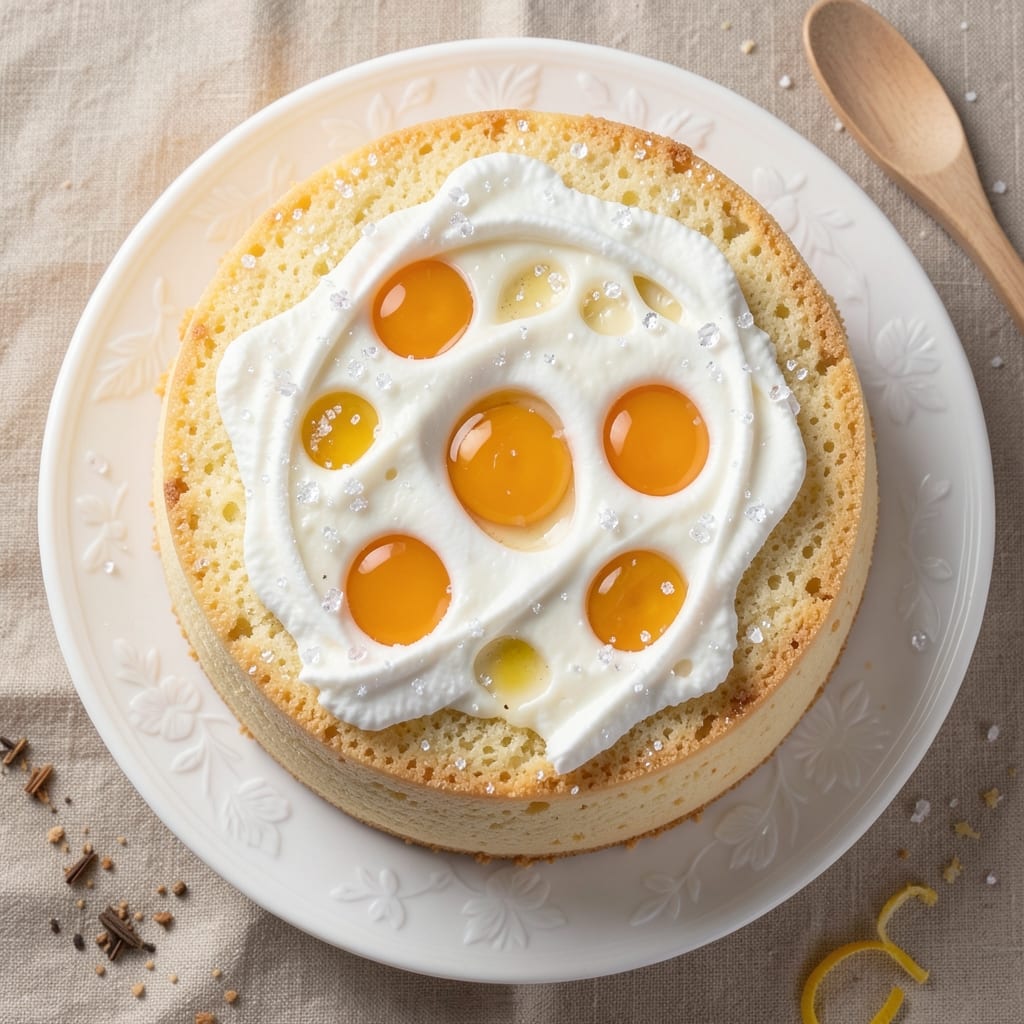
This 8-egg sponge cake recipe delivers the perfect balance of lightness and structure—no more sinking centers or dense crumbs. The secret lies in the precise ratio of eggs to flour and the right mixing technique, which transforms simple ingredients into a towering, airy masterpiece that holds its shape without collapsing. I've perfected this method after years of testing, ensuring every slice is tender yet sturdy enough to support generous layers of filling or frosting.
The key to achieving that signature fluffiness is using the foam method—whipping egg whites to stiff peaks before folding them into the batter. This technique incorporates air gently, creating a delicate crumb that's both light and stable. With 350°F oven temperature and 30-35 minutes of baking time, you'll get a golden, even rise that's impossible to resist. The cake's structure comes from properly folded egg whites and a touch of cream of tartar for stability, while the richness comes from the full 8 eggs, which create a velvety texture that's far from dry.
What makes this recipe truly special is its versatility—it's the ideal base for layer cakes, trifles, or even a simple vanilla sponge. The neutral flavor profile lets the cake shine on its own or as a canvas for your favorite fillings, like lemon curd, chocolate ganache, or fresh berries. Once baked, the cake will have a springy yet tender crumb that holds up beautifully when sliced, making it perfect for both elegant desserts and casual treats.
Whether you're a seasoned baker or just starting out, this foolproof method ensures success every time. The recipe includes optional flavor variations, like vanilla or lemon zest, so you can customize it to your taste. Ready to bake a cake that's light enough to float but sturdy enough to impress? Let's get started.
Ingredients for 8 egg sponge cake
Eight eggs, precise technique—this is where lightness meets structure in perfect harmony.
| Ingredient | Amount | Notes |
|---|---|---|
| Large Eggs 🥚 | 8 whole | Room temperature for best volume |
| All-Purpose Flour 🌾 | 2 cups | Sifted, plus extra for dusting |
| Granulated Sugar 🍚 | 1 ½ cups | Superfine preferred for smooth texture |
| Unsalted Butter 🧈 | ½ cup | Room temperature, cubed |
| Vanilla Extract 🌿 | 1 tbsp | Pure vanilla for authentic flavor |
| Cream of Tartar 🧂 | ½ tsp | Stabilizes egg whites |
| Salt 🧂 | ¼ tsp | Fine sea salt preferred |
| Lemon Zest 🍋 | 1 tbsp | Optional, for brightness |
| Vanilla Bean Seeds 🌿 | 1 tsp | Optional, scraped from pod |
| Cornstarch 🌾 | 1 tbsp | For tender crumb |
The eggs are non-negotiable here—room temperature is critical for maximum volume. Kirkland Signature or Organic Valley are reliable choices, but any large eggs in the carton will work. Sift your flour twice to avoid dense pockets, and use superfine sugar if you can find it—it dissolves more smoothly. For the butter, Land O'Lakes unsalted melts beautifully, but any brand works as long as it's room temp. The cream of tartar is the secret weapon—it stabilizes those egg whites like nothing else. If you can't find it, lemon juice at half the amount works in a pinch.
No vanilla extract? Vanilla sugar or pure almond extract at half the amount adds depth. Skipping the lemon zest? Orange zest works just as well for that bright note. The cornstarch is optional but worth it—it creates that signature tender crumb. For flavor variations, matcha powder (1 tsp) or cardamom (0.5 tsp) can transform this into a completely different cake. And if you're feeling fancy, vanilla bean seeds add flecks of luxury that make every bite special. The butter should be soft enough to press with your finger but not melted—this is where most home bakers go wrong.
This batter is delicate—work quickly once mixed to maintain air. Line your pans with parchment and dust with flour to prevent sticking. The cake keeps best in an airtight container at room temperature for 3 days, or frozen for 3 months. For serving, bring to room temperature first—it reheats beautifully in the oven at 300°F for 10 minutes. Leftovers? Slice and freeze between parchment for perfect individual portions. The structure holds up remarkably well, making it ideal for making ahead.
Why You'll Love This Recipe
- Here’s what sold me: the way warm butter and sugar melt together in the oven. The edges get this golden, crackly crust while the inside stays moist—like a hug from your favorite bakery, but with half the effort.
- No Mixer Needed: I swear by this method—just fold, don’t beat. The eggs and sugar whip up light and airy with a hand mixer or even a whisk if you’re in a pinch. That butter gets folded in so gently, the cake turns out tender without a trace of toughness.
- Butter-Sugar Magic: Here’s what sold me: the way warm butter and sugar melt together in the oven. The edges get this golden, crackly crust while the inside stays moist—like a hug from your favorite bakery, but with half the effort.
- Crowd-Pleaser Any Day: Between us, this cake disappears fast. Serve it plain for breakfast, drizzle with honey for a snack, or layer with jam for dessert. It’s the one thing I always bake when I have company—no one questions why it’s on the table.
Step-by-step instructions for 8 egg sponge cake
Mastering this recipe delivers a flawlessly light, towering sponge cake without the dreaded collapse.
Separate Eggs and Prepare the Egg Whites
Begin by separating the 8 whole Large Eggs, placing yolks in one bowl and whites in a clean, grease-free metal or glass bowl. The bowl must be spotless—any grease will prevent proper volume development. I use two separate bowls to avoid cross-contamination, which can weaken the structure.
Add the 0.5 tsp Cream of Tartar and 0.25 tsp Salt to the egg whites. Cream of tartar stabilizes the whites, giving you stiffer peaks that hold air better. Beat the whites on low speed for 1 minute to combine completely, then increase to medium-high speed and beat until soft peaks form—when you lift the whisk, the peaks should curve slightly but not stand straight.
Gradually Whip Egg Whites to Stiff Peaks
Continue beating the egg whites until they reach stiff peaks—when you lift the whisk, the peaks should stand straight and hold their shape. This usually takes 3-5 minutes depending on your mixer. The whites should look glossy and hold their shape when the whisk is tilted. If you're unsure, test by lifting the whisk—if the peak stands at least 1 inch tall, it's ready.
I like to stop the mixer and scrape the sides of the bowl with a spatula to redistribute any whites that may have collected there. This ensures even volume development. Avoid overbeating—once the peaks are stiff, stop immediately to prevent dry, grainy whites that can make the cake dense.
Mix Yolk and Sugar to Ribbon Stage
In a separate large bowl, combine the 8 egg yolks and 1.5 cups Granulated Sugar. Beat them on medium speed for 5 minutes until the mixture is pale, thick, and forms a ribbon when the whisk is lifted. To test, dip the whisk into the mixture—when you lift it, a slow-moving ribbon should trail back into the bowl. This ensures proper aeration and a tender crumb.
Add the 0.5 cup Unsalted Butter, 1 tbsp Vanilla Extract, 1 tbsp Lemon Zest, and 1 tsp Vanilla Bean Seeds to the yolk mixture. Fold these in gently with a spatula, being careful not to deflate the air you've incorporated. The butter should be fully emulsified, and the mixture should look smooth and uniform. This step is where the cake's richness and flavor come together.
Fold Dry Ingredients in Three Stages
Sift the 2 cups All-Purpose Flour and 1 tbsp Cornstarch together into a separate bowl. The cornstarch adds tenderness, while the flour provides structure. Using a large spatula, gently fold one-third of the dry ingredients into the yolk mixture, using a J-stroke motion to cut through the center and fold from the bottom up. This prevents deflating the air bubbles.
Repeat with the remaining dry ingredients in two more additions, folding just until combined. The batter should be thick, glossy, and ribbon-like. Avoid overmixing—you should still see some streaks of flour, as this ensures a tender crumb. The batter should hold its shape when the spatula is lifted, but it shouldn't be stiff or dry.
Fold Egg Whites in Three Additions
Using the same J-stroke technique, fold one-third of the egg whites into the batter, cutting through the center and folding from the bottom up. This preserves the air incorporated into both the yolks and whites. Repeat with the remaining egg whites in two more additions, ensuring each addition is fully incorporated before adding the next.
The final batter should be smooth, thick, and hold its shape when the spatula is lifted. If the batter looks too thin, it may not have enough volume. If it looks too thick, you may have overmixed the whites. Transfer the batter to a piping bag fitted with a large round tip for even distribution in the pan.
Bake at Low Temperature for Even Rise
Preheat your oven to 325°F. Line the bottom of a 9-inch round cake pan with parchment paper, then lightly grease the sides with butter and dust with flour. Pour or pipe the batter into the pan, smoothing the top with a spatula. Tap the pan gently on the counter to release any air bubbles.
Bake for 50-60 minutes, or until the top is golden brown and a toothpick inserted into the center comes out clean. The cake should spring back slightly when pressed gently in the center. I like to check the cake at the 50-minute mark—if the top is browning too quickly, tent it loosely with foil to prevent overbrowning while allowing it to finish baking.
Pro Tips For Making 8 Egg Sponge Cake
- Whip Eggs to Ribbon Stage: I learned this the hard way—stop beating the eggs when they form stiff but slightly wobbly peaks that hold their shape when you lift the whisk. Over-whipping turns your cake into a rubbery brick, and nobody wants that, especially with eight eggs. (Yes, even if you're impatient like me.)
- Use Room-Temp Butter: Cold butter won’t melt smoothly into your batter, and you’ll end up with greasy pockets instead of a tender crumb. Let that butter sit out for 30–45 minutes until it’s soft but not liquid—press your finger into it; it should leave a slight indent. Trust me, your cake’s texture will thank you.
- Sift Flour Like You Mean It: I skip this when I’m lazy, but the dish is noticeably better when I don’t. Sifting the flour removes lumps and aerates it, so your cake rises higher and stays lighter. Use a fine-mesh sieve and tap it firmly over a bowl—no half-measures. (Pro tip: Sift the flour directly into your mixing bowl to avoid extra steps.)
- Bake Until Golden, Not Just Set: Your cake might look "done" at 340°F (170°C) when the edges pull away, but resist opening the oven. Keep baking until the top is golden brown—around 350°F (175°C)—and a toothpick comes out clean but with a few crumbs, not wet batter. Underbaking is the fastest way to a gummy center.
Common mistakes when making perfect results
Overwhipped Egg Whites
One of the biggest mistakes is overbeating the egg whites, which turns them dry and grainy. When whites reach stiff peaks and you keep beating, they lose their delicate structure and can even collapse when folded into the batter. I’ve ruined cakes this way—always stop immediately when the peaks hold their shape and look glossy. If in doubt, test by tilting the whisk: the whites should hold a 1-inch peak without dripping. 🥚
Under-Mixed Yolk Mixture
Skipping the proper ribbon stage for the yolk mixture leads to a dense, flat cake. The yolks and sugar need to be beaten for 5 minutes until pale and thick—this incorporates air that creates the cake’s lightness. I’ve seen beginners stop too soon, resulting in a cake that’s more like a dense brownie. Test by lifting the whisk: a slow-moving ribbon should trail back into the bowl. If it doesn’t, keep beating!
Improper Folding Technique
Using a spoon instead of a spatula or mixing too vigorously when folding the egg whites into the batter deflates all that hard work. The J-stroke technique—cutting through the center and folding from the bottom up—preserves air bubbles. I’ve seen batters turn flat and soupy when overmixed. Fold in three additions, and stop once the batter is just combined. Streaks of flour are okay—they disappear during baking. 🍳
Skipping Room-Temperature Ingredients
Cold eggs or butter create air pockets that don’t incorporate properly, leading to a cake with uneven texture. Always let eggs sit at room temperature for 30 minutes before separating, and ensure butter is soft but not melted. I’ve had cakes sink in the middle because of cold ingredients—this step is non-negotiable for a stable structure. Use your finger to press the butter: it should dent slightly but hold its shape.
Overbaking or Underbaking
Checking for doneness too early (before 50 minutes) or leaving the cake in the oven too long causes collapse or dryness. The cake is done when a toothpick comes out clean and the top springs back when pressed gently. I’ve had cakes that looked perfect but were still raw inside—always trust the toothpick test over visual cues. If the top browns too quickly, tent with foil to prevent overbrowning while it finishes baking.
Greasy or Dirty Mixing Bowls
Even a trace of grease in your mixing bowls prevents egg whites from whipping properly, leading to a flat, dense cake. Always use a spotless metal or glass bowl for the whites—no plastic! I’ve had cakes fail because I rushed and didn’t wash the bowl thoroughly. Wipe it with a damp cloth, then dry completely before adding the whites. This small step makes a huge difference in volume. 🧼
Nutrition facts
Frequently asked questions
Why does this recipe use 8 eggs instead of the usual 4-6?
Eight eggs create a richer, more stable structure while keeping the texture incredibly tender. The extra yolks add moisture and fat, preventing dryness, while the whites provide the signature lightness. This ratio is perfect for high-altitude baking or when you need a cake sturdy enough for multiple layers without collapsing.
Can I make this cake without a stand mixer?
Use a hand mixer with a whisk attachment for the egg whites (beat on high for 5-7 minutes until stiff peaks form). For the yolks, beat vigorously by hand for 7-10 minutes until pale and ribbon-like. The key is patience—just work in bursts to avoid arm fatigue. Folding requires more care, so use a rubber spatula and go slowly.
How do I prevent a sunken center?
Underbaking is the #1 cause of collapse. Bake until a toothpick comes out clean (50-60 minutes) and the cake springs back when pressed. Avoid opening the oven door early, and never overfill the pan. For extra insurance, chill the batter for 30 minutes before baking—this helps stabilize the structure. The cream of tartar also reinforces the egg whites against sinking.
What's the best way to store leftover cake?
Wrap tightly in plastic wrap, then place in an airtight container. It stays fresh at room temperature for 3 days or frozen for 3 months. To serve, let it sit at room temperature for 1 hour—this prevents condensation from making it soggy. For individual slices, freeze between parchment paper for perfect portions.
Can I substitute the butter with oil?
Not recommended for this recipe—the butter adds richness and helps create the tender crumb. However, if you must, use ½ cup melted coconut oil or vegetable oil, cooled to room temperature. The cake will be slightly denser but still light. For best results, stick with butter—its fat content is crucial for that signature texture.