
Beverages
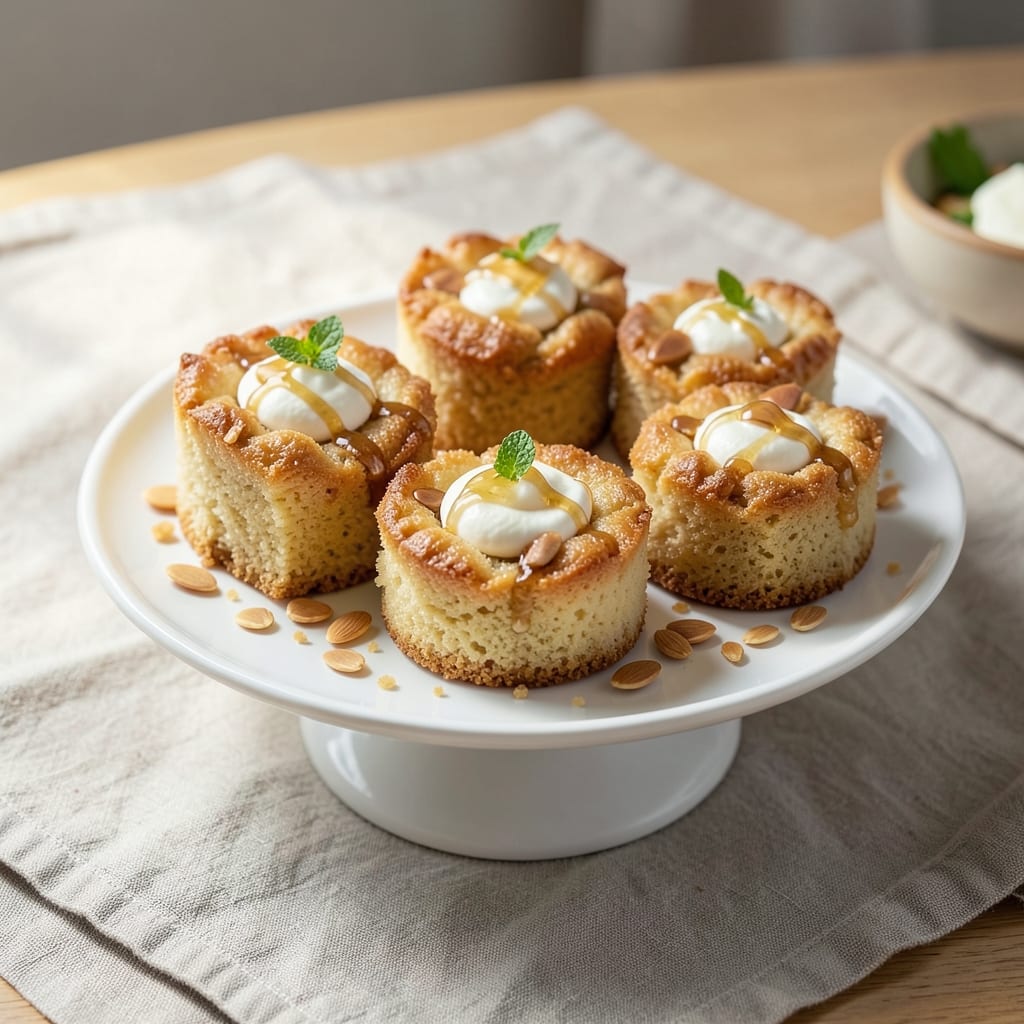
This almond ricotta tea cakes recipe delivers delicate layers of vanilla-infused ricotta and buttery almond crumb that dissolve on your tongue. 💛 The secret lies in properly creaming the butter and folding in the ricotta just until combined—overmixing destroys that tender crumb we're after. I've perfected this technique after years of testing, and it's become my go-to for afternoon tea or holiday gatherings.
What makes these tea cakes special is the balance of textures: crisp edges from the almond flour crust give way to a moist, vanilla-kissed ricotta center. The recipe uses both almond flour and ground almonds for that signature nutty flavor without being overly dense. A 350°F oven temperature ensures even baking while maintaining that delicate interior.
By the time they emerge from the oven, you'll have golden, fragrant tea cakes with just the right amount of crunch at the edges and a velvety ricotta center. The vanilla extract infuses throughout, creating that warm, comforting aroma that makes any gathering feel special. These are the kind of treats that disappear quickly—expect to make at least two batches.
Perfect for serving with Earl Grey tea or as a light dessert after dinner. The recipe scales beautifully for parties, and the dough can be prepared ahead of time for convenient baking. Let's create these elegant tea cakes together—your guests won't believe they're homemade.
Ingredients for almond ricotta tea cakes
Buttery, nutty, and velvety—these ingredients create delicate tea cakes that vanish fast.
| Ingredient | Amount | Notes |
|---|---|---|
| Unsalted Butter 🧈 | ¾ cup | Cold, cubed for creaming |
| Granulated Sugar 🍚 | ¾ cup | Superfine preferred for smoothness |
| Almond Flour 🥜 | 1 ½ cups | Blanched preferred for flavor |
| Ground Almonds 🥜 | ½ cup | Finely ground for texture |
| Whole Milk Ricotta 🧀 | 1 cup | Whole milk for creaminess |
| Pure Vanilla Extract 🍯 | 1 tbsp | High-quality for aroma |
| All-Purpose Flour 🌾 | ½ cup | For structure and binding |
| Large Eggs 🥚 | 2 whole | Room temperature for blending |
| Baking Powder 🍞 | ½ tsp | For lightness in crust |
| Salt 🧂 | ¼ tsp | Fine sea salt preferred |
| Powdered Sugar 🍚 | ¼ cup | For dusting finished cakes |
| Almond Slices 🥜 | ¼ cup | For garnish (optional) |
The almond flour and ground almonds are non-negotiable for that signature flavor. Bob's Red Mill or King Arthur brands are my go-tos—they're finely ground and consistent. If you can only find one, use almond flour and skip the ground almonds, but you'll lose that extra crunch. The ricotta needs to be whole milk for creaminess—part-skim gets rubbery. I always grab mine from the Trader Joe's refrigerated section, but any brand works. The butter should be cold when you cream it—pull it from the fridge 15 minutes before starting.
No almond flour? Substitute with 1 cup blanched almonds ground into a fine powder in a food processor. Whole milk ricotta unavailable? Drain cottage cheese in a sieve for 30 minutes to get a similar texture. The powdered sugar can be swapped for super-fine sugar if you're in a pinch, but it won't dissolve as nicely. For extra vanilla flavor, add 1/4 tsp vanilla bean paste alongside the extract. The almond slices are optional but add that pretty crunch—Trader Joe's has pre-sliced ones that save time.
Store the dough in an airtight container for up to 2 days in the fridge. Bake straight from cold for best results—they won't spread as much. Once baked, keep at room temperature in an airtight container for 3 days, or freeze for 1 month. I always make a double batch and freeze half—perfect for last-minute guests. Reheat in a 300°F oven for 5 minutes to restore that fresh-from-the-oven warmth.
Why You'll Love This Recipe
- No-Mix Needed: I swear by this recipe because it’s one of those rare things that doesn’t require you to cream butter and sugar or fold in a million ingredients. Just fold warm ricotta into almond flour, add a touch of sugar, and pop into the oven. Honestly, the dough comes together faster than I can make coffee.
- Nutty Creamy Magic: That first bite—warm, tender crumb with a whisper of toasted almonds and a gooey ricotta center? It’s like a hug in cake form. The ground almonds add crunch, but the ricotta keeps it rich without being heavy. (Yes, even on a Tuesday night.)
- Breakfast or Dessert: Call them tea cakes, breakfast treats, or sneaky dessert—these do it all. I’ve served them with jam and tea for a fancy brunch, or straight from the oven with a sprinkle of sugar as a quick afternoon pick-me-up. They’re the kind of thing that makes you question why you ever bought store-bought pastries.
- Leftovers? More Like Zero: Between us, these disappear so fast you’ll barely have any left. But if you do, they reheat in seconds—perfect for a grab-and-go snack the next day. And since they’re made with pantry staples (butter, sugar, almond flour), they’re cheap enough to bake twice in one week without guilt.
Step-by-step instructions for almond ricotta tea cakes
Here's how to make these tender, vanilla-kissed tea cakes with a buttery crust—easy steps for perfect results.
👨🍳 Step 1: Cream Butter and Sugar Until Light
In a stand mixer fitted with the paddle attachment, beat the 0.75 cup unsalted butter (cold, cubed) and 0.75 cup granulated sugar on medium speed for 3-4 minutes. You're looking for a pale, fluffy mixture that nearly doubles in volume—this incorporates air for a light texture. Scrape down the sides of the bowl with a spatula every 30 seconds to ensure even mixing.
Here's the thing—don't rush this step. The butter needs to emulsify completely with the sugar to create that signature tender crumb. If you skip this, your cakes might turn out dense instead of delicate. You'll know it's ready when the mixture looks like soft whipped cream and leaves clean streaks when you lift the paddle.
👨🍳 Step 2: Add Ricotta and Vanilla for Richness
Reduce the mixer speed to low and add the 1 cup whole milk ricotta and 1 tablespoon pure vanilla extract. Mix for 1 minute until fully combined and smooth. The ricotta will make the mixture slightly thicker, but that's exactly what we want for that moist, velvety texture in the finished cakes.
I like to press the mixture through a fine-mesh sieve at this stage to remove any lumps—this ensures a silky batter. The vanilla extract should be high-quality; you'll notice the difference in aroma right away. If you're using imitation, swap in an extra ½ teaspoon of pure extract for better flavor.
👨🍳 Step 3: Incorporate Dry Ingredients Gently
In a separate bowl, whisk together the 1.5 cups almond flour, 0.5 cup ground almonds, 0.5 cup all-purpose flour, 0.5 teaspoon baking powder, and 0.25 teaspoon salt. With the mixer on low speed, gradually add the dry ingredients to the ricotta mixture, mixing just until combined—about 30 seconds. Overmixing develops gluten, which can make the cakes tough.
Here's where it gets fun—add the 2 whole large eggs, one at a time, mixing on low speed for 10 seconds after each addition. The batter should be thick but pourable. If it looks too stiff, add 1 teaspoon of milk to loosen it slightly. The eggs bind everything together while adding moisture and structure.
🔥 Step 4: Bake to Golden Perfection
Preheat your oven to 350°F and line a baking sheet with parchment paper. Using a 2-tablespoon scoop, drop rounded portions of batter onto the prepared sheet, spacing them 2 inches apart. Gently flatten each cake with your finger to about ½-inch thickness—this ensures even baking.
Bake for 12-15 minutes until the edges are golden brown and the tops spring back when lightly touched. Here's the trick: the centers should still look slightly underdone—they'll firm up as they cool. If you bake them too long, they'll dry out. Let them cool on the baking sheet for 5 minutes before transferring to a wire rack.
🍽️ Step 5: Dust and Garnish for Finishing Touches
While the cakes are still warm, dust the tops generously with the 0.25 cup powdered sugar using a fine-mesh sieve. This gives them that classic tea cake look and adds a touch of sweetness. For extra flair, arrange the 0.25 cup almond slices on top or around the cakes—just press them gently so they stick.
Serve warm with a cup of Earl Grey tea or a dollop of whipped cream. The contrast of the crisp edges with the tender, ricotta-rich center is what makes these cakes irresistible. Store leftovers in an airtight container at room temperature for up to 3 days, or freeze for up to 1 month for freshly baked flavor anytime.
Pro Tips For Making Almond Ricotta Tea Cakes
- Mix Ricotta Last: I learned this the hard way—adding ricotta early makes the dough too wet and sticky. Fold it in just before shaping, or your cakes will flatten out like sad pancakes. Use a rubber spatula to gently fold, not stir.
- Toast Almond Flour: Skip this, and your cakes taste bland. Dry-toast the almond flour in a 350°F oven for 5-7 minutes until it smells nutty. It’s the thing that matters most for that rich, toasted almond flavor—no shortcut here.
- Don’t Overmix the Dough: Once you add the butter and sugar, mix just until combined. I used to beat it like I was punishing the dough, and the cakes turned out dense. Stop when it looks shaggy, not smooth—overworking glues the gluten.
- Use Room-Temp Ricotta: Cold ricotta makes the dough fight you. Scoop it out of the fridge 30 minutes ahead and let it sit in a bowl. It blends better, distributes evenly, and your cakes stay light instead of heavy. (Yes, even if you’re impatient like me.)
Troubleshooting this dish
Dense Cakes Issue
If your tea cakes turn out dense instead of tender, you likely overmixed the batter or used the wrong ricotta. Whole milk ricotta is non-negotiable—part-skim lacks the fat needed for creaminess. I've found that pressing the ricotta mixture through a fine-mesh sieve removes any lumps that could create dense pockets. Also, mix the dry ingredients just until combined—overmixing develops gluten, which makes cakes tough. 💡
Flattened or Spread Too Much
Tea cakes that flatten excessively or spread too much during baking usually mean the butter wasn't cold enough when creamed. Always use cold, cubed butter straight from the fridge and cream it for the full 3-4 minutes—this incorporates enough air to create structure. Another trick? Chill the dough for 30 minutes before baking. I also recommend using a 2-tablespoon scoop and gently flattening each cake to ½-inch thickness—don't press too hard.
Pale or Underbaked Centers
Pale centers that stay doughy after baking happen when the oven isn't hot enough or the cakes aren't baked long enough. Always preheat your oven to 350°F for at least 15 minutes before baking. Check for doneness at 12 minutes—edges should be golden brown, and tops should spring back when gently touched. If they still look underdone, bake for another 1-2 minutes. The centers will firm up as they cool, but they should never be raw. ⏱️
Cracked or Sunk Centers
Cracked or sunken centers usually mean the baking powder was old or expired, or the oven temperature fluctuated. I recommend using fresh baking powder—test it by mixing 1 teaspoon with ¼ cup hot water; it should foam immediately. Also, avoid opening the oven door during the first 10 minutes of baking, as temperature drops cause uneven rising. If your oven runs hot, reduce the temperature to 325°F for more even baking.
Dry or Crumbly Texture
Dry or crumbly tea cakes often result from overbaking or using too much almond flour. Once the edges turn golden brown (12-15 minutes), remove them immediately—they'll continue cooking off the heat. For extra moisture, add 1 teaspoon lemon juice to the ricotta mixture or replace 2 tablespoons of almond flour with all-purpose flour. I also find that brushing the tops with a little melted butter right after baking adds back some moisture. 💧
Ricotta Separation
If your ricotta separates during mixing, it's likely too old or was handled roughly. Always use fresh ricotta straight from the fridge—older ricotta has more moisture and separates more easily. To prevent separation, mix the ricotta and vanilla on low speed for just 1 minute and press the mixture through a fine-mesh sieve before adding dry ingredients. If separation happens, stir in 1 teaspoon cornstarch to thicken it back up. 🧀
Nutrition facts
Frequently asked questions
Can I make these tea cakes without almond flour?
Yes! For a 1:1 substitution, grind 1 cup blanched almonds into a fine powder using a food processor. The texture will be slightly different but still delicious. For extra moisture, reduce the almond flour by 2 tablespoons and add 1 teaspoon lemon juice to the ricotta mixture.
How do I store the dough before baking?
Wrap the dough tightly in plastic wrap and refrigerate for up to 2 days. For best results, bake straight from cold—they won't spread as much. If you need to freeze, shape the dough into balls, freeze for 1 hour, then transfer to an airtight container for up to 1 month.
Why does my ricotta mixture separate?
Old ricotta or overmixing causes separation. Always use fresh, whole milk ricotta straight from the fridge. Mix it with vanilla on low speed for just 1 minute, then press through a fine-mesh sieve. If separation occurs, stir in 1 teaspoon cornstarch to thicken it back up.
Can I add chocolate or citrus zest?
Fold in 2 ounces dark chocolate chips with the dry ingredients or add 1 teaspoon lemon zest to brighten the flavor. For chocolate, reduce the powdered sugar to 2 tablespoons to balance sweetness. Zest adds a lovely brightness that pairs beautifully with the vanilla.
How do I reheat stale tea cakes?
Place them on a baking sheet and warm in a 300°F oven for 5-7 minutes until fragrant. For a quick fix, microwave for 10-15 seconds (cover with a damp paper towel). The powdered sugar will melt slightly, restoring that fresh-from-the-oven appeal.